Curved Belt Conveyor Design and Fabrication
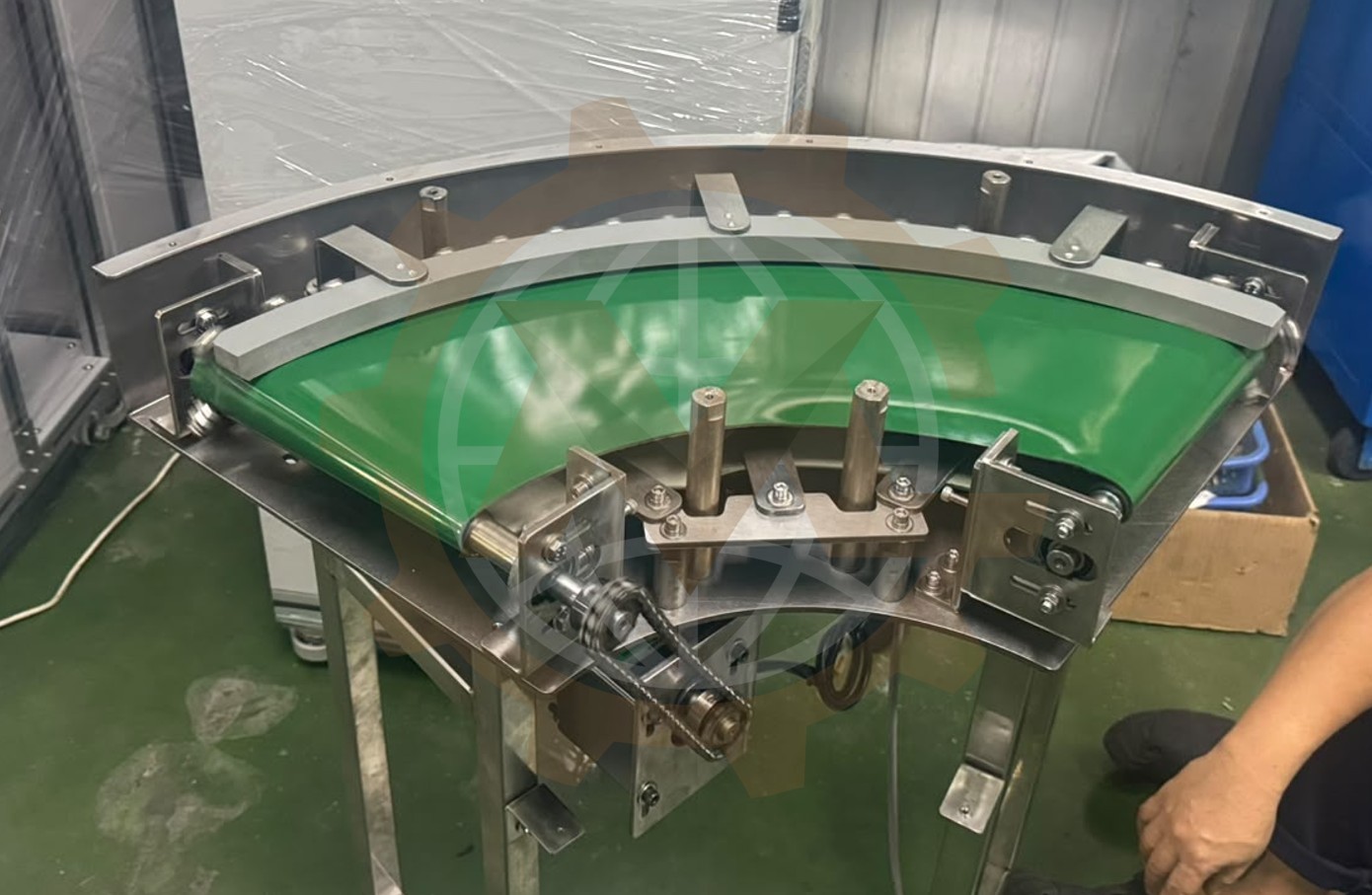
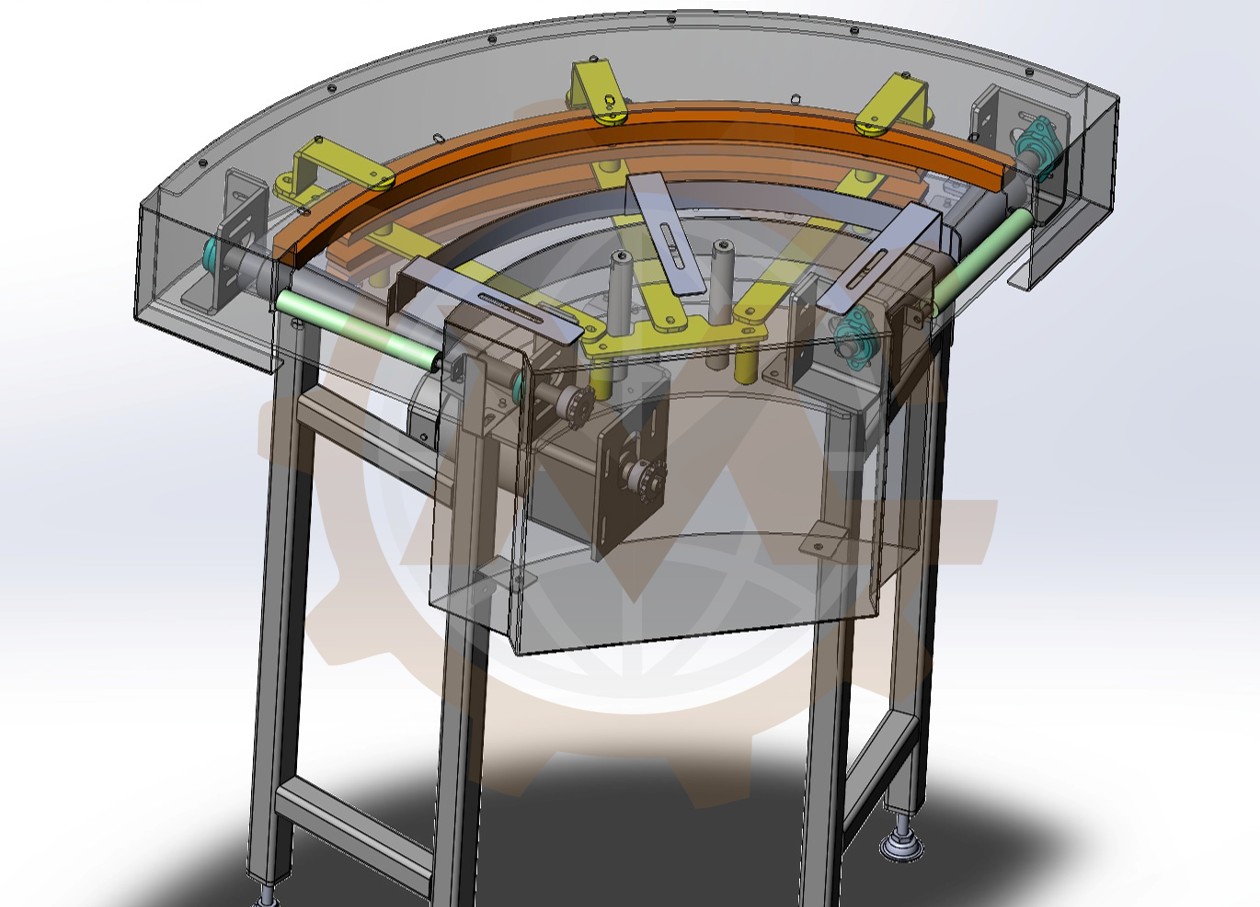
GMD designed and fabricated a curved belt conveyor for changing product travel direction within a compact layout. The completed unit combines a continuous belt surface, curved frame, side guidance and drive mechanism, and was demonstrated in operation.
Changing the direction of a conveyor line can be difficult when products need continuous support through the turn. Gaps between straight conveyors may affect product stability, while the available floor space can limit the size of a transfer arrangement.
GMD designed and fabricated a curved belt conveyor to provide a continuous conveying surface around the turn. The completed unit brings together a shaped belt, curved support structure, side guidance and drive components in a compact assembly.
1. Material Handling Context: Turning Products Within a Conveyor Line
The project involved a conveyor section intended to redirect products between two transport paths. A curved conveyor allows the line to change direction while maintaining a powered conveying surface through the transition.
The specific client, product type and production site are withheld from this public case study.
2. The Engineering Challenge: Keeping the Belt Stable Around a Curve
A straight belt conveyor and a curved belt conveyor place different demands on the belt and its supporting components. In a curved unit, the belt must travel around an arc while remaining guided and sufficiently tensioned.
The frame, end rollers, belt support, drive and guiding components therefore had to work together. The design also needed to keep the conveying surface usable across the width of the turn and allow access for adjustment and maintenance.
3. Inputs That Define the Curved Conveyor
The main design inputs for this type of conveyor include:
- Required change in conveying direction.
- Inner and outer curve radii.
- Usable belt width.
- Infeed and outfeed heights.
- Product dimensions, mass and contact surface.
- Required belt speed and product spacing.
- Available installation space and connection points.
- Operating environment and cleaning requirements.
These values determine the conveyor geometry, belt specification, drive selection and interfaces with adjacent equipment.
4. Design Constraints Along the Curved Belt Path
The conveyor had to fit its belt and running components within a curved frame. Its inlet and outlet also needed to provide practical transfer points for connecting to other equipment.
Belt tracking was a central design consideration. The belt path, guiding arrangement and tension adjustment needed to control belt movement during operation. The curved side structure also had to retain the conveyed product without unnecessarily reducing the usable belt surface.
5. Concepts Considered for the Direction Change
| Concept | Consideration |
|---|---|
| Two straight conveyors with a transfer between them | Simple equipment, but introduces a transfer point at the change of direction |
| Curved roller conveyor | Suitable for some products, depending on their base and required support |
| Curved belt conveyor | Provides a continuous conveying surface through the turn |
A curved belt conveyor was selected for this project’s direction change and continuous surface requirement.
6. Selected Mechanism and Fabricated Assembly
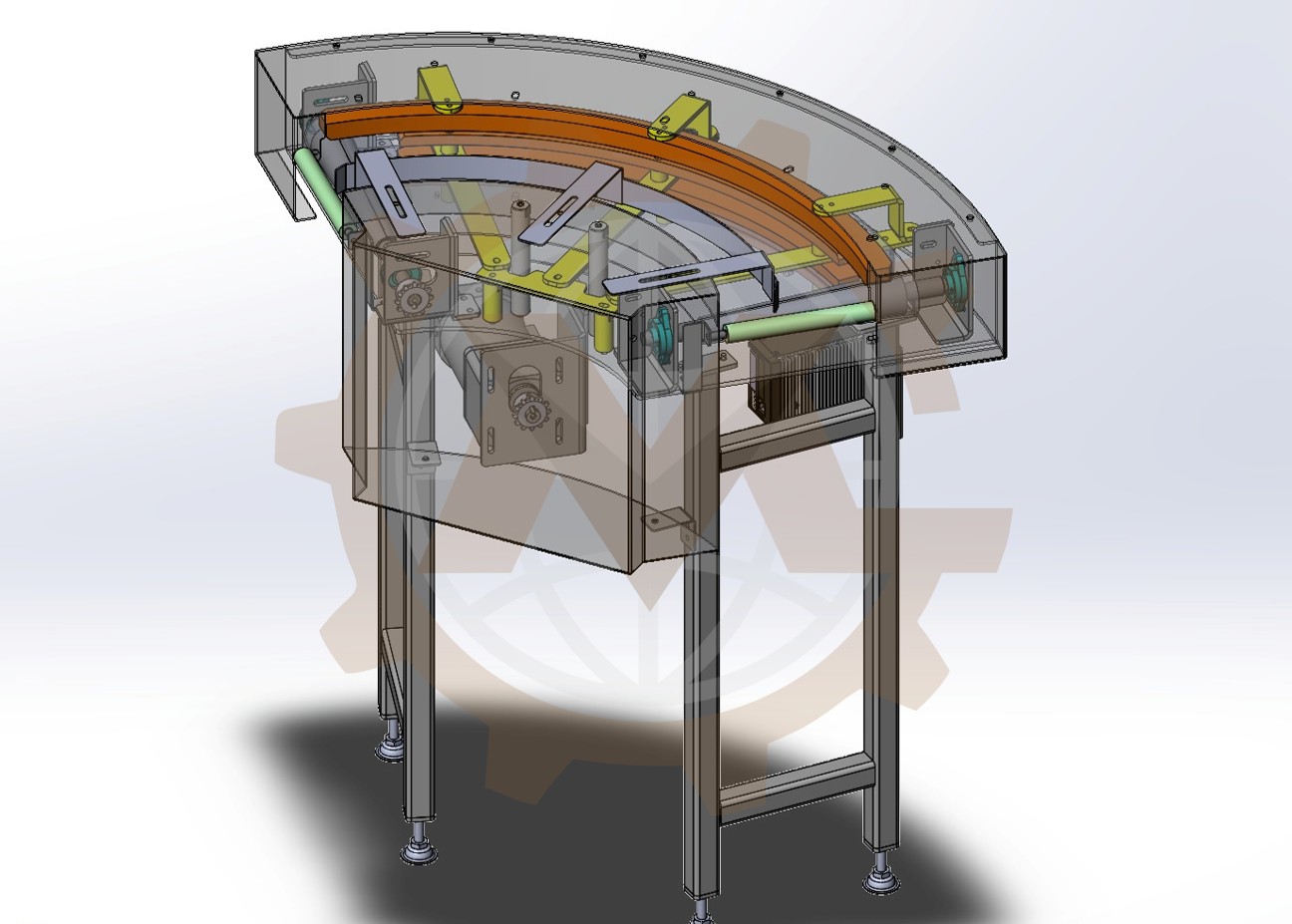
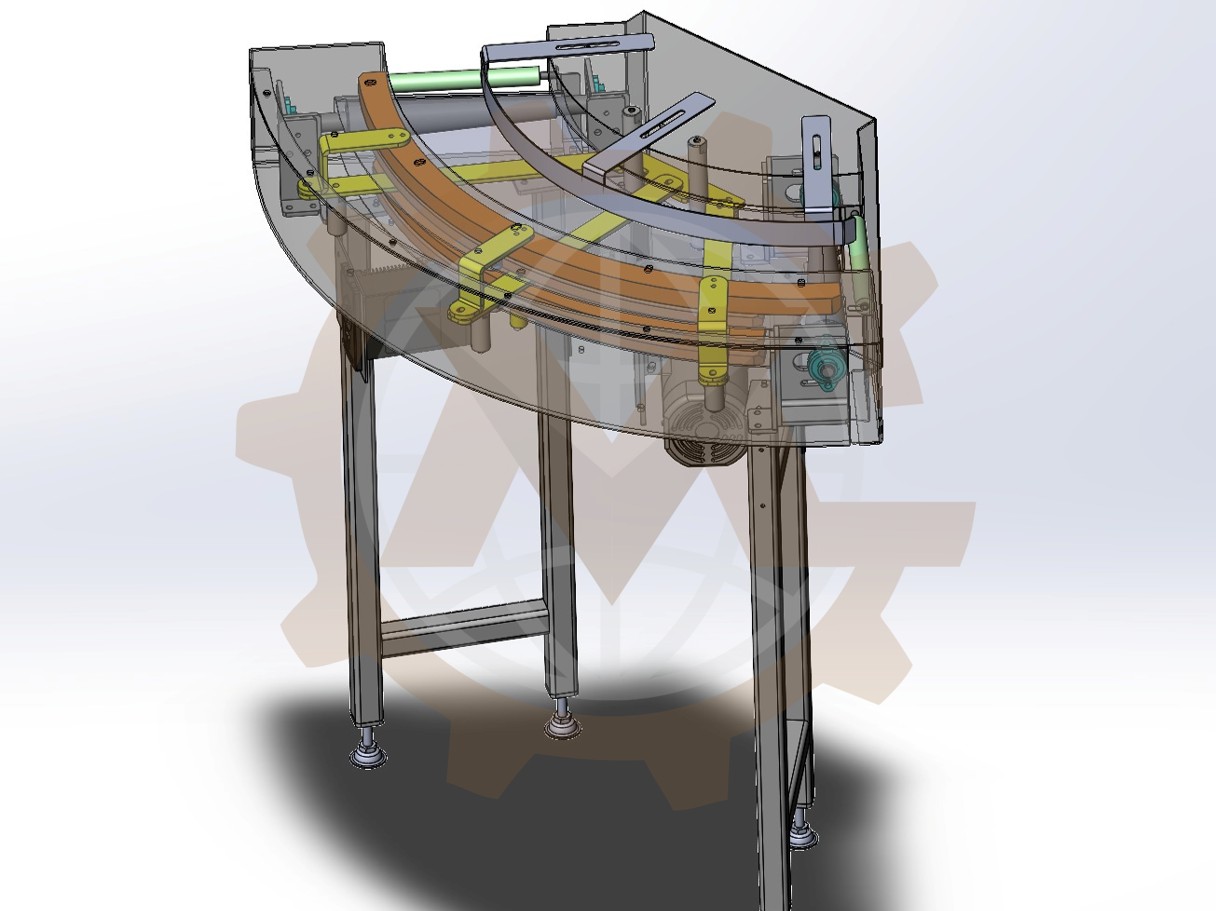
The fabricated conveyor uses a green curved belt supported by a shaped frame. Side guidance follows the outer edge of the conveying path. The drive and associated running components are positioned within the conveyor assembly, keeping the overall unit compact.
As shown in the project video, the assembled belt moves around the curve during a running demonstration. The frame includes accessible mechanical components for setting up and maintaining the belt path.
7. Engineering Checks for Belt Travel and Drive Selection
The mechanical design of a curved belt conveyor requires checks beyond its overall footprint. Key calculations and verifications include:
- Conveying path geometry: inner and outer radii, belt width and arc length.
- Belt speed: compatibility with the upstream and downstream conveyors.
- Loading: combined weight of conveyed products on the belt at one time.
- Drive requirement: resistance from the loaded belt, running components and guidance system.
- Belt tension and tracking: sufficient tension for drive engagement while maintaining stable travel around the curve.
- Transfers: inlet and outlet geometry relative to adjacent conveyors.
- Frame support: stiffness and mounting for the expected operating load.
The numerical values for these checks are project specific and are omitted because they were not provided for publication.
8. CAD and Manufacturing Workflow
The project progressed from mechanical layout and component design to fabrication, assembly and running demonstration. CAD modeling was used to coordinate the curved frame, belt path, drive location, supports and interfaces between components.
The public project information does not identify a specific CAD software version, so it is not attributed here.
9. Project Deliverables
The work covered the design and fabrication of the curved belt conveyor assembly, including its structural frame, belt conveying surface, guidance, drive integration and mechanical supports.
The assembled conveyor was then demonstrated in operation. Manufacturing drawings, BOM files and installation documents can be added to this section if they formed part of the actual client handover.
10. Demonstrated Result: A Running Curved Belt Conveyor
The visible result is a fabricated curved belt conveyor running under power. Its belt provides a continuous surface around the change in direction, and the conveyor components are integrated into a single compact unit.
The video demonstrates belt operation without a conveyed product. Product transfer performance, rated load, speed and long term reliability should be stated only when supported by the relevant test or operating records.
11. Related Conveyor Design Services
This project is an example of GMD’s mechanical design services for conveyor and material handling equipment. Curved belt sections can be incorporated into larger production, inspection, packaging and warehouse transport systems.
12. Need a Curved Conveyor for Your Line?
GMD can help develop a conveyor around your product, available space and required connection to existing equipment. The design can be tailored to the required turn geometry, conveying width, operating load and transfer heights.
Related Portfolios
Explore similar engineering portfolios and industrial solutions.
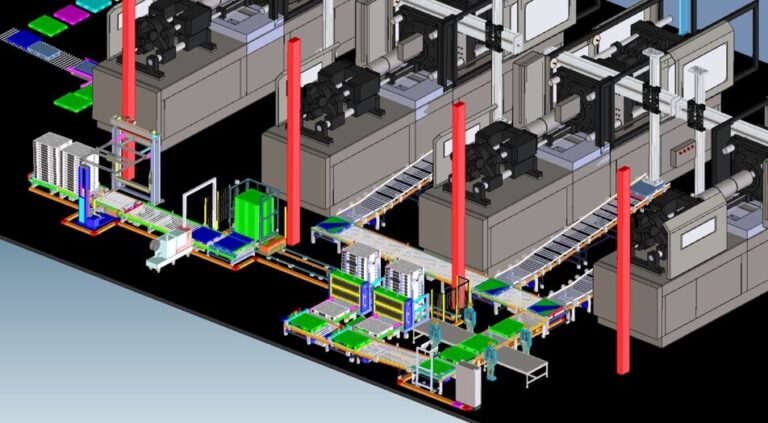
Automated Pallet Sorting, Stacking and Packaging Line
GMD designed an integrated line that collects molded...
View Portfolio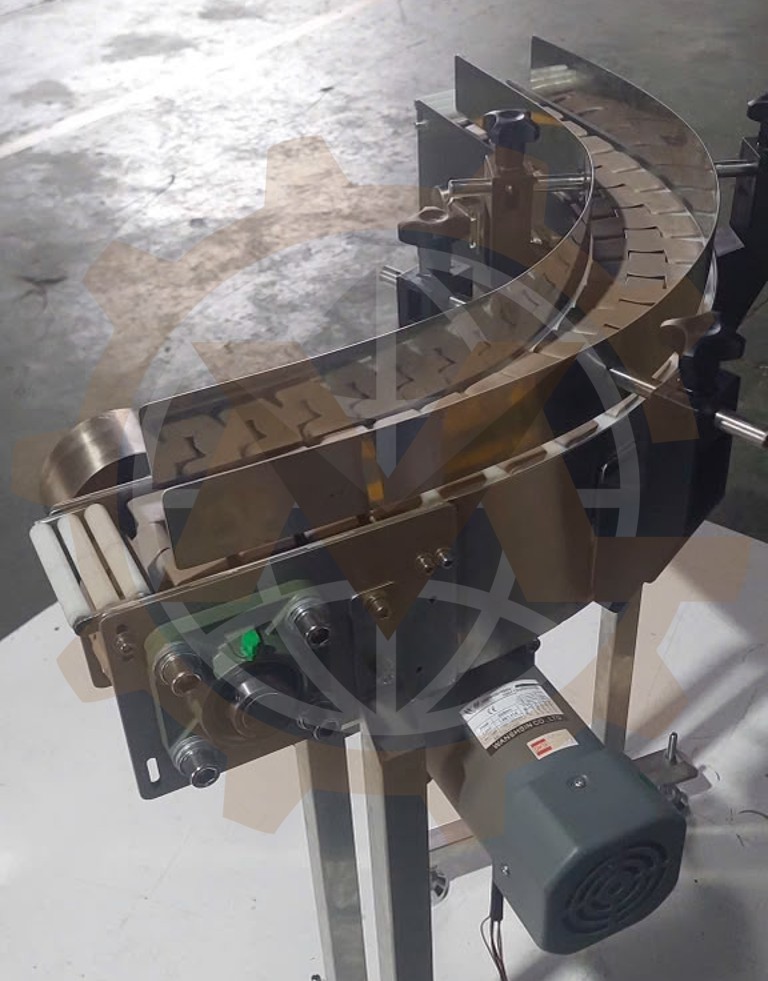
Custom Curved Tabletop Chain Conveyor Design
GMD Engineering designed a compact curved tabletop chain...
View Portfolio
Automatic Medical Tube Cap Assembly and Welding Machine
GMD Engineering developed an automatic medical tube cap...
View Portfolio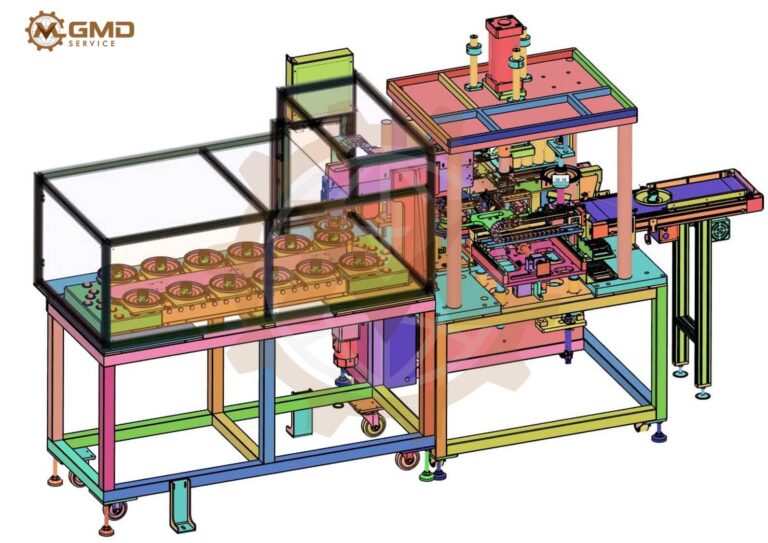
Automatic Sealing Press Machine Design – Case Study
GMD Engineering designed an automatic sealing press machine...
View Portfolio
Automatic Bearing Press-Fit and Assembly Machine with Runout Inspection
Discover an automatic bearing press-fit and assembly machine...
View Portfolio
Automatic Connector Terminal Insertion and Dual Housing Assembly Machine Design
Custom automatic connector assembly machine designed for a...
View Portfolio