Custom machines that move products smoothly from production to packaging.
GMD Engineering designs mechanical systems for feeding, forming, sealing, conveying and handling consumer products. We develop practical machine concepts and production-ready CAD documentation around your product, package and process requirements.
Engineering for Packaging and Consumer Goods Production
Packaging equipment has to do more than perform one operation. Products must enter the machine in the correct position, move through each stage at a suitable rate and leave in a form that the next machine or operator can handle. Changes in product dimensions, packaging material or production volume can affect the entire sequence.
GMD Engineering supports manufacturers and equipment builders with the mechanical design of custom packaging and consumer goods production equipment. Our work can cover a single handling mechanism, a sealing station, a conveyor between machines or the mechanical development of a complete machine concept.
We design around the real product and process: its shape, stability, orientation, packaging format, expected output, available floor space and existing equipment interfaces. The resulting design package can include 3D CAD models, manufacturing drawings, bills of materials and agreed files for supplier collaboration.
Where Custom Equipment Adds Value
A standard machine is useful when the product and package fit its intended operating range. Custom mechanical design becomes important when the process involves unusual product geometry, limited space, a specific transfer sequence or an interface that standard equipment cannot accommodate.
Common project needs include:
Feeding products consistently into a packaging operation.
Orienting or spacing items before forming, filling or sealing.
Transferring products between machines at different heights or speeds.
Guiding flexible or unstable products through a process.
Supporting several product sizes with defined changeover tooling.
Integrating a new station into an existing production line.
Designing a compact mechanism around a restricted factory footprint.
Improving access for loading, cleaning, adjustment and maintenance.
Updating an existing machine for a new product or package format.
Preparing detailed drawings and BOMs for equipment manufacture.
Each project begins with the product and the required process. We then select and develop mechanisms suited to those inputs.
Packaging and Consumer Goods Equipment We Can Design
Product Feeding and Orientation Systems
A packaging process depends on receiving products at the right time and in the right position. If parts arrive inconsistently, downstream operations may require unnecessary stops or manual correction.
We can develop mechanical concepts for product feeding, singulation, guiding, indexing and orientation. Depending on the application, the design may use conveyors, guides, stops, pushers, rotary mechanisms, pockets or other purpose-built devices.
Important inputs include product dimensions, shape, surface, weight, allowable contact areas and how products arrive from the previous operation.
Product Feeding and Orientation Systems
Packaging Conveyors and Transfer Systems
Conveyors connect production, inspection and packaging operations. Their design should account for product stability, transfer gaps, accumulation, access and the layout of neighboring machines.
GMD can design conveyor and transfer arrangements such as:
Belt or modular belt conveyors.
Product infeed and outfeed conveyors.
Curved or space-saving transfer paths.
Guided product transfer between stations.
Positioning and spacing mechanisms.
Interfaces to inspection, sealing or packing equipment.
The appropriate conveyor type depends on the product, environment, required movement and line layout.
Guided product transfer between stations.
Forming, Filling and Sealing Machine Mechanisms
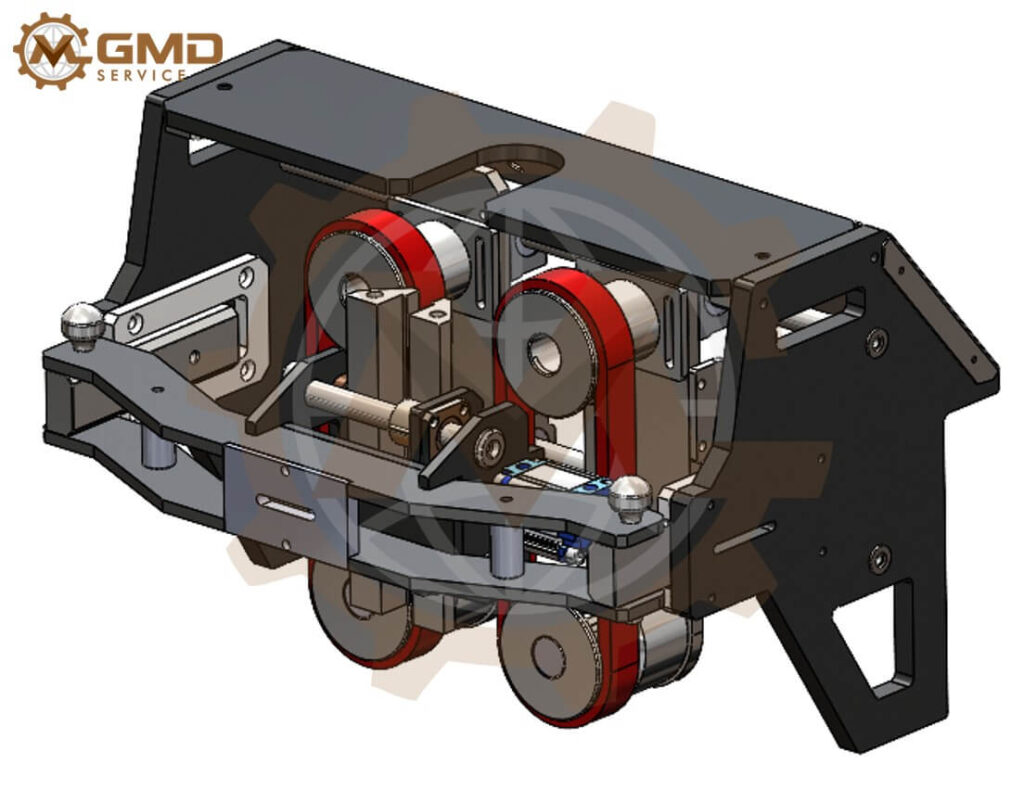
Forming, filling and sealing machines contain several coordinated mechanical operations. Their specific configuration depends on the package material and intended process.GMD can develop mechanical parts and assemblies associated with feeding, forming, positioning, sealing and product discharge when these functions fall within the agreed design scope. We consider motion, access, component mounting, adjustment and the relationship between stations.For heat sealing or other process-dependent operations, the required temperature, pressure, dwell time, material behavior and acceptance criteria must be established and validated for the actual package. Mechanical design alone does not establish the quality of a seal.
Forming, Filling and Sealing Machine Mechanisms
Assembly and Product Handling Equipment
Some consumer products require assembly before packaging. Components may need to be presented, located, pressed, fastened or transferred through several operations.
We can design fixtures, indexing devices, handling modules and custom stations around the required assembly sequence. The concept can include manual, semiautomatic or automated mechanical operations, depending on the project requirements.
Sealing and Pressing Stations
A reliable sealing or pressing operation requires repeatable positioning and a suitable force path. The tooling must also allow practical loading, unloading and adjustment.Our mechanical design work can include machine frames, tool supports, pressing arrangements, product nests, moving elements and related interfaces. We define the design inputs with the client before selecting the mechanism and preparing detailed CAD documentation.
Sealing and Pressing Stations
Inspection and Reject Handling Interfaces
Packaging lines may include weighing, counting, visual inspection or other checks. The mechanical equipment must present each product or package in a predictable position and provide a route for items that do not meet the process criteria.
GMD can design positioning, transfer and reject mechanisms and provide mounting interfaces for inspection hardware. Sensor selection, algorithms, calibration and inspection performance are defined with the responsible specialist unless specifically included in the project scope.
End-of-Line Handling
After the primary packaging operation, products may need to be grouped, transferred, accumulated or presented for manual or automated packing.
We can develop mechanical concepts for these handoff stages, including conveyor layouts, guides, stops, transfer devices and equipment interfaces. The design should account for package stability, line rate and access for operators.
Consumer Goods Products and Packaging Formats
The mechanical approach varies with the product. A rigid container behaves differently from a flexible pouch; a small loose component needs different handling from a stable boxed product.
A project may involve:
Individual consumer products.
Bottles, containers, tubs or trays.
Flexible bags, pouches or film-wrapped products.
Cartons and boxes.
Small components that must be counted or grouped.
Products requiring assembly before packaging.
These examples describe potential applications, not a claim that one machine design works across every product category. We establish the contact surfaces, orientation, dimensional range and packaging requirements for each assignment.
Where food, cosmetics, pharmaceutical or other regulated products are involved, the client’s hygiene, material, cleaning and compliance requirements must be defined explicitly. The design and verification scope is then agreed for that application.
Production Challenges That Shape the Machine Design
Product Variability
Products and packages can vary in width, height, stiffness, center of gravity and surface friction. The design must account for the specified range rather than relying on a single nominal sample.
Changeovers
A line may produce several sizes or formats. We identify which components can be adjusted and which should use replaceable tooling. Clear adjustment points and documented settings can make the changeover process easier to manage.
Throughput and Timing
Target output affects the required motion, number of stations and handoff between machines. The cycle sequence should be reviewed as a whole so that one mechanism does not become an unplanned constraint.
Product Protection
Handling surfaces, guiding forces and transfer gaps must be considered when a product or package can be marked, deformed, spilled or damaged.
Space and Access
A new machine often has to fit between existing equipment. Its footprint, transfer height, doors, maintenance clearances and operator positions matter as much as the central mechanism.
Cleaning and Maintenance
Access to product-contact areas, wear parts, drives and adjustments should be considered early. The required construction details depend on the operating environment and the client’s cleaning procedure.
How GMD Develops a Packaging Equipment Design
1. Review the Product and Production Sequence
We begin with the product, package and process flow. Drawings, samples, photographs and videos help us understand how items enter the proposed equipment and what must happen before they leave it.
We document product dimensions and variants, package formats, target rate, movement, positioning needs, machine interfaces, available space and preferred construction methods. Any assumptions are identified for client review.
3. Develop the Concept
We evaluate feasible mechanical arrangements for feeding, movement and processing. At this stage, the main goal is to resolve the equipment layout and operating sequence before detailed part design.
4. Build the Detailed 3D Design
We develop the machine assemblies and parts in Autodesk Inventor. Depending on the agreed scope, selected load or motion questions can be assessed through engineering calculations, FEA or motion simulation.
5. Prepare Manufacturing Documentation
The design handover can include native CAD files, STEP models, 2D part and assembly drawings, PDF files and a bill of materials. File formats and revision requirements are confirmed at the start of the project.
Typical Project Deliverables
Deliverable
Purpose
Concept layout
Review machine arrangement, product flow and space requirements
3D CAD assembly
Coordinate mechanisms, components and equipment interfaces
Individual part models
Support fabrication and supplier collaboration
2D manufacturing drawings
Communicate dimensions and construction details
Bill of materials
Identify parts and selected components
STEP files
Exchange geometry with clients and suppliers
PDF drawing package
Support review, purchasing and manufacturing
The exact deliverables depend on whether the assignment covers concept design, detailed mechanical design, an existing machine modification or production drawing work.
Relevant GMD Projects
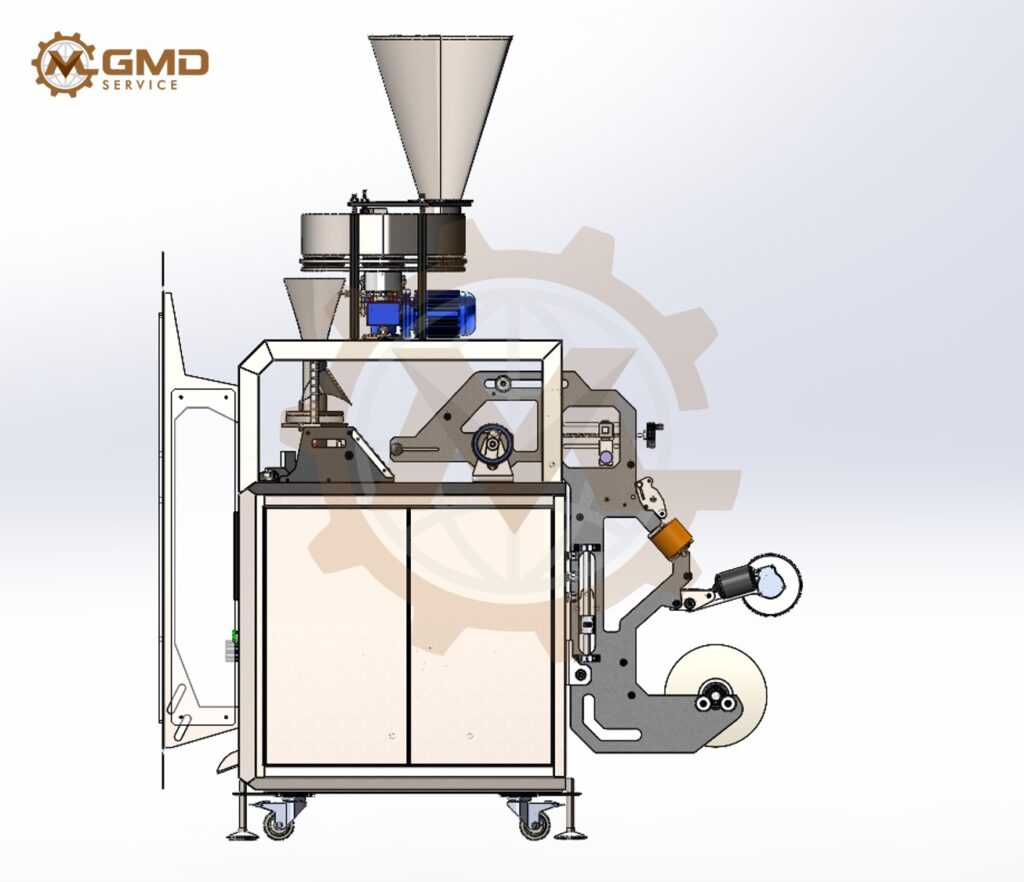
Vertical Form-Fill-Seal Packaging Machine
A vertical form-fill-seal project is relevant to clients considering product feeding, film handling, forming, sealing and the coordination of machine mechanisms.
A sealing press project illustrates the mechanical considerations around tooling, pressing motion, product location and access within a dedicated station.
Where factory space or machine positions require a change in product travel direction, a curved conveyor can be an important part of the overall line layout.
GMD provides custom mechanical design for machines, material handling systems and production equipment. Our team works extensively with Autodesk Inventor and prepares 3D assemblies, drawings and bills of materials for the agreed engineering handover.For packaging and consumer goods projects, we focus on how the complete mechanical sequence works: product arrival, location, processing, transfer, changeover and maintenance. We can collaborate remotely with a manufacturer, equipment builder or integrator and coordinate the design around their fabrication methods and existing equipment.Project confidentiality, ownership and deliverable requirements can be defined in the agreement before work begins.
What to Send Us for a Project Discussion
You can start with preliminary information. The most useful inputs are:
Product and package photos, drawings or samples.
Dimensions, weights and expected variation.
Packaging material and format.
Current process sequence and the operation you want to improve.
Target output or approximate cycle time.
Required product orientation and positioning.
Existing equipment models and interface dimensions.
Available machine footprint and factory layout.
Videos of the current operation.
Preferred components or fabrication methods.
Required CAD files, drawings and BOM format.
Applicable cleaning, safety or customer specifications.
These inputs help us identify the mechanical scope and the information still needed for a detailed proposal.
Frequently Asked Questions
Can GMD design a complete packaging machine?
We can discuss mechanical concept and detailed design for a complete custom machine. The final scope depends on the product, process requirements and which party is responsible for controls, fabrication, testing and installation.
Can you design equipment around an existing packaging line?
Yes. We can develop a new station or transfer mechanism around existing equipment when the machine interfaces, layout and operating sequence are available for review.
Can you modify a machine for a new product size?
Yes, subject to a review of the existing design and the new product requirements. The work may involve change parts, guides, fixtures, travel adjustments or a larger mechanism redesign.
Do you provide conveyor design for packaged products?
Yes. Conveyor and material handling design can be included as a standalone project or as part of an integrated packaging machine or production line.
Can you guarantee a target cycle rate or seal quality?
Performance targets require defined product and material specifications, component selection, controls and appropriate testing. We can design toward agreed requirements, while validation methods and acceptance criteria are established in the project scope.
Do you manufacture, install or commission the equipment?
GMD’s primary service here is mechanical engineering design and documentation. Manufacturing, installation, electrical controls, PLC programming and commissioning are assigned explicitly in each project agreement.
What CAD files can you deliver?
Depending on the scope, we can provide Autodesk Inventor files, STEP models, PDF drawings, 2D manufacturing drawings and a bill of materials. We agree on the required software version and file structure before handover.
Design Packaging Equipment Around Your Product
A useful packaging machine starts with a clear understanding of the product and every step it must pass through. Whether you need a feeding mechanism, a sealing station, a conveyor connection or a complete custom machine concept, GMD can help develop the mechanical design and technical documentation.
Tell us what you produce, how it is packaged and where the current process needs improvement.
We use cookies to make our website work, analyse traffic and improve your experience. You can accept all cookies, deny non-essential cookies or manage your preferences. You can change your choice at any time. For more information, please see our Cookie Policy.
Functional
Always active
The technical storage or access is strictly necessary for the legitimate purpose of enabling the use of a specific service explicitly requested by the subscriber or user, or for the sole purpose of carrying out the transmission of a communication over an electronic communications network.
Preferences
The technical storage or access is necessary for the legitimate purpose of storing preferences that are not requested by the subscriber or user.
Statistics
The technical storage or access that is used exclusively for statistical purposes.The technical storage or access that is used exclusively for anonymous statistical purposes. Without a subpoena, voluntary compliance on the part of your Internet Service Provider, or additional records from a third party, information stored or retrieved for this purpose alone cannot usually be used to identify you.
Marketing
The technical storage or access is required to create user profiles to send advertising, or to track the user on a website or across several websites for similar marketing purposes.