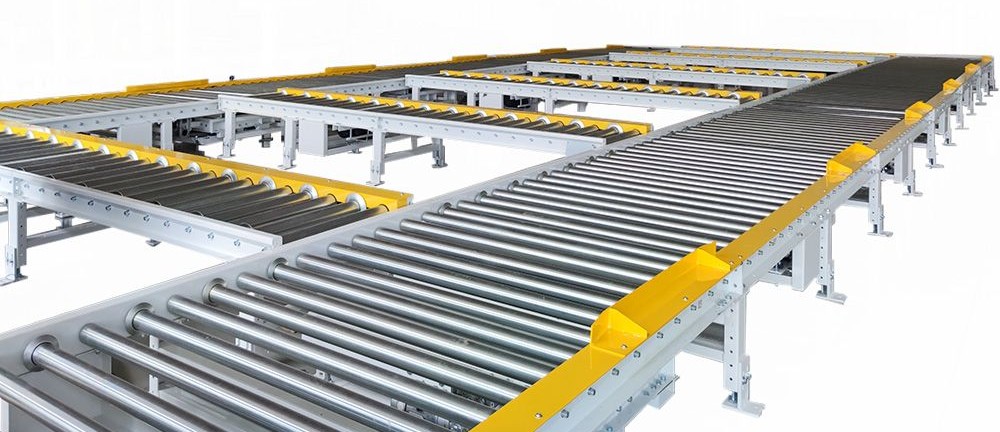
Custom Pallet Conveyor Engineering for Automated Material Handling
Moving a pallet reliably involves much more than placing rollers or chains beneath a load. The conveyor must support different pallet conditions, start under load, maintain alignment, transfer products without instability, accumulate when downstream equipment stops, and interact correctly with forklifts, palletizers, stretch wrappers, lifts, robots, AS/RS equipment, and safety systems.
GMD Services designs custom pallet conveyors and integrated pallet handling systems for OEMs, machine builders, system integrators, and industrial end users. Each design is developed from the product, process, duty cycle, environment, available footprint, manufacturing capability, and required control philosophy—not from a generic conveyor template.
Our engineering scope can cover layouts, conveyor-type selection, roller and chain calculations, motor and gearbox sizing, structural design, transfer modules, stops, centering devices, guarding, sensors, 3D CAD, manufacturing drawings, assembly drawings, BOMs, and technical documentation.
What Is a Pallet Conveyor System?
A pallet conveyor system is a powered or gravity-based material handling system designed to transport, accumulate, orient, elevate, or transfer loaded and empty pallets between process areas. Depending on the pallet construction and required movement, the conveying surface may use rollers, chains, belts, modular chain, slats, or a combination of technologies.
Pallet conveyor systems are commonly installed between production cells, palletizers, inspection stations, wrappers, labeling systems, storage areas, loading zones, and automated warehouses. A complete system may include straight conveyor sections, accumulation zones, chain transfers, turntables, pallet lifts, centering stations, stackers, dispensers, stops, sensors, and guarding.
Types of Pallet Conveyors We Design
Pallet Roller Conveyors
A pallet roller conveyor supports the pallet on multiple rollers and is well suited to rigid pallets with runners oriented perpendicular to the roller axes. Roller pitch is selected so the pallet remains adequately supported during normal travel and through transfers. Powered versions may use chain-driven live rollers (CDLR), line-shaft arrangements, individual zones, or motorized drive rollers.
Key design factors include pallet runner geometry, roller diameter and wall thickness, axle and bearing capacity, roller spacing, drive distribution, accumulation method, side guides, guarding, and maintenance access.
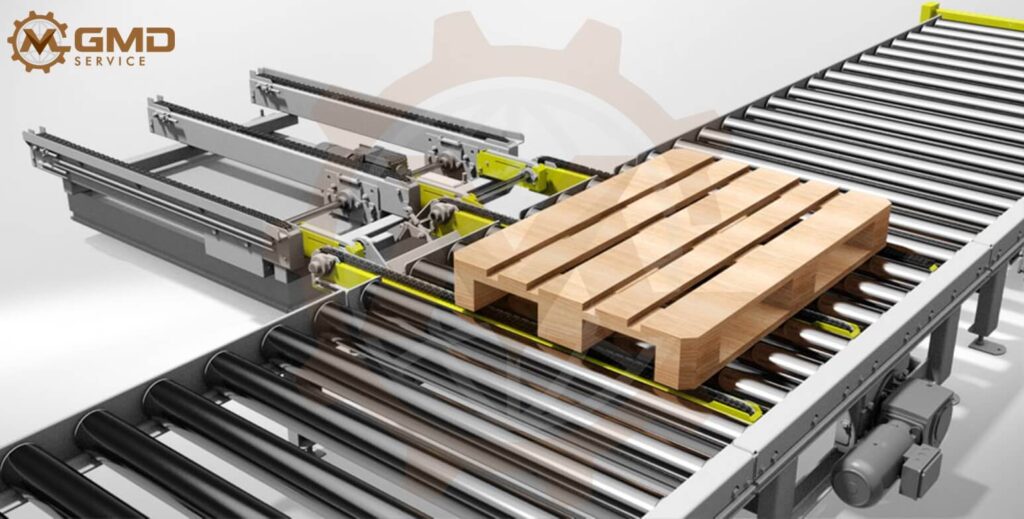
Pallet Roller Conveyors
Pallet Chain Conveyors
A pallet chain conveyor typically uses two or three parallel chain strands that support pallet runners in the direction of travel. Chain conveyors are often selected for heavy loads, dirty environments, elevated temperatures, or 90-degree transfers where the pallet must move in a direction that does not suit a roller conveyor.
The design must coordinate chain pitch, strand spacing, attachment or top-roller style, sprockets, shafts, wear strips, take-up travel, lubrication, chain support, return routing, and the interface with adjacent equipment.
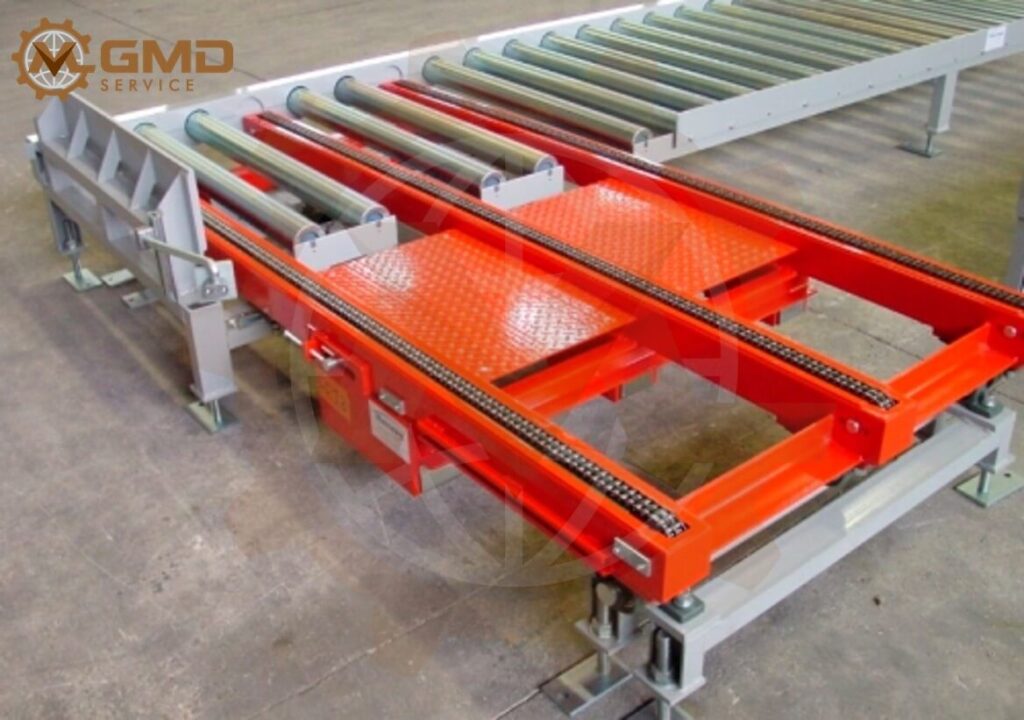
Pallet Chain Conveyors
Gravity Pallet Conveyors
A gravity pallet conveyor moves pallets by manual force or controlled gravity. It can reduce drive complexity in staging, loading, unloading, or FIFO pallet flow applications. However, pallet mass, slope, roller resistance, speed control, braking, end stops, operator effort, and uncontrolled rollback must be carefully evaluated. Gravity is not automatically the safest or simplest solution for every pallet.
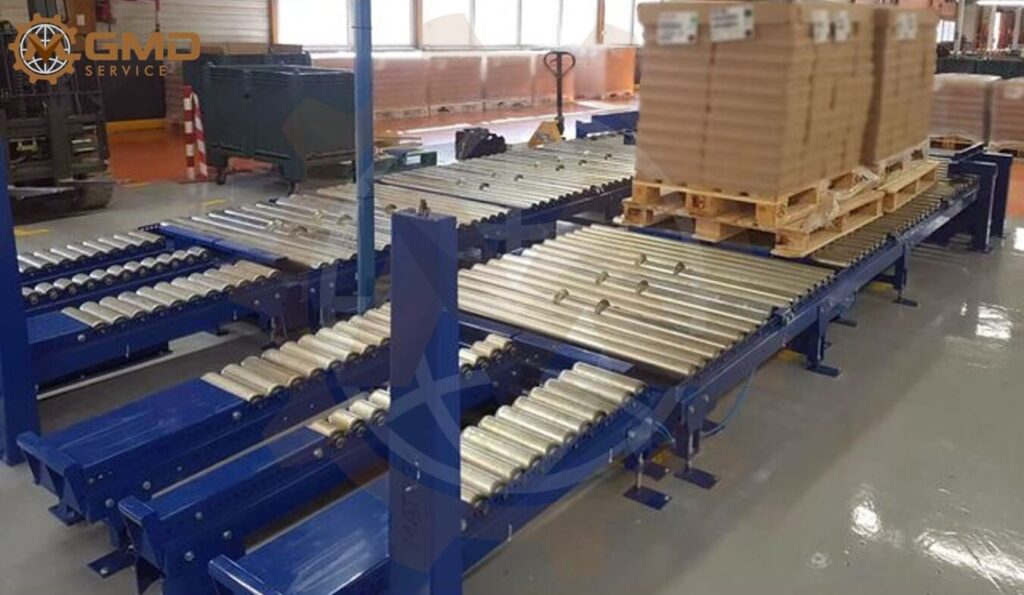
Gravity Pallet Conveyors
Accumulating Pallet Conveyors
An accumulating pallet conveyor creates controlled buffers between processes. Zero-pressure or low-pressure accumulation can prevent pallet contact and product damage, while contact accumulation may be acceptable for selected stable loads. Zone length, stop position, sensor placement, restart logic, available motor torque, and line pressure must be engineered as one system.
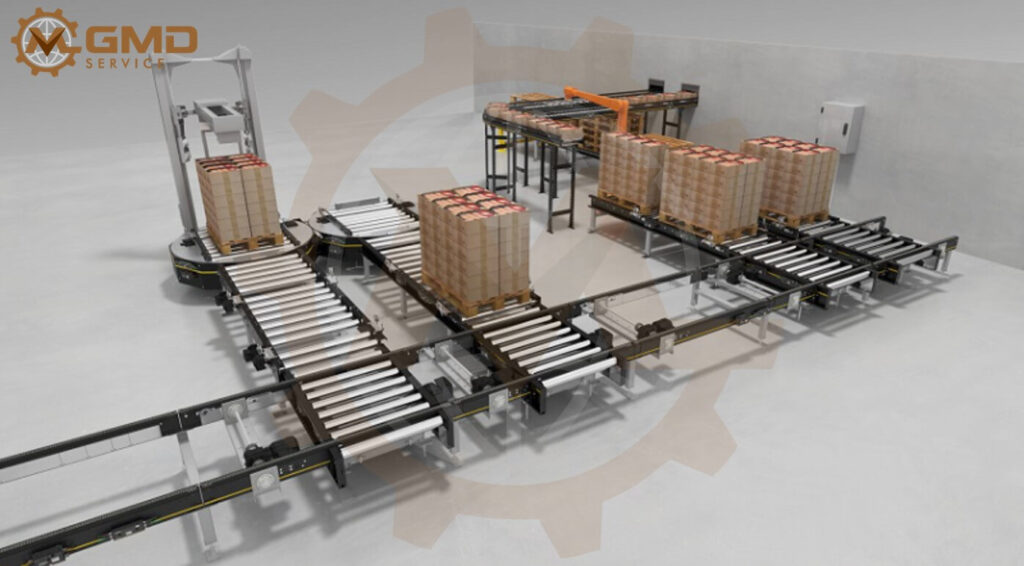
Accumulating Pallet Conveyors
Pallet Transfer Conveyors
A pallet transfer conveyor changes the pallet direction or moves it between parallel conveyor lines. Common solutions include pop-up chain transfers, lift-and-transfer modules, shuttle conveyors, cross transfers, and powered roller transfers. The transfer mechanism must support the pallet throughout the handover, control elevation accurately, and avoid interference with pallet boards or runners.
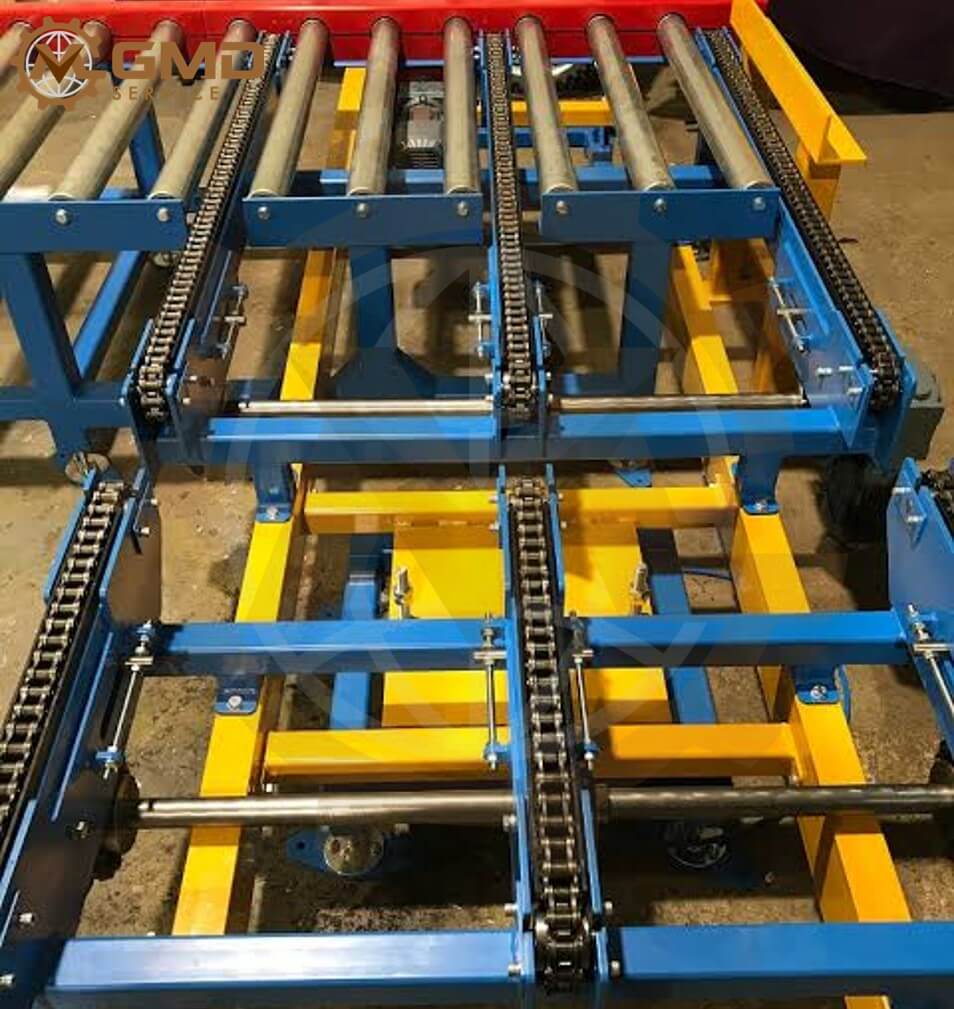
Pallet Transfer Conveyors
Pallet Conveyor Turntables
A pallet conveyor turntable rotates the pallet flow direction while preserving or changing pallet orientation. The design must consider rotating mass, center of gravity, stopping accuracy, cable routing, sensor positions, locking, bearing arrangement, drive torque, and guarding around the rotating platform.
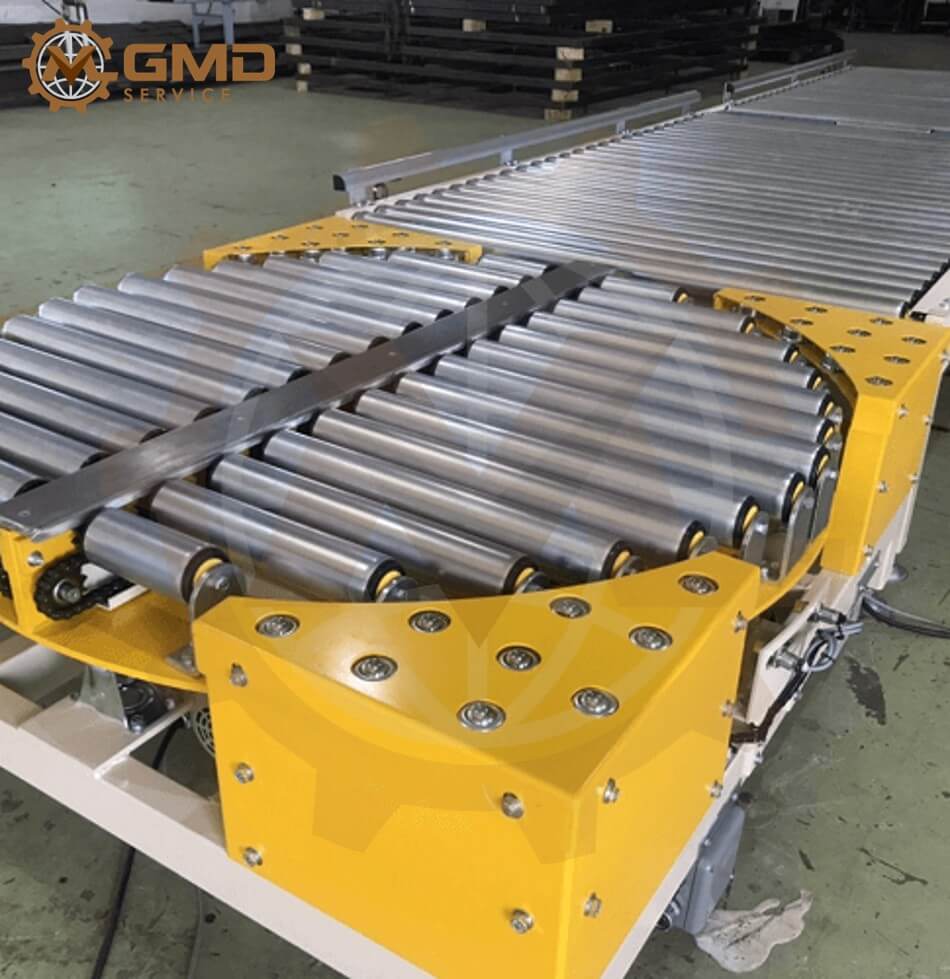
Pallet Conveyor Turntables
Vertical Pallet Conveyors and Pallet Lifts
A vertical pallet conveyor or pallet lift connects different floor levels or process elevations. These systems require special attention to load retention, anti-fall protection, controlled braking, interlocked access, overtravel protection, maintenance access, and interface logic. The complete installation must be assessed under the applicable machinery and lifting requirements.
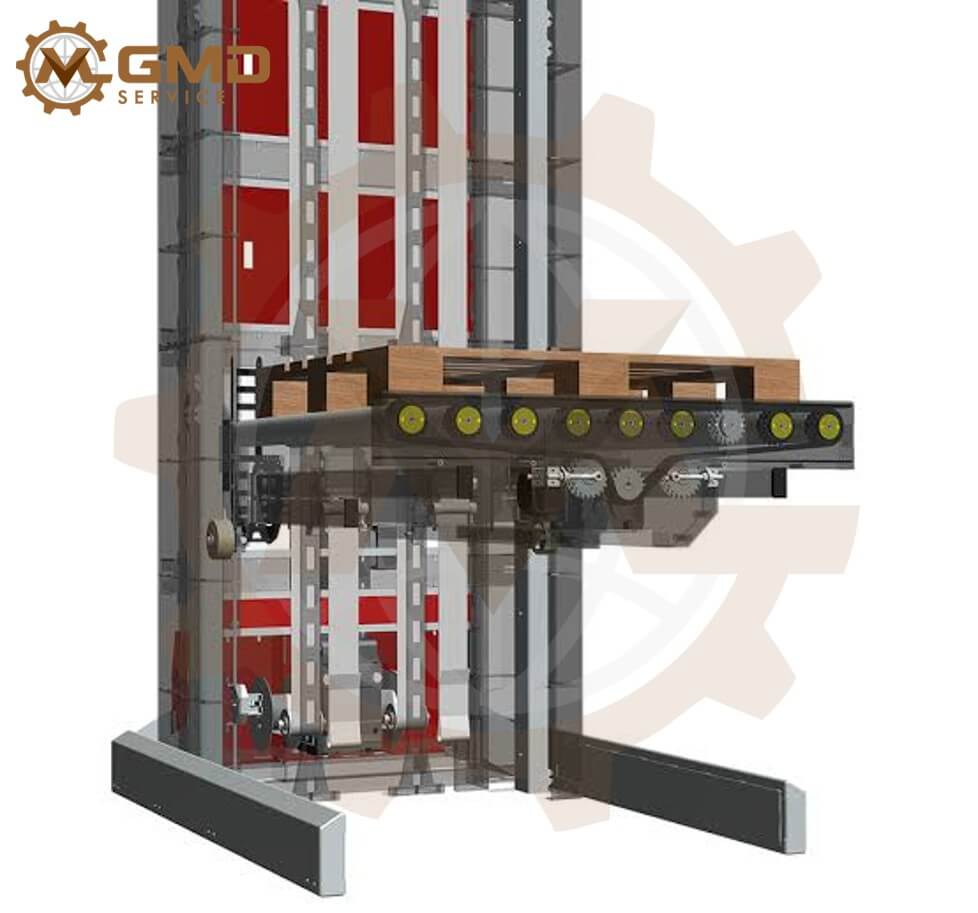
Vertical Pallet Conveyors and Pallet Lifts
Pallet Stackers, Dispensers, and Over-Under Systems
A pallet stacker or dispenser conveyor automatically stores and releases empty pallets. Over-under pallet conveyor systems return fixtures or workpiece pallets beneath the production level. These arrangements can save floor space but require reliable separation, stack guidance, lift synchronization, and fault recovery.
| Conveyor type |
Typical use |
Primary design focus |
| Pallet roller conveyor |
Rigid pallets and straight transport |
Pallet support, roller pitch, drive distribution, accumulation |
| Pallet chain conveyor |
Heavy loads and cross-direction movement |
Strand spacing, chain pull, wear strips, sprockets, tensioning |
| Gravity pallet conveyor |
Manual staging and pallet flow lanes |
Slope, speed control, braking, rollback and end stops |
| MDR / zoned conveyor |
Automated accumulation and energy control |
Zone length, motor capacity, controls and restart behavior |
| Transfer conveyor |
90-degree transfer between lines |
Lift stroke, support during handover, timing and interference |
| Turntable |
Direction and orientation changes |
Rotating inertia, positioning, cable routing and guarding |
| Vertical conveyor / lift |
Movement between elevations |
Load retention, braking, interlocks and structural loads |
Our Pallet Conveyor Design Process
1. Define the Pallet, Load, and Process
We collect pallet dimensions, runner orientation, deck-board geometry, material, condition, load mass, center of gravity, overhang, product stability, throughput, speed, cycle time, accumulation, operating hours, environment, interfaces, and available layout. Mixed pallet sizes and damaged or inconsistent pallets are identified early because they strongly influence conveyor selection.
2. Develop the System Layout and Operating Concept
We define conveyor elevations, traffic direction, buffer locations, forklift interfaces, operator access, transfer points, process stations, maintenance zones, and safety boundaries. Alternative layouts can be compared before detailed design begins.
3. Select the Conveying Technology
Roller, chain, gravity, MDR, belt, transfer, turntable, lift, or hybrid solutions are selected according to pallet support geometry and process requirements. The decision also considers noise, contamination, washdown, temperature, accumulation, service access, and lifecycle cost.
4. Perform Engineering Calculations
The chosen architecture is checked for conveyor resistance, acceleration, incline force, chain pull, roller loading, shaft and bearing reactions, motor power, gearbox torque, structural deflection, anchoring loads, and cycle time. Manufacturer ratings are applied using the actual duty profile and appropriate service factors.
5. Create the Detailed 3D CAD Model
We model the conveyor structure, rollers, chains, sprockets, shafts, bearings, drives, supports, stops, transfers, guides, guards, sensor brackets, cable provisions, and surrounding interfaces. The assembly is reviewed for collision, adjustment, fabrication, installation, lubrication, and component replacement.
6. Produce Fabrication-Ready Documentation
The deliverable package can include general arrangements, fabrication drawings, machining drawings, assembly drawings, purchased-component specifications, BOMs, and neutral CAD exports. Documentation is structured to support procurement, manufacturing, assembly, and design review.
7. Review, Revise, and Support Integration
We review the design with your team, resolve agreed comments, and update interface details before release. Optional support may include manufacturing clarification, installation details, design changes, and as-built revisions.
Key Pallet Conveyor Design Calculations
- Pallet and product load distribution, including concentrated loads, overhang, center of gravity, and dynamic effects.
- Roller capacity, roller pitch, axle loading, bearing life, shaft deflection, and contact stress.
- Chain pull from pallet load, chain mass, friction, guides, acceleration, incline, accumulation, and process forces.
- Motor power and gearbox torque for normal operation, loaded starting, stop-start duty, and required service factor.
- Drive shaft sizing for combined bending and torsion, keys or locking devices, fatigue, and acceptable deflection.
- Sprocket tooth count, chain engagement, chordal action, wear, alignment, and multi-strand synchronization.
- Frame strength, cross-member loading, global deflection, floor reactions, anchors, and support spacing.
- Transfer and turntable torque, lift forces, actuator sizing, acceleration, deceleration, and positional accuracy.
- Throughput, zone length, accumulation capacity, release timing, and recovery after blocked or starved conditions.
For critical structures, long spans, elevated conveyors, or unusually heavy pallets, finite element analysis can be added to evaluate stress, stiffness, local deformation, and load paths. FEA should support verified loading assumptions and conventional engineering calculations.
Conveyor Design Services: https://gmd.engineering/conveyor-design-services/
Designing for Real-World Pallet Variation
Pallets are rarely identical in service. Timber boards can warp or break, nails may protrude, plastic pallets can deflect, and loads may be off-center or overhanging. A robust conveyor design defines the acceptable pallet specification and addresses realistic variation without allowing rare worst-case conditions to silently control every component.
- Confirm whether pallets are two-way or four-way entry and identify the runner direction at every transfer.
- Check minimum and maximum pallet dimensions, deck-board gaps, bottom-board geometry, and damaged-pallet criteria.
- Define acceptable load overhang and center-of-gravity offset.
- Provide guides, entry funnels, centering, or pallet stops only where they improve repeatability without causing jams.
- Ensure transfer gaps do not allow boards, runners, straps, or wrapping film to catch.
Provide a rejection or manual recovery strategy for pallets that fall outside the agreed specification.
Automation, Sensors, and Line Integration
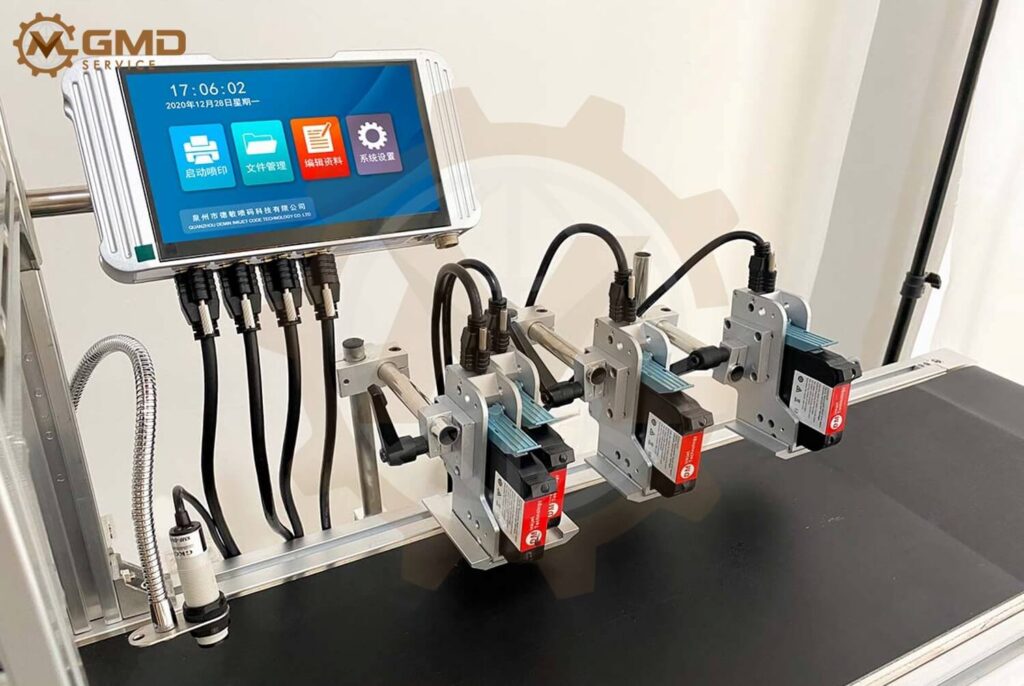
Automated pallet conveyor systems depend on reliable mechanical and control interfaces. We can provide mounting and layout provisions for photoelectric sensors, inductive sensors, RFID readers, barcode scanners, encoders, pallet stops, pneumatic or electric actuators, motor feedback, jam detection, safety devices, and communication interfaces.
The conveyor sequence should define normal flow, pallet arrival and release, blocked and starved states, accumulation limits, merge priority, destination routing, manual mode, restart logic, and recovery from a pallet that stops between zones. Mechanical design, electrical design, and PLC logic should use the same zone and interface definitions.
Automation, Sensors, and Line Integration
Pallet Conveyor Bottleneck Solutions
A bottleneck is not always caused by conveyor speed. It may result from insufficient accumulation, poorly timed releases, long transfer cycles, unstable pallets, sensor blind zones, slow lift movement, excessive merge conflicts, or downstream process variability. Increasing speed without diagnosing the real constraint can reduce reliability and increase product damage.
We can review layouts and cycle data to identify the limiting operation, then evaluate changes such as additional buffer zones, parallel lanes, revised routing, faster transfers, improved pallet detection, decoupled processes, or a different conveyor architecture.
Safety, Guarding, and Maintainability
Pallet conveyors create nip points, crushing zones, rotating shafts, chains, sprockets, stored energy, and interaction risks with forklifts, operators, robots, and adjacent machinery. Safety requirements depend on the installation country, complete machine risk assessment, customer standards, and system interfaces.
- Guard chains, sprockets, couplings, shafts, transfers, lift mechanisms, and accessible pinch or crush points.
- Coordinate emergency stops, safety gates, scanners, light curtains, and restart behavior with the complete line.
- Provide electrical, pneumatic, hydraulic, and stored-energy isolation for maintenance.
- Control pallet movement after power loss, especially on inclines, lifts, gravity lanes, and elevated sections.
- Keep lubrication, take-up adjustment, sensors, bearings, motors, and wear components accessible.
- Provide practical removal routes for rollers, shafts, chains, gearboxes, guards, and transfer modules.
- Separate forklift loading areas from personnel access where reasonably practicable.
Where Pallet Conveyor Systems Deliver the Most Value
- Automotive and electric-vehicle manufacturing.
- Packaging, palletizing, stretch wrapping, and labeling lines.
- Warehousing, distribution, and AS/RS interfaces.
- Food, beverage, pharmaceutical, and consumer goods production.
- Steel fabrication, machining, foundry, and heavy equipment manufacturing.
- Appliance, electronics, battery, and industrial assembly lines.
- Empty-pallet handling, pallet stackers, and dispensers.
- Robot cells, inspection stations, and end-of-line automation.
Pallet Conveyor CAD Models, Drawings, and BOMs
| Deliverable |
Typical content |
| Concept and layout |
System architecture, conveyor routing, interfaces, preliminary component strategy and risks |
| Engineering calculations |
Rollers, chains, drive sizing, shafts, bearings, frames, transfers, lifts and cycle-time assumptions |
| 3D CAD assembly |
Complete conveyor, drives, structures, guards, sensors, transfers and surrounding interfaces |
| 2D drawings |
General arrangement, fabrication, machining, assembly and installation drawings |
| Bill of materials |
Manufactured parts, standard components, motors, gearboxes, bearings, sensors and actuators |
| Exchange formats |
Inventor files, STEP, SAT, DXF, PDF, Excel or other agreed formats |
| Review support |
Design review, comment resolution, manufacturing clarification and controlled revisions |
Why Choose GMD Services for Pallet Conveyor Engineering?
- More than 10 years of mechanical machine-design experience applied to complete production systems.
- Designs developed for actual pallets, loads, process timing, interfaces, and fabrication capability.
- Practical focus on manufacturing, assembly, adjustment, maintenance, component replacement, and fault recovery.
- Autodesk Inventor as the primary design platform, with common neutral CAD and documentation formats available.
- Flexible support for a complete pallet conveyor system or as an extension of your internal engineering team.
- Clear definition of scope, assumptions, exclusions, interfaces, deliverables, and revision responsibilities.
- Remote engineering collaboration for machine builders, manufacturers, and integrators worldwide.
Information Required to Start a Pallet Conveyor Project
- Pallet drawings or dimensions, entry type, runner direction, construction, and condition criteria.
- Minimum and maximum load mass, dimensions, center of gravity, overhang, and product stability.
- Required throughput, line speed, cycle time, accumulation, routing, and operating schedule.
- Start and end elevations, footprint, transfer directions, process stations, and available layout.
- Forklift, robot, palletizer, wrapper, lift, AS/RS, and other equipment interfaces.
- Environmental conditions including dust, temperature, moisture, washdown, or corrosive exposure.
- Preferred components, utilities, controls philosophy, design standards, CAD formats, and project schedule.
Pallet Conveyor Selection and Design FAQs
What type of conveyor is best for pallets?
The best conveyor depends on pallet runner orientation, pallet condition, load, movement direction, accumulation, environment, and process interfaces. Roller conveyors suit many rigid pallets, while chain conveyors are often preferred for heavy loads or cross-direction transfer. A hybrid system frequently provides the best overall solution.
What is the difference between a pallet roller conveyor and a pallet chain conveyor?
A roller conveyor supports a pallet across multiple rollers and normally moves it perpendicular to the roller axes. A chain conveyor supports the pallet on parallel chain strands and usually moves it along the pallet runners. The pallet base geometry determines which surface provides stable support.
Can a pallet conveyor accumulate pallets automatically?
Yes. Accumulation can be achieved with zoned drives, pallet stops, clutches, or controlled conveyor sections. The accumulation method must account for pallet contact, load stability, available drive torque, line pressure, sensor positions, and restart sequence.
Can you design heavy-duty pallet conveyor systems?
Yes. Heavy-duty designs consider concentrated load, impact, loaded starting, roller or chain capacity, shaft strength, bearings, frame stiffness, transfers, anchoring, and maintenance access. The allowable pallet specification and duty cycle must be clearly defined.
Can pallet conveyors integrate with robots, palletizers, and AS/RS equipment?
Yes. Mechanical datum positions, pallet orientation, stopping accuracy, elevation, sensor logic, handshaking, safety zones, and fault recovery are coordinated with the connected equipment.
Do you provide pallet conveyor CAD models, drawings, and BOMs?
Yes. The agreed scope may include 3D CAD assemblies, general arrangement drawings, fabrication and machining drawings, assembly drawings, calculations, purchased-component specifications, BOMs, PDFs, and neutral CAD exports.
Can you redesign an existing pallet conveyor?
Yes. Typical objectives include increased throughput, new pallet sizes, improved accumulation, safer guarding, replacement of obsolete components, reduced chain or roller wear, improved maintenance access, or integration with new automation.
How long does a pallet conveyor design project take?
The schedule depends on system length, number of transfers, lifts or turntables, input quality, calculation depth, documentation level, and review cycles. Complete pallet data and timely interface decisions significantly reduce engineering lead time.
Design a Pallet Conveyor System Around Your Actual Operation
A dependable pallet conveyor is the result of coordinated mechanical design, drive calculations, pallet-interface analysis, automation planning, guarding, and maintenance strategy. If you are developing a new pallet handling line or upgrading an existing system, GMD Services can provide the engineering capacity and documentation needed to move from concept to fabrication.
Send us your pallet data, load information, layout, throughput, operating environment, and required deliverables. We will review the application and propose a practical scope for your Pallet Conveyor Design Services project.