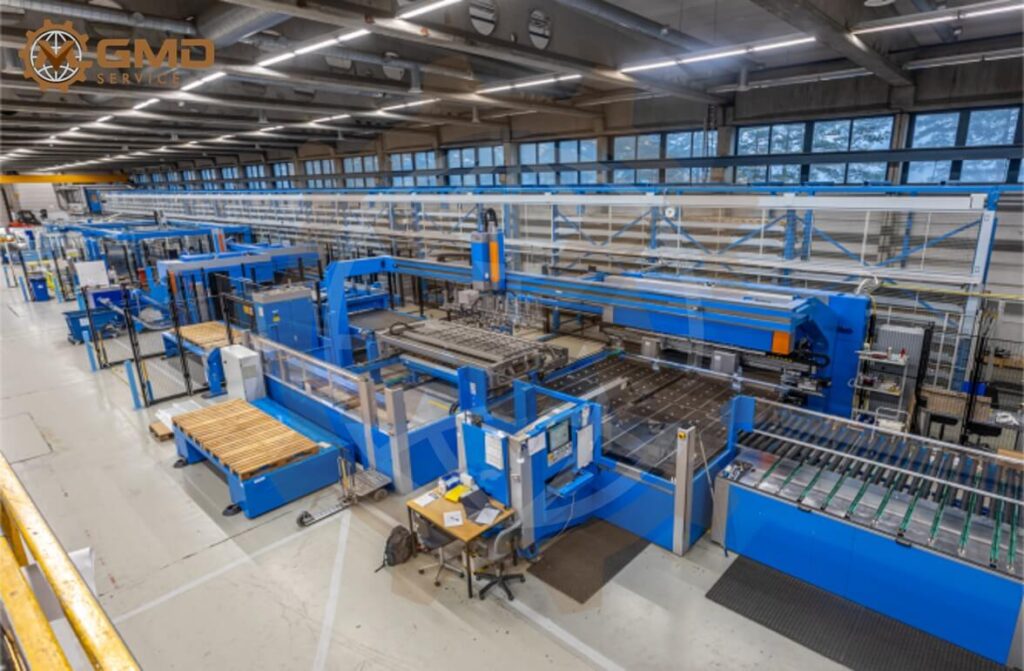
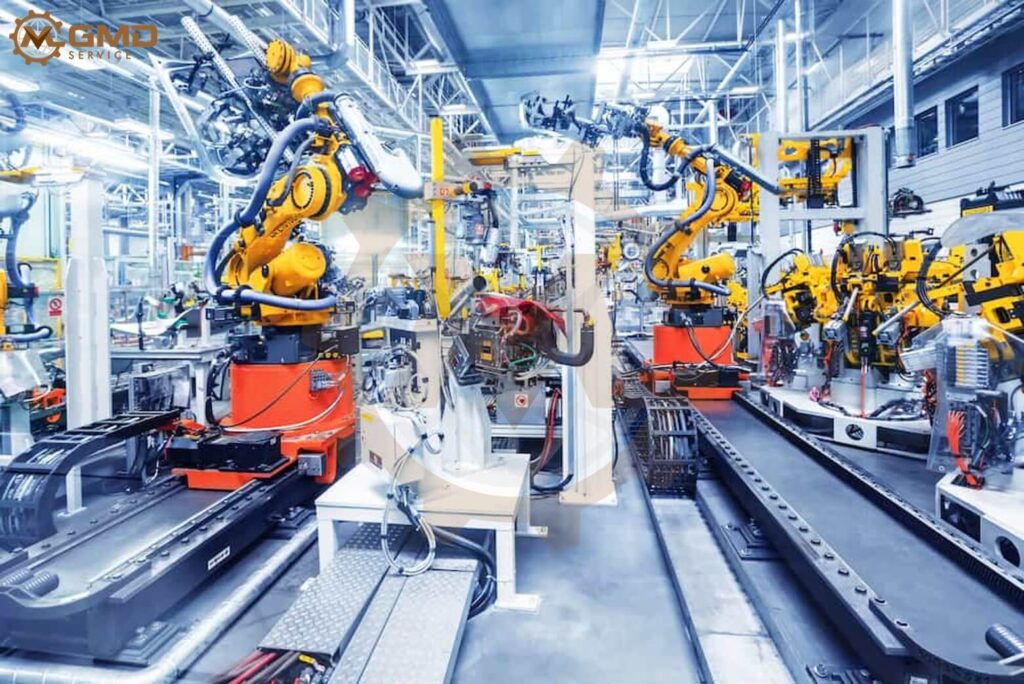
Production Line Design Services

Production Line Design Services

An efficient production line is the foundation of modern manufacturing. Whether producing automotive components, industrial machinery, consumer products, or automated equipment, a well-designed production line improves productivity, ensures consistent product quality, reduces operating costs, and creates a scalable manufacturing environment. Successful production line design requires more than connecting machines—it demands a complete engineering approach that optimizes material flow, workstation layout, automation, and every stage of the manufacturing process.

Start Project About Us

At Global Machine Design Services (GMD), we provide professional Production Line Design Services for manufacturers, OEMs, automation companies, and industrial equipment suppliers worldwide. Our engineering team designs complete production systems tailored to your products, production targets, available factory space, and long-term business objectives. From concept development and factory layout planning to 3D mechanical design, conveyor integration, automation-ready equipment, and detailed manufacturing documentation, we deliver practical, production-ready engineering solutions that help manufacturers build smarter factories.

On this page, you’ll learn about our complete production line design capabilities, engineering process, production line types, and the industries we serve. Whether you’re planning a new manufacturing facility, expanding an existing production line, or optimizing production efficiency, GMD provides the engineering expertise to transform your ideas into reliable, scalable, and high-performance manufacturing systems.

Design Smarter Production Lines. Build More Efficient Factories.

Whether you’re launching a new manufacturing facility, expanding production capacity, or upgrading an existing production process, the success of your investment depends on one critical factor—how well your production line is designed.

At Global Machine Design Services (GMD), we provide comprehensive Production Line Design Services that transform manufacturing concepts into practical, production-ready systems. Our engineering team helps manufacturers, OEMs, automation companies, and industrial equipment builders develop efficient production lines that maximize throughput, improve product quality, reduce operating costs, and support long-term business growth.

Unlike companies that only design individual machines, we engineer the entire production system. Every conveyor, workstation, lifting mechanism, robotic cell, transfer unit, inspection station, and assembly machine is designed to work together as one integrated manufacturing solution.

With over a decade of experience in mechanical engineering and industrial automation, our team has delivered production line designs for clients across Europe, North America, Australia, and other global markets. Every project is developed with manufacturing practicality in mind, ensuring that the final design is not only technically sound but also economical to build, easy to maintain, and flexible enough to support future expansion.

Whether you require a fully automated production line, a semi-automatic assembly system, or a customized manufacturing cell, GMD delivers engineering solutions that help you bring products to market faster while reducing project risks.

Engineering Better Production Lines Starts with Better System Design

Modern manufacturing is becoming increasingly complex. Customers demand higher quality, shorter lead times, greater product customization, and lower production costs. Meeting these expectations requires more than simply purchasing advanced machinery—it requires a production line designed as a complete engineering system.

An effective production line balances multiple engineering disciplines, including mechanical design, material handling, automation, ergonomics, safety, and production planning. Every component must operate in harmony to eliminate bottlenecks, minimize downtime, and maintain consistent product flow.

A poorly designed production line often results in:

  • Excessive material handling
  • Production bottlenecks
  • Low equipment utilization
  • Operator fatigue
  • Difficult maintenance
  • High operating costs
  • Long changeover times
  • Inconsistent product quality
  • Limited scalability
  • Frequent production interruptions

These issues can significantly reduce manufacturing efficiency and increase the total cost of ownership over the life of the production system.

Our role is to identify and eliminate these inefficiencies during the engineering phase—long before fabrication and installation begin.

What Is Production Line Design?

Production Line Design is the engineering process of planning, designing, and integrating all equipment, machines, workstations, material handling systems, and manufacturing processes into one coordinated production system.

Rather than focusing on individual pieces of equipment, production line design considers the entire manufacturing workflow—from the arrival of raw materials to the shipment of finished products.

A professionally engineered production line typically includes:

  • Manufacturing process planning
  • Factory layout design
  • Production line layout optimization
  • Material flow analysis
  • Conveyor system design
  • Assembly workstation design
  • Machine integration
  • Robotic automation
  • Pick-and-place systems
  • Vision inspection stations
  • Quality control checkpoints
  • Packaging systems
  • Palletizing solutions
  • Lifting and transfer systems
  • Safety guarding
  • Maintenance access planning
  • Utility routing
  • Future expansion capability

The objective is simple: create a production system where every operation adds value, every movement has a purpose, and every resource is used efficiently.

Why Production Line Design Is More Than Equipment Selection

Many manufacturers assume that building a production line simply involves purchasing several machines and connecting them with conveyors. In reality, this approach often leads to costly integration issues, inconsistent cycle times, and poor overall performance.

A successful production line begins with system-level engineering.

Instead of treating machines as independent assets, we design them as interconnected elements of a larger manufacturing ecosystem. This holistic approach ensures that every stage of production—from feeding and processing to assembly, inspection, packaging, and material handling—works together seamlessly.

By considering the complete production process from the beginning, manufacturers can avoid many common challenges, including:

  • Overloaded workstations
  • Underutilized equipment
  • Poor operator ergonomics
  • Material congestion
  • Long transportation distances
  • Unbalanced production capacity
  • Difficult equipment maintenance
  • Inefficient floor space utilization

The result is a production line that operates more efficiently, adapts more easily to future product changes, and delivers a stronger return on investment.

Our Engineering Philosophy

At GMD, we believe that successful production line design is built on three core principles:

Function Before Complexity

We focus on practical engineering solutions that solve manufacturing challenges without unnecessary mechanical complexity. Every component, mechanism, and subsystem should serve a clear purpose while remaining reliable and easy to maintain.

Design for Manufacturing (DFM)

Every production line we design is developed with manufacturing feasibility in mind. We consider fabrication methods, machining requirements, standard components, assembly processes, and maintenance accessibility from the earliest stages of the project.

This approach reduces manufacturing costs while improving production quality.

Design for Future Growth

Manufacturing requirements rarely remain static.

Production volumes increase, product variants evolve, and automation requirements expand over time.

Our production line designs are therefore created with flexibility in mind, allowing future modifications, equipment additions, and production upgrades without requiring a complete redesign of the entire system.

Custom Machine Design Services: https://gmd.engineering/custom-machine-design-services/

Benefits of Professional Production Line Design Services

Investing in professional engineering at the beginning of a project creates measurable long-term value throughout the life of the manufacturing system.

Our clients typically experience benefits such as:

Increased Production Throughput

Optimized machine sequencing and balanced workflows improve production capacity without unnecessary equipment investment.

Reduced Manufacturing Costs

Efficient layouts, simplified material handling, and optimized equipment utilization help reduce both capital and operating expenses.

Better Product Quality

Well-designed production systems improve process consistency, reduce variation, and minimize production defects.

Improved Operator Productivity

Ergonomic workstation design and optimized material presentation allow operators to work more efficiently while reducing physical strain.

Easier Maintenance

Maintenance accessibility is incorporated into every stage of the design process, reducing downtime and simplifying equipment servicing.

Lower Project Risk

By validating the production line digitally before manufacturing begins, potential design conflicts can be identified and resolved early, avoiding costly changes during installation.

Scalable Manufacturing

Modular production line architectures allow manufacturers to expand capacity, introduce new products, or integrate additional automation as business requirements evolve.

Our Services

Our Production Line Design Services

Every manufacturing business has unique products, production methods, quality requirements, and growth objectives. For this reason, we never rely on standardized production line layouts or preconfigured equipment. Every production line we design is engineered specifically around your manufacturing process, available floor space, production targets, and long-term business strategy.

Our Production Line Design Services cover the complete engineering lifecycle—from initial concept development to fully detailed manufacturing documentation—ensuring every component of your production system works together efficiently.

Whether you need a single automated assembly cell or a fully integrated manufacturing facility, our engineering team provides practical, production-ready solutions that balance performance, reliability, maintainability, and investment cost.

Complete Production Line Engineering

Designing a production line involves far more than arranging machines inside a factory. It requires understanding how products move, how operators interact with equipment, how materials are supplied, and how every process affects production efficiency.

Our engineering approach combines multiple disciplines into one coordinated system, including:

  • Mechanical engineering
  • Manufacturing engineering
  • Factory layout planning
  • Material handling engineering
  • Conveyor system design
  • Automation integration
  • Ergonomic workstation design
  • Equipment standardization
  • Maintenance planning
  • Safety engineering

By considering the entire production system rather than individual machines, we create manufacturing solutions that are easier to operate, simpler to maintain, and more adaptable to future production requirements.

Complete Production Line Engineering

Custom Production Line Design

No two factories are identical.

Even manufacturers producing similar products often have different production volumes, quality standards, available floor space, labor resources, and investment budgets.

For this reason, every production line we design is fully customized.

Our engineers evaluate:

  • Product dimensions
  • Product weight
  • Product variants
  • Production volume
  • Required takt time
  • Shift patterns
  • Operator availability
  • Factory constraints
  • Existing equipment
  • Expansion plans

These factors influence every engineering decision—from selecting conveyor types to determining workstation spacing, machine capacity, and automation level.

Rather than adapting your production process to standard equipment, we design equipment that supports your manufacturing goals.

Custom Production Line Design

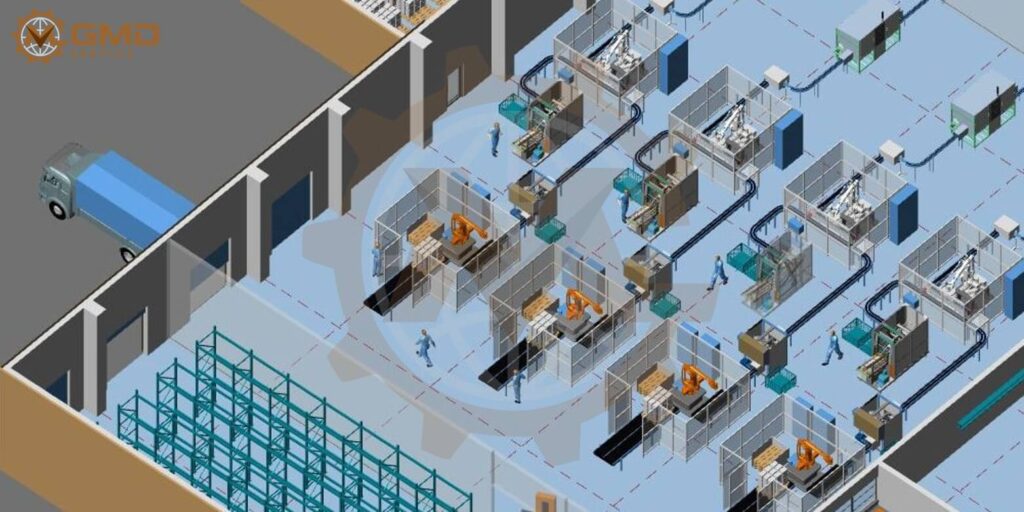
Production Line Layout Design

An efficient layout forms the foundation of every successful manufacturing facility.

Poor layouts increase unnecessary transportation, create bottlenecks, waste valuable floor space, and make future expansion difficult.

Our Production Line Layout Design service focuses on optimizing every aspect of factory workflow.

During layout development, we carefully evaluate:

Material Flow

Raw materials should move through the factory with as few unnecessary transfers as possible.

We analyze transportation distances, transfer points, storage locations, and equipment positioning to minimize wasted movement.

Operator Movement

Walking is one of the largest sources of hidden production inefficiency.

By strategically positioning tools, fixtures, components, and workstations, we reduce unnecessary operator movement while improving productivity and ergonomics.

Machine Accessibility

Equipment should be easy to operate and maintain.

Our layouts include sufficient clearance for:

  • Routine maintenance
  • Component replacement
  • Forklift access
  • Crane access
  • Inspection
  • Cleaning
  • Future upgrades

Future Expansion

Production requirements change.

Instead of designing a layout that only meets today’s production volume, we reserve logical expansion zones that allow additional machines, conveyors, or automation equipment to be integrated with minimal disruption.

Production Line Layout Design

Manufacturing Production Line Design

A production line should support stable manufacturing—not simply move products from one machine to another.

Our Manufacturing Production Line Design services focus on building complete manufacturing systems that deliver predictable output, repeatable quality, and efficient resource utilization.

Depending on your industry, production lines may include:

  • Assembly operations
  • Machining processes
  • Welding stations
  • Laser processing
  • Press operations
  • Inspection stations
  • Leak testing
  • Functional testing
  • Packaging systems
  • Labeling stations
  • Robotic palletizing

Every manufacturing stage is engineered to maintain balanced production flow and consistent cycle times throughout the entire line.

Manufacturing Production Line Design

Flexible Production Line Design

Today’s manufacturers rarely produce a single product forever.

Markets evolve, customer requirements change, and new product variants are introduced regularly.

Traditional production lines often struggle to adapt, resulting in expensive modifications and extended downtime.

Our Flexible Production Line Design philosophy addresses these challenges by incorporating adaptability into the engineering process from the beginning.

Features may include:

  • Modular machine stations
  • Adjustable fixtures
  • Servo-controlled positioning
  • Quick-change tooling
  • Configurable conveyors
  • Expandable production cells
  • Multi-product capability
  • Future robot integration
  • Software-ready automation architecture

This flexibility allows manufacturers to respond quickly to market changes while protecting long-term capital investment.

Flexible Production Line Design

Assembly Line Engineering

Assembly operations often represent the largest portion of manufacturing labor.

Even small improvements in workstation design and production sequencing can significantly increase productivity.

We design assembly lines for both manual and automated manufacturing environments.

Typical applications include:

Our assembly line designs focus on reducing assembly time while improving quality and operator comfort.

Assembly Line Engineering

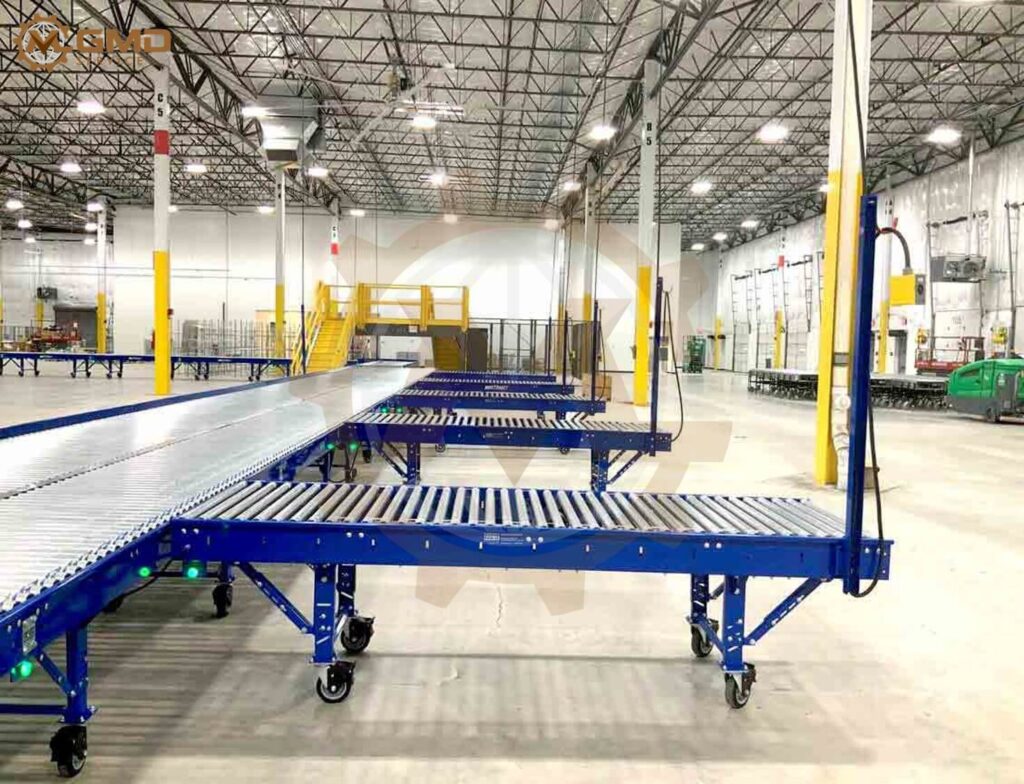
Conveyor System Integration

Conveyors connect every stage of a production line.

Choosing the wrong conveyor type can create production bottlenecks, increase maintenance costs, and reduce overall system reliability.

Our engineering team designs and integrates a wide range of conveyor technologies, including:

  • Belt conveyors
  • Roller conveyors
  • Chain conveyors
  • Timing belt conveyors
  • Pallet transfer systems
  • Modular plastic chain conveyors
  • Accumulation conveyors
  • Indexing conveyors
  • Vertical lift conveyors
  • Overhead conveyor systems

Each conveyor is selected based on product characteristics, production speed, load capacity, cleanliness requirements, and available factory space.

Rather than functioning as standalone equipment, every conveyor is engineered as an integrated component of the complete production system.

Conveyor System Integration

Automation Integration

Automation should solve manufacturing problems—not create unnecessary complexity.

Our engineers help manufacturers determine the appropriate level of automation based on production volume, labor availability, product variety, and return on investment.

Automation solutions may include:

  • Pick-and-place systems
  • Gantry automation
  • Robotic handling
  • Vision inspection
  • Barcode verification
  • Servo positioning
  • Automatic feeding systems
  • Lift-and-transfer mechanisms
  • Pneumatic handling
  • Automated sorting systems

Instead of replacing every manual operation, we identify the areas where automation delivers the greatest operational and financial benefit.

Automation Integration

Engineering Process

Production Line Design Process

Every successful production line follows a structured engineering methodology. Our design process minimizes technical risks while ensuring that every manufacturing requirement is addressed before fabrication begins.

1. Requirement Analysis

The project begins with a detailed review of your manufacturing objectives.

We collect information including:

  • Product specifications
  • Production targets
  • Cycle time requirements
  • Factory dimensions
  • Utility availability
  • Existing equipment
  • Budget limitations
  • Future expansion plans

This information forms the engineering foundation for the entire project.

2. Concept Development

Our engineers develop one or more conceptual solutions that define the overall production strategy.

Typical concept deliverables include:

  • Process flow diagrams
  • Preliminary layouts
  • Equipment concepts
  • Material flow paths
  • Automation strategies
  • Capacity estimates

This stage allows key decisions to be evaluated before detailed engineering begins.

3. Detailed 3D Engineering

Once the concept is approved, our team develops a complete 3D digital model of the production line using professional CAD software.

The model includes:

  • Machine assemblies
  • Structural frames
  • Conveyor systems
  • Workstations
  • Safety guarding
  • Maintenance access
  • Utility routing
  • Installation interfaces

Creating a virtual production line enables clients to review the entire system before any manufacturing work begins.

4. Engineering Optimization

Detailed engineering is followed by a comprehensive design review to improve overall system performance.

We evaluate:

  • Cycle time balance
  • Material flow efficiency
  • Operator ergonomics
  • Equipment accessibility
  • Manufacturing feasibility
  • Maintenance requirements
  • Standard component usage
  • Cost optimization

This iterative process ensures that the final production line is both technically robust and economically efficient.

5. Manufacturing Documentation

The final stage involves preparing complete production-ready documentation for fabrication, assembly, and installation.

Typical deliverables include:

  • 3D CAD models
  • Assembly drawings
  • Manufacturing drawings
  • Bill of Materials (BOM)
  • Purchased parts lists
  • Exploded views
  • Installation drawings
  • PDF documentation
  • STEP files

Our documentation package provides manufacturers and machine builders with everything needed to confidently move from design to production.

Engineering Capabilities

Types of Production Lines We Design

At Global Machine Design Services (GMD), we design production lines for a wide range of manufacturing industries, from standalone assembly cells to fully automated production facilities. Every system is engineered around the client’s product, production volume, available floor space, automation strategy, and long-term business objectives.

Rather than offering standardized solutions, we develop custom production lines that align with your manufacturing process, ensuring maximum efficiency, reliability, and scalability.

Automated Production Lines

For manufacturers with high production volumes, labor shortages, or stringent quality requirements, fully automated production lines provide significant operational advantages.

Our automated production line designs integrate mechanical systems, industrial automation, robotics, and intelligent control systems into one synchronized manufacturing process.

Typical automated production lines include:

  • Automotive component manufacturing
  • Consumer electronics assembly
  • Battery production
  • Food packaging
  • Pharmaceutical packaging
  • Metal fabrication
  • Plastic product manufacturing
  • Warehouse automation systems

Automated production lines can incorporate:

  • Industrial robots
  • Servo-driven positioning systems
  • Automated feeding systems
  • Conveyor networks
  • Vision inspection systems
  • Barcode and RFID identification
  • Pick-and-place mechanisms
  • Palletizing robots
  • Automatic packaging stations
  • Smart sensors and monitoring devices

The objective is to improve throughput while reducing human intervention, production variation, and operating costs.

Automated Production Lines

Semi-Automated Production Lines

Not every manufacturing process benefits from full automation.

For many industries, a semi-automated production line offers the best balance between investment cost and productivity.

Our engineers identify repetitive, labor-intensive operations where automation provides the highest return while allowing operators to perform tasks requiring flexibility or manual precision.

Semi-automated production lines commonly include:

  • Manual assembly stations
  • Automatic screw driving
  • Pneumatic pressing
  • Automatic material transfer
  • Vision-assisted inspection
  • Barcode verification
  • Robotic palletizing
  • Conveyor-based product movement

This hybrid approach often delivers substantial productivity improvements without the capital investment required for full automation.

Semi-Automated Production Lines

Assembly Production Lines

Assembly operations are among the most common applications for production line engineering.

Whether assembling industrial equipment, automotive components, medical devices, or consumer products, every workstation must support consistent quality while maintaining target cycle times.

Our assembly line designs focus on:

  • Balanced workloads
  • Efficient operator movement
  • Ergonomic workstation design
  • Standardized work sequences
  • Component presentation
  • Automatic fastening systems
  • Quality inspection integration
  • Flexible product changeovers

Well-designed assembly lines reduce production variability while increasing overall manufacturing efficiency.

Assembly Production Lines

Manufacturing Lines for Continuous Production

Continuous manufacturing environments demand uninterrupted material flow and consistent production rates.

We design production lines capable of supporting continuous operations with features such as:

  • Buffer accumulation zones
  • Automatic transfer systems
  • Intelligent conveyor control
  • Redundant material supply
  • Continuous product tracking
  • Automatic reject stations
  • Equipment synchronization

By maintaining smooth product flow throughout the system, manufacturers can maximize equipment utilization while minimizing production interruptions.

Manufacturing Lines for Continuous Production

Flexible Manufacturing Systems

Modern manufacturers rarely produce only one product throughout the life of a production line.

New product variants, changing customer demands, and evolving production requirements require manufacturing systems that can adapt without extensive redesign.

Our flexible manufacturing systems are designed around modular engineering principles, allowing future expansion with minimal disruption.

Typical flexibility features include:

  • Adjustable tooling
  • Servo-controlled positioning
  • Modular conveyors
  • Configurable workstations
  • Replaceable fixtures
  • Software-configurable production recipes
  • Expandable machine modules
  • Future robot integration

This engineering approach protects long-term investment while reducing the cost of future production changes.

Flexible Manufacturing Systems

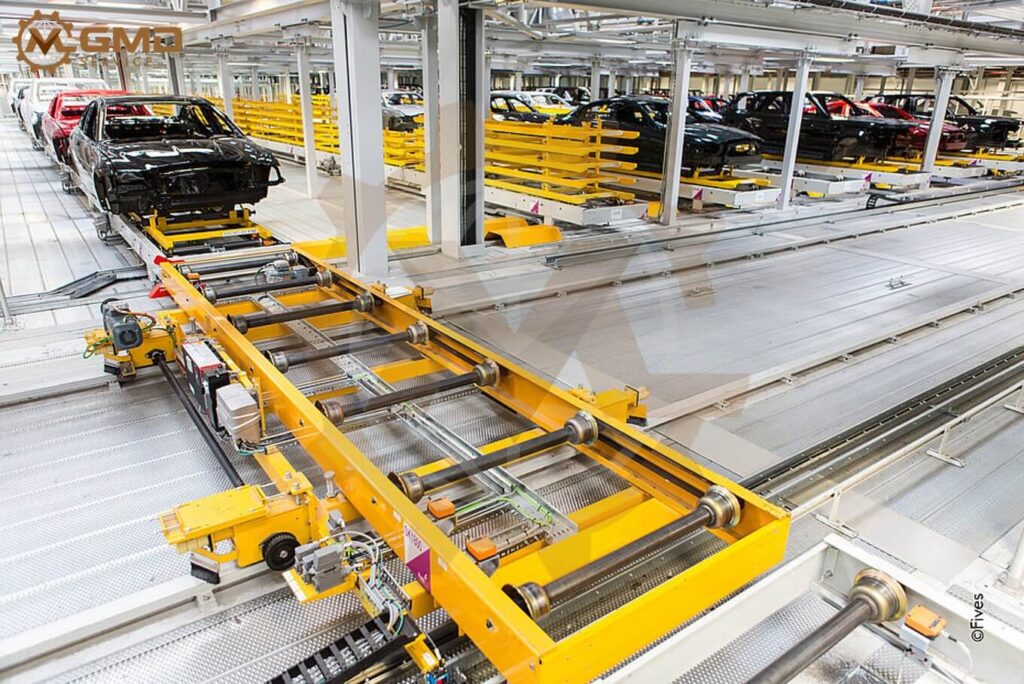
Material Handling System Design

Efficient material handling is fundamental to every successful production line.

Moving products from one operation to another may appear straightforward, but poor material handling often creates bottlenecks, excessive labor requirements, and unnecessary production delays.

Our engineers design integrated material handling systems that support continuous product flow while minimizing transportation distances and manual handling.

Solutions include:

  • Conveyor systems
  • Lift stations
  • Transfer mechanisms
  • Turntables
  • Pallet handling systems
  • AGV interface stations
  • Robot loading systems
  • Product buffering
  • Accumulation conveyors
  • Vertical transportation systems

Every material handling solution is engineered to match production capacity while maintaining smooth synchronization with the rest of the manufacturing process.

Material Handling System Design

Conveyor System Engineering

Conveyors form the backbone of most modern production lines.

Selecting the correct conveyor technology directly affects production efficiency, maintenance requirements, product quality, and future scalability.

Our engineers design complete conveyor systems, including:

Belt Conveyors

Suitable for lightweight products, packaging applications, food processing, and continuous product transportation.

Roller Conveyors

Ideal for cartons, pallets, heavy industrial products, and gravity-assisted transportation.

Chain Conveyors

Designed for heavy-duty manufacturing environments requiring high load capacities and robust operation.

Timing Belt Conveyors

Provide accurate positioning for automated assembly, robotic handling, and precision manufacturing.

Pallet Transfer Systems

Widely used in automated assembly lines where products require controlled positioning between manufacturing stations.

Vertical Conveyor Systems

Transport products efficiently between multiple production levels while minimizing factory floor space.

Conveyor System Engineering

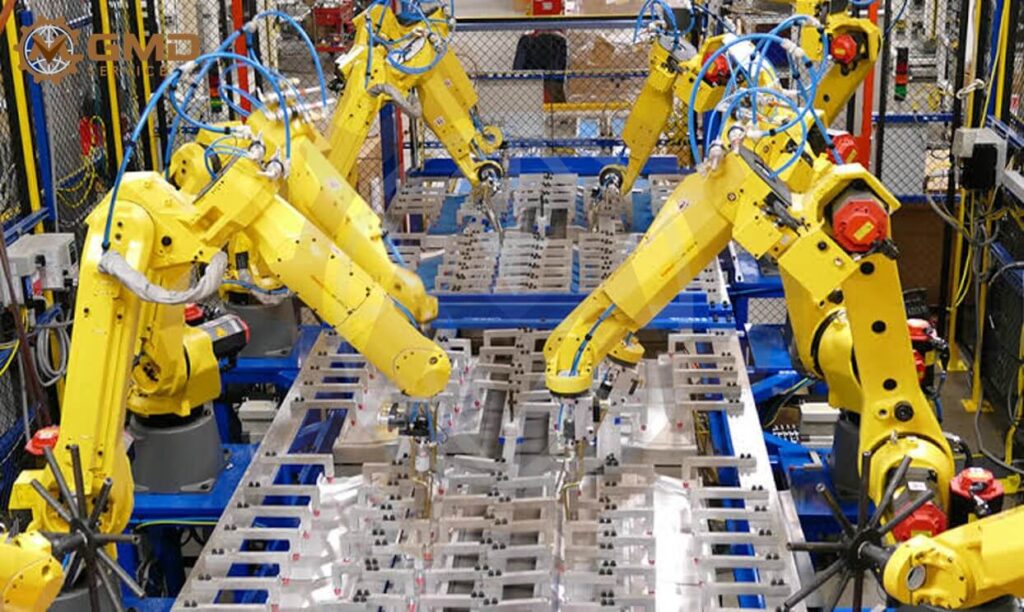
Robotic Cell Integration

Industrial robots have become an essential component of modern manufacturing.

Rather than designing robotic cells independently, we integrate robots directly into the production line architecture.

Applications include:

  • Pick and place
  • Machine tending
  • Welding
  • Palletizing
  • Packaging
  • Material loading
  • Inspection
  • Product sorting
  • Adhesive dispensing
  • Screw fastening

Our engineering team ensures robots operate seamlessly with conveyors, fixtures, sensors, safety systems, and production controls.

Robotic Cell Integration

Ergonomic Workstation Design

Production efficiency depends not only on machines but also on the people operating them.

Poor workstation design leads to operator fatigue, repetitive strain injuries, inconsistent production quality, and lower productivity.

Our workstation engineering considers:

  • Operator reach zones
  • Comfortable working heights
  • Tool placement
  • Component accessibility
  • Lighting
  • Product presentation
  • Walking distances
  • Lift assistance
  • Safety
  • Ease of maintenance

Applying ergonomic principles improves both production performance and employee well-being.

Ergonomic Workstation Design

Cycle Time Optimization

A production line can only perform as efficiently as its slowest operation.

Our engineers analyze every manufacturing step to identify opportunities for reducing cycle time while maintaining product quality.

Optimization activities include:

  • Eliminating unnecessary movements
  • Balancing workstation workloads
  • Reducing idle machine time
  • Optimizing conveyor speeds
  • Improving product presentation
  • Standardizing assembly sequences
  • Automating repetitive operations

Small improvements at individual stations often produce significant gains across the entire production line.

Cycle Time Optimization

Capacity Planning

Production line design must support both current demand and future business growth.

Our capacity planning process evaluates:

  • Daily production targets
  • Annual production forecasts
  • Product mix
  • Machine utilization
  • Buffer requirements
  • Planned maintenance
  • Shift patterns
  • Future expansion

Using these inputs, we determine the equipment capacity, conveyor sizing, workstation quantity, and production balancing required to meet long-term manufacturing objectives.

Digital Engineering & Virtual Validation

Modern production lines should be validated digitally before manufacturing begins.

Virtual engineering reduces project risks, shortens commissioning time, and minimizes costly modifications during installation.

Our digital engineering process includes:

  • Complete 3D CAD modeling
  • Equipment interference checking
  • Factory layout verification
  • Maintenance accessibility review
  • Assembly sequence validation
  • Space utilization analysis
  • Production line visualization

By reviewing the entire production system in a virtual environment, stakeholders gain confidence that the design will perform as intended before fabrication starts.

Digital Engineering Virtual Validation
Digital Engineering & Virtual Validation

Design for Manufacturing (DFM)

Every production line we design follows Design for Manufacturing (DFM) principles.

Rather than focusing solely on performance, we engineer equipment that can be manufactured efficiently, assembled reliably, and maintained economically.

DFM considerations include:

  • Standardized components
  • Simplified fabrication
  • Machining efficiency
  • Weld accessibility
  • Fastener standardization
  • Reduced part count
  • Ease of assembly
  • Serviceability

These engineering decisions reduce manufacturing costs while improving long-term reliability.

Design for Manufacturing (DFM)

Design for Assembly (DFA)

Production equipment should be straightforward to assemble, both during manufacturing and future maintenance.

Our Design for Assembly approach focuses on:

  • Modular machine construction
  • Standard fastening methods
  • Accessible connection points
  • Simplified installation
  • Reduced assembly time
  • Improved maintenance access
  • Faster component replacement

A well-designed machine not only performs better but also reduces installation time and future service costs.

Design for Assembly (DFA)

Engineering Analysis and Simulation

Engineering decisions should be supported by analysis rather than assumptions.

Where required, we perform engineering validation using advanced simulation tools to verify that production equipment meets functional and structural requirements before manufacturing begins.

Our engineering capabilities include:

  • Structural strength analysis (FEA)
  • Frame deflection evaluation
  • Motion simulation
  • Mechanism validation
  • Load distribution analysis
  • Safety factor assessment
  • Dynamic movement verification

By validating critical components digitally, manufacturers reduce technical risks while increasing confidence in the final production line design.

Engineering Analysis and Simulation

Integrated Engineering for Complete Manufacturing Solutions

One of the biggest challenges in large manufacturing projects is coordinating multiple engineering disciplines.

At GMD, we bring together mechanical design, conveyor engineering, factory layout planning, automation integration, and manufacturing documentation into one unified workflow.

This integrated approach provides several advantages:

  • Faster project execution
  • Improved communication
  • Better system compatibility
  • Fewer design conflicts
  • Simplified project management
  • Lower engineering costs
  • Higher manufacturing quality
  • Easier future expansion

Instead of managing multiple suppliers for individual machines, clients benefit from a coordinated engineering solution where every subsystem is designed to operate as part of one optimized production line.

Integrated Engineering for Complete Manufacturing Solutions

Industries & Technologies

Industries We Serve

Every industry has unique manufacturing challenges. Product dimensions, production volumes, quality standards, regulatory requirements, and automation levels vary significantly from one sector to another.

Rather than applying a one-size-fits-all approach, we engineer production lines around the specific operational requirements of each industry.

Automotive Manufacturing

Automotive production demands high precision, repeatability, and continuous operation.

We support manufacturers and Tier 1–Tier 3 suppliers with production line designs for:

  • Component assembly
  • Chassis subassemblies
  • Battery modules
  • Electric vehicle components
  • Interior assemblies
  • Metal fabrication
  • Welding cells
  • Inspection stations
  • Conveyor systems
  • Material handling solutions

Our designs prioritize high throughput, minimal downtime, and efficient maintenance to support demanding automotive production schedules.

Warehouse Automation & Intralogistics

As warehouses become increasingly automated, efficient material flow has become a critical competitive advantage.

We design production and handling systems that integrate seamlessly with warehouse operations, including:

  • Conveyor networks
  • Vertical lifting systems
  • Automated storage interfaces
  • Sorting systems
  • Picking stations
  • Transfer modules
  • Buffer systems
  • Packaging lines
  • AGV interfaces

Our engineering solutions help warehouses improve order fulfillment speed while reducing manual handling and operational costs.

Consumer Products Manufacturing

Manufacturers of consumer goods require production systems capable of handling high product volumes while maintaining consistent quality.

We design production lines for:

  • Household products
  • Personal care products
  • Consumer electronics
  • Plastic products
  • Small appliances
  • Industrial accessories

Our designs emphasize production flexibility, allowing manufacturers to introduce new product variants with minimal disruption.

Food & Beverage Equipment

Although we do not provide food process engineering, we design the mechanical equipment and production systems used by food and beverage manufacturers.

Applications include:

  • Packaging lines
  • Product transfer systems
  • Conveyor systems
  • Inspection stations
  • Case packing
  • Palletizing
  • Material handling equipment

Equipment layouts prioritize hygiene, cleanability, maintenance accessibility, and production efficiency.

Medical & Pharmaceutical Equipment

Medical manufacturing demands precision, repeatability, and strict process control.

Our engineering services support equipment manufacturers by designing:

  • Assembly systems
  • Inspection stations
  • Precision fixtures
  • Packaging equipment
  • Material transfer systems
  • Automated handling equipment

Every project is developed with reliability, cleanliness, and manufacturing consistency in mind.

Metal Fabrication & Heavy Industry

Heavy industrial environments require equipment capable of handling substantial loads while operating reliably under demanding conditions.

Typical applications include:

  • Steel fabrication
  • Sheet metal processing
  • Structural welding
  • Laser cutting automation
  • Heavy component assembly
  • Material transportation
  • Industrial lifting systems

Our mechanical designs focus on structural integrity, durability, and long service life.

Engineering Software & Design Technologies

Professional engineering requires professional tools.

Our team utilizes industry-leading CAD, simulation, and engineering software to ensure every production line is designed accurately and efficiently.

Autodesk Inventor

Our primary design platform for:

  • Complete machine design
  • Production line assemblies
  • Mechanical components
  • Structural frames
  • Manufacturing documentation
  • Assembly drawings
  • BOM generation
  • Design automation using iLogic

Autodesk Inventor enables us to develop detailed production-ready models while maintaining excellent documentation quality.

AutoCAD

Used for:

  • Factory layouts
  • Equipment layouts
  • Installation drawings
  • Utility planning
  • Construction coordination
  • 2D manufacturing documentation

Engineering Simulation

Where required, engineering validation is performed through:

  • Finite Element Analysis (FEA)
  • Motion Simulation
  • Mechanism analysis
  • Structural verification
  • Deflection analysis
  • Load calculations

Simulation reduces engineering uncertainty before fabrication begins.

Manufacturing Documentation

Every project includes comprehensive documentation suitable for fabrication and assembly.

Deliverables may include:

  • 3D CAD models
  • STEP files
  • DWG drawings
  • DXF files
  • PDF drawing packages
  • Assembly instructions
  • Fabrication drawings
  • Bill of Materials (BOM)
  • Purchased parts lists

Working With GMD

Deliverables

The exact deliverables depend on project scope, but a typical Production Line Design package includes:

Concept Engineering

  • Production concept
  • Manufacturing process flow
  • Layout proposal
  • Equipment arrangement
  • Capacity estimation
  • Initial engineering review

Mechanical Design

  • Complete 3D production line
  • Machine assemblies
  • Conveyor systems
  • Lifting mechanisms
  • Structural frames
  • Workstations
  • Safety guarding

Manufacturing Documentation

  • Detailed fabrication drawings
  • Assembly drawings
  • Exploded views
  • Installation drawings
  • Mechanical BOM
  • Purchased parts lists
  • PDF documentation

Engineering Support

Depending on the project scope, we can also provide:

  • Design reviews
  • Manufacturing support
  • Design modifications
  • Engineering consultation
  • Production line optimization
  • Existing equipment integration

Why Choose Global Machine Design Services?

Choosing the right engineering partner is just as important as choosing the right manufacturing technology.

At GMD, we focus on delivering engineering solutions that are practical, manufacturable, and aligned with your long-term business goals.

Engineering Experience That Delivers Practical Results

Our team has more than ten years of experience designing industrial machinery, automated equipment, conveyor systems, lifting mechanisms, and complete production lines for clients worldwide.

Rather than producing theoretical concepts, we develop solutions intended for real manufacturing environments.

Custom Engineering for Every Project

No two production lines are identical.

Every project begins with understanding your product, manufacturing process, production targets, and business objectives before any engineering work begins.

This allows us to deliver solutions tailored specifically to your operation rather than adapting generic machine concepts.

Design for Manufacturing

Beautiful CAD models alone do not create successful production systems.

Every design decision considers:

  • Manufacturing cost
  • Ease of fabrication
  • Assembly efficiency
  • Maintenance accessibility
  • Spare part availability
  • Long-term reliability

This approach helps clients reduce manufacturing costs while improving equipment performance.

Global Remote Engineering Support

Our engineering team collaborates with manufacturers worldwide through a structured remote design process.

Using secure online collaboration tools, cloud-based CAD reviews, and regular engineering meetings, we provide the same level of support as an in-house engineering department—without the overhead of maintaining additional internal resources.

Whether your business is located in Europe, North America, Australia, or elsewhere, we can integrate seamlessly into your development workflow.

Flexible Project Engagement

Every client has different engineering needs.

We can support projects ranging from:

  • Concept development
  • Individual machine design
  • Conveyor engineering
  • Factory layout planning
  • Production line optimization
  • Reverse engineering
  • Engineering documentation
  • Long-term engineering outsourcing

Our flexible engagement model allows manufacturers to access experienced engineering resources exactly when they need them.

Quality Assurance Throughout Every Project

Quality is built into every stage of our engineering process.

Before any design package is delivered, we perform comprehensive internal reviews covering:

  • Assembly verification
  • Component interference
  • Manufacturing feasibility
  • Bill of Materials accuracy
  • Drawing consistency
  • Design standards compliance
  • Maintainability
  • Functional performance

This structured review process helps minimize revisions and ensures that the final documentation is ready for manufacturing.

Our Engineering Collaboration Process

Successful projects depend on clear communication as much as technical expertise.

Our collaboration process is designed to keep clients informed throughout every stage of development.

Step 1 – Project Discussion

We begin by understanding your product, production objectives, technical requirements, and project timeline.

Step 2 – Proposal & Scope Definition

A detailed engineering proposal is prepared, clearly defining project scope, deliverables, milestones, and responsibilities.

Step 3 – Concept Design

Initial layouts, production flow, and equipment concepts are developed for client review.

Step 4 – Detailed Engineering

Once the concept is approved, we proceed with complete 3D modeling, mechanical design, and manufacturing documentation.

Step 5 – Design Review

Design reviews are conducted throughout the project to ensure alignment with manufacturing requirements and client expectations.

Step 6 – Final Delivery

The completed engineering package—including CAD models, drawings, BOMs, and supporting documentation—is delivered in the agreed formats.

Step 7 – Post-Delivery Support

We remain available to support manufacturing, answer technical questions, and assist with future design improvements as needed.

Supporting Long-Term Manufacturing Success

A production line is a long-term investment that should continue delivering value for many years.

Our goal is not simply to complete a design project but to help clients build manufacturing systems that remain efficient, reliable, and adaptable as production demands evolve.

Whether you are introducing a new product, increasing production capacity, or modernizing an existing facility, our engineering team is committed to delivering production line solutions that support sustainable business growth.

Frequently Asked Questions

Frequently Asked Questions (FAQs)

1. What are Production Line Design Services?

Production Line Design Services involve planning, engineering, and integrating all equipment, machines, conveyors, workstations, automation systems, and material handling solutions into one efficient manufacturing process. The objective is to maximize productivity, improve product quality, reduce operating costs, and support long-term production growth.

2. What industries can benefit from production line design?

Our engineering services support manufacturers across a wide range of industries, including:

  • Automotive
  • Industrial machinery
  • Electronics
  • Consumer products
  • Warehouse automation
  • Logistics
  • Food and beverage equipment
  • Medical devices
  • Pharmaceutical equipment
  • Metal fabrication
  • Packaging
  • Plastics processing

3. Do you design fully automated production lines?

Yes. We design both fully automated and semi-automated production lines depending on your production volume, labor availability, budget, and return-on-investment objectives. Our solutions can integrate conveyors, robotics, vision systems, servo motion, and intelligent material handling.

4. Can you improve an existing production line?

Absolutely.

Many clients engage us to optimize existing manufacturing systems by increasing throughput, reducing bottlenecks, improving ergonomics, redesigning material flow, or integrating new equipment into an existing production line.

5. Do you provide complete 3D CAD models?

Yes.

Every project includes professional 3D CAD models developed using Autodesk Inventor, allowing clients to review the entire production line before manufacturing begins.

6. Do you also prepare manufacturing drawings?

Yes.

We prepare complete manufacturing documentation, including:

  • Assembly drawings
  • Fabrication drawings
  • BOM lists
  • Purchased parts lists
  • Installation drawings
  • PDF documentation
  • STEP files

7. Can you design only one machine instead of an entire production line?

Certainly.

Although we specialize in complete production line engineering, we also design individual machines, conveyor systems, lifting equipment, workstations, and customized automation equipment.

8. Can you work with our internal engineering team?

Yes.

Many of our clients use GMD as an extension of their in-house engineering department. We collaborate with project managers, manufacturing engineers, automation specialists, and machine builders throughout the development process.

9. How do remote engineering projects work?

Our projects are managed through structured online collaboration using regular meetings, cloud file sharing, engineering reviews, and milestone approvals. Clients receive continuous updates throughout the design process regardless of their location.

10. What software do you use?

Our primary engineering tools include:

  • Autodesk Inventor
  • AutoCAD
  • Inventor iLogic
  • Inventor Nastran
  • Microsoft Excel
  • STEP, DWG, DXF, and PDF documentation formats

11. Can you integrate conveyors into an existing production line?

Yes.

We frequently redesign production layouts to integrate new conveyor systems, lifting mechanisms, transfer units, and robotic workstations while minimizing disruption to existing manufacturing operations.

12. Do you perform engineering calculations?

Yes.

Depending on project requirements, we can provide:

  • Load calculations
  • Structural analysis
  • Motion simulation
  • Deflection evaluation
  • Factor of safety assessments
  • Mechanical design verification

13. Can you support prototype development?

Yes.

We can assist from the concept stage through prototype engineering, manufacturing documentation, and production-ready design packages.

14. Do you provide factory layout design?

Yes.

Factory layout planning is one of our core engineering services and is often integrated with production line development to optimize material flow, equipment positioning, and future expansion.

15. Why choose GMD instead of hiring a local engineering company?

Our clients choose GMD because we combine practical manufacturing experience with flexible remote collaboration, competitive engineering costs, and production-ready mechanical design solutions tailored to real industrial applications.
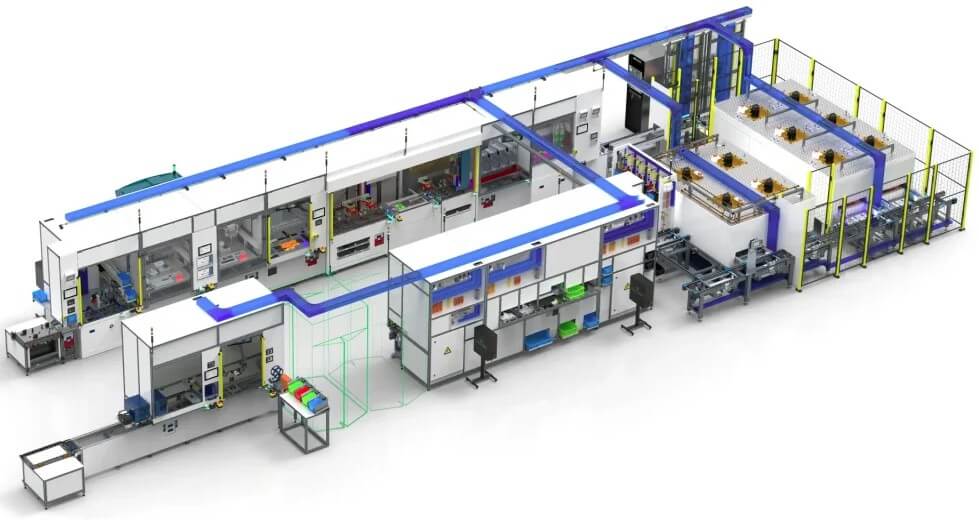
Contact Us

Ready to Build a More Efficient Production Line?

Every successful manufacturing operation starts with a well-engineered production system.

Whether you’re planning a new factory, expanding an existing facility, or modernizing a production process, investing in professional production line design can significantly improve productivity, product quality, and long-term operational performance.

At Global Machine Design Services (GMD), we partner with manufacturers, automation companies, OEMs, and industrial equipment suppliers worldwide to develop custom production lines that are practical, scalable, and ready for manufacturing.

Our engineering services cover every stage of development—from concept engineering and factory layout planning to complete 3D mechanical design, conveyor integration, automation-ready equipment, and detailed manufacturing documentation.

By combining technical expertise with a practical understanding of manufacturing, we help our clients reduce project risks, accelerate development timelines, and create production systems designed for long-term success.

Whether you need a single machine, a complete production line, or engineering support for an existing manufacturing system, our team is ready to help transform your ideas into reliable, production-ready solutions.