Tu dien 3

Industrial Automation Services

GMD Services provides industrial automation engineering solutions for custom machines, production equipment, material-handling systems, robotic cells, and automated manufacturing lines.

Our capabilities cover four essential areas of industrial automation: Electronics Design, Embedded Systems Development, PLC Programming, and Electrical Design & Control Panel Engineering.

Start Project About Us

Requirement Discussion

Online meeting to better understand your application, capabilities, and limitations.

Proofreading/Review

Initial layout, operating principles, and feasibility assessment.

Detailed Electrical Design in Software

Complete detailed electrical drawings in software with revisions.

Submission of Drawings and BOM List

Manufacturing drawings, assembly drawings, and component lists.

Assembly/Commissioning Support

Online technical support throughout the assembly and commissioning process.

Built on Engineering Excellence

By coordinating hardware, software, sensors, actuators, control equipment, and machine functions within one engineering workflow, we help machine builders, manufacturers, system integrators, and industrial companies develop reliable and practical automation systems.

Whether you need a complete machine control solution or support for one specific engineering discipline, our team can work as an extension of your internal engineering resources.

1

Integrated Automation Engineering for Industrial Machines

An effective industrial automation system requires multiple engineering disciplines to work together.

The mechanical system defines how the machine moves and interacts with the product. Sensors detect positions and operating conditions. Electrical hardware supplies and distributes power. Electronics process signals and control dedicated functions. Embedded systems manage specialized devices, while PLC and HMI software coordinate the complete machine sequence.

If these areas are developed separately without proper coordination, the project may experience interface conflicts, unreliable operation, difficult troubleshooting, or costly modifications during manufacturing and commissioning.

GMD Services provides an integrated engineering approach that considers the complete control architecture from the beginning of the project.

Our industrial automation capabilities include:

  • Automation concept development
  • Control system architecture
  • Electronics and PCB design
  • Embedded hardware and firmware development
  • PLC programming
  • HMI development
  • Electrical schematic design
  • Control panel engineering
  • Sensor and actuator integration
  • Servo motor and variable-frequency drive integration
  • Pneumatic and hydraulic sequence control
  • Industrial communication
  • Machine safety coordination
  • Software documentation
  • Testing and commissioning support
 
2

Our Industrial Automation Services

Electronics Design Services

Our Electronics Design Services support the development of custom electronic systems for industrial machines, dedicated control devices, sensors, monitoring equipment, and automation products.

We design electronic solutions according to the functional requirements, available power supply, signal types, communication protocols, installation environment, physical dimensions, and connection with other machine-control components.

Our electronics engineering capabilities include:

  • Electronic system architecture
  • Schematic circuit design
  • PCB design and layout
  • Analog and digital circuit design
  • Power supply and power-management design
  • Industrial input and output circuits
  • Sensor interface circuits
  • Actuator and motor-control interfaces
  • Signal conditioning
  • Communication interface design
  • Microcontroller circuit design
  • Component selection
  • Prototype development support
  • PCB design review
  • Troubleshooting and design improvement
  • Manufacturing documentation

We can develop a dedicated electronic system as an independent product or integrate it into a larger PLC-controlled machine.

The final deliverables may include circuit schematics, PCB layout files, Gerber files, bills of materials, component specifications, assembly drawings, and other agreed manufacturing documentation.

Electronics Design Services

Embedded Systems Development

Our Embedded Systems Development services combine dedicated electronic hardware with firmware to provide intelligent control, communication, monitoring, and data-processing functions.

Embedded systems are suitable for industrial applications that require compact hardware, dedicated control functions, fast signal processing, or specialized features that may not be practical to implement directly within a standard PLC.

Our embedded engineering capabilities include:

  • Embedded system architecture
  • Microcontroller-based hardware development
  • Firmware development
  • Sensor data acquisition
  • Real-time signal processing
  • Actuator and motor control
  • Machine and device monitoring
  • Local control algorithms
  • Data logging
  • Device configuration
  • Alarm and diagnostic functions
  • Communication protocol implementation
  • PLC and HMI communication
  • Prototype testing and debugging
  • Existing firmware modification
  • Hardware and firmware integration

Embedded controllers can be used in applications such as sensor modules, motor controllers, condition-monitoring devices, data-acquisition systems, smart industrial products, specialized machine controllers, and communication gateways.

When an embedded device operates as part of a larger automation system, we coordinate its signals, data structure, communication method, and operating sequence with the PLC or supervisory control system.


Embedded Systems Development

PLC Programming Services

Our PLC Programming Services help machine builders and manufacturers develop structured control software for individual machines, automated workstations, robotic cells, material-handling systems, and complete production lines.

The PLC program is developed according to the machine sequence, production requirements, manual operations, safety conditions, maintenance needs, and required communication with other equipment.

Our PLC programming capabilities include:

  • PLC software architecture
  • Machine sequence programming
  • Automatic and manual operating modes
  • HMI screen development
  • Alarm and diagnostic management
  • Recipe and parameter management
  • Sensor and actuator control
  • Pneumatic and hydraulic sequence programming
  • Servo motor and motion-control integration
  • Variable-frequency drive integration
  • Remote I/O configuration
  • IO-Link device integration
  • Industrial communication setup
  • Data exchange between machines
  • Robot and peripheral equipment coordination
  • Safety logic coordination
  • Existing PLC program modification
  • PLC software troubleshooting
  • Program backup and documentation
  • Remote commissioning support

We can develop a new PLC program or review and modify an existing control system.

Our programming approach emphasizes clear software structure, consistent device naming, understandable machine states, alarm identification, and practical maintenance functions. This helps operators and maintenance teams diagnose machine conditions more efficiently.

PLC Programming Services

HMI Design and Operator Interfaces

The HMI provides the main communication point between the operator and the automated machine. A well-structured interface should make machine operation clear while providing enough information for maintenance and troubleshooting.

Our HMI development services may include:

  • Machine overview screens
  • Manual control screens
  • Automatic operation displays
  • Production status monitoring
  • Recipe and parameter management
  • Alarm history
  • Sensor and actuator status
  • Maintenance screens
  • User-access management
  • Diagnostic information
  • Multilingual interfaces

HMI screens are designed around the actual operating sequence and the information required by operators, technicians, and maintenance personnel.

HMI Design and Operator Interfaces

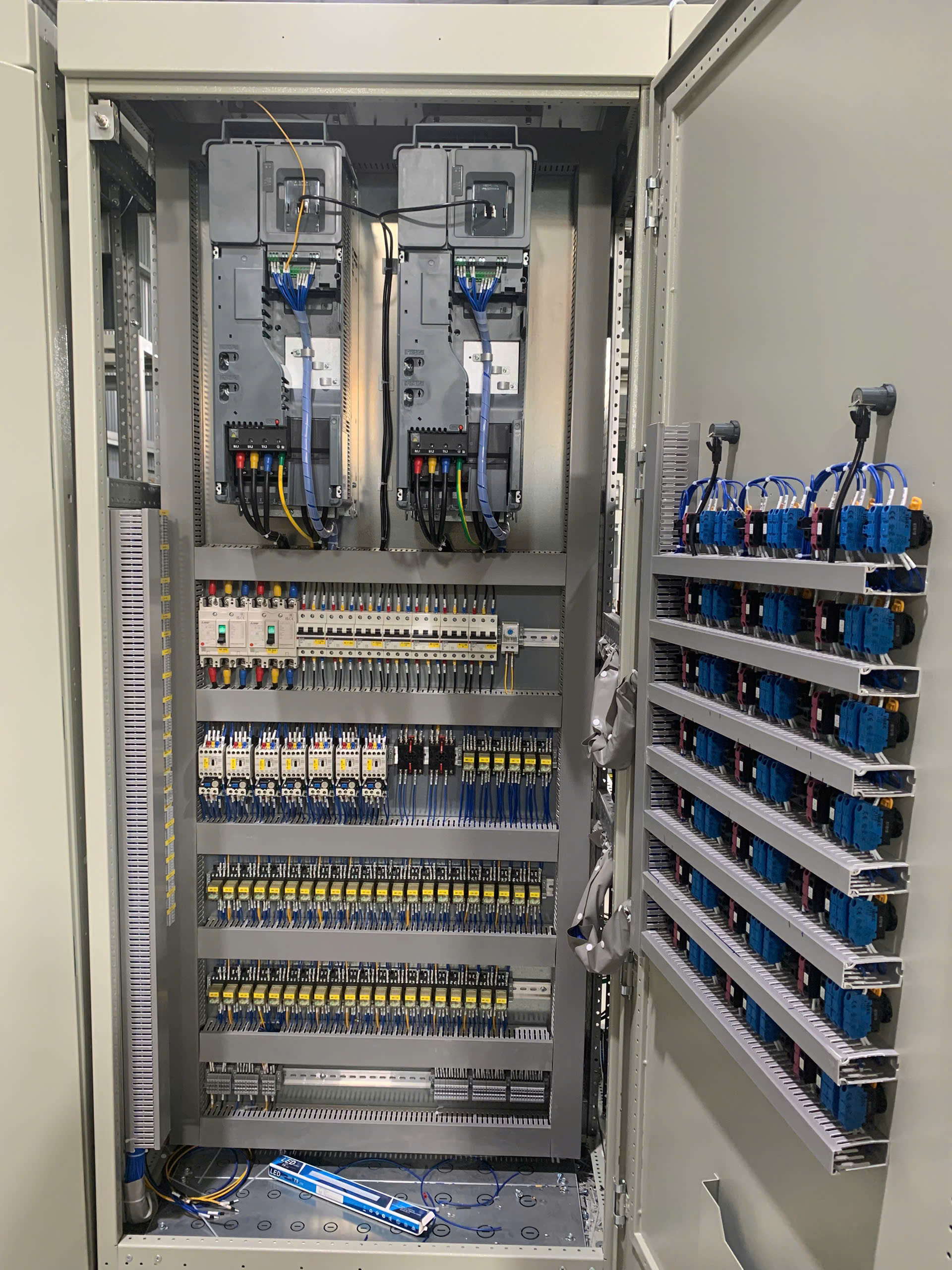
Electrical Design & Control Panel Engineering

Our Electrical Design & Control Panel Engineering services provide the documentation and hardware architecture required to power, control, and protect industrial machines.

We develop electrical systems based on the machine power requirements, control voltage, selected PLC platform, motor types, sensor configuration, safety functions, installation conditions, and applicable project requirements.

Our electrical engineering capabilities include:

  • Electrical control system architecture
  • Power distribution design
  • Electrical schematic development
  • PLC and remote I/O configuration
  • Control panel layout
  • Motor and drive circuit design
  • Servo drive integration
  • Variable-frequency drive integration
  • Circuit protection and component selection
  • Relay and contactor circuits
  • Sensor and actuator wiring
  • Safety relay and safety PLC coordination
  • Emergency-stop circuit design
  • Terminal plan development
  • Cable and wire schedules
  • Electrical bills of materials
  • Panel heat and space considerations
  • Machine wiring documentation
  • Control panel assembly support
  • Existing electrical system review

The electrical design is coordinated with the PLC software and the physical machine layout. This helps ensure that sensors, actuators, motors, drives, control devices, and safety components are correctly connected and accessible for installation and maintenance.

Project deliverables may include electrical schematics, control panel layouts, wiring diagrams, terminal schedules, cable lists, component lists, device specifications, and electrical bills of materials.

Electrical Design & Control Panel Engineering
3

Industrial Control Panel Design and Assembly Support

A control panel must provide more than a location for mounting electrical components. Its design affects equipment reliability, heat management, installation, troubleshooting, maintenance, and future expansion.

Our control panel engineering process considers:

  • Available installation space
  • Power and control separation
  • Component accessibility
  • Cable routing
  • Terminal arrangement
  • Electrical protection
  • Heat generation and ventilation
  • Electromagnetic interference
  • Maintenance clearances
  • Spare capacity
  • Future system expansion
  • Machine installation requirements

Depending on the agreed project scope, we can also support component sourcing, panel assembly review, wiring inspection, signal verification, and control panel testing.

4

Industrial Communication and System Integration

Modern automated machines often need to exchange information with robots, drives, sensors, vision systems, embedded devices, production equipment, or higher-level management systems.

We can support the integration of industrial communication technologies based on the selected hardware and project requirements.

Applications may include:

  • Communication between PLCs
  • PLC-to-HMI communication
  • Remote I/O networks
  • IO-Link device integration
  • Servo and drive communication
  • Robot-to-PLC communication
  • Machine-to-machine data exchange
  • Barcode and RFID integration
  • Vision system integration
  • Embedded controller communication
  • Production data collection
  • Connection with supervisory systems

The communication structure is developed around the required data, update speed, network architecture, diagnostic needs, and compatibility of the selected devices.

5

Automation Services for Complete Machine Development

GMD Services can provide industrial automation as an independent service or combine it with our Mechanical Design Services for complete machine development.

A multidisciplinary machine-development package may include:

  • Machine concept development
  • Mechanical structure design
  • Mechanism and motion design
  • Pneumatic and hydraulic circuit design
  • Sensor and actuator selection
  • Electronics and PCB development
  • Embedded system development
  • Electrical schematic design
  • Control panel engineering
  • PLC and HMI programming
  • Servo and drive integration
  • Safety-system coordination
  • 3D CAD models
  • Manufacturing drawings
  • Electrical documentation
  • Bills of materials
  • Software documentation
  • Testing and commissioning support

This integrated approach allows the mechanical, electrical, electronic, and software elements to be reviewed as parts of one complete system.

6

Automation Applications We Support

Our Industrial Automation Services can be applied to a wide range of machines and industrial systems, including:

  • Custom machinery
  • Assembly machines
  • Packaging equipment
  • Inspection and testing machines
  • Conveyor systems
  • Material-handling equipment
  • Lifting systems
  • Pick-and-place machines
  • Robotic work cells
  • Palletizing systems
  • Warehouse automation
  • Automated storage equipment
  • Production lines
  • Process equipment
  • Machine-tending systems
  • Electrical control panels
  • Industrial monitoring systems
  • Smart industrial devices
  • Retrofit and machine-upgrade projects

Each automation solution is developed according to the actual production process, required cycle time, operating environment, safety conditions, available equipment, and client specifications.

7

Machine Automation and Production Line Control

Our engineers can support both standalone machines and larger production systems.

Standalone Machine Automation

For an individual machine, the scope may cover its complete electrical and control system, including sensors, actuators, drives, PLC programming, HMI screens, alarms, safety functions, and operating modes.

Production Line Automation

For a production line, the control system may coordinate multiple machines, conveyors, robots, inspection stations, and material-handling devices.

The automation architecture can include:

  • Centralized or distributed PLC control
  • Machine-to-machine communication
  • Product tracking
  • Production sequence coordination
  • Line status monitoring
  • Fault and alarm management
  • Buffer control
  • Recipe distribution
  • Production data collection
  • Operator and maintenance interfaces

Automation Retrofit and Machine Upgrades

We can also support the modernization of existing machines where mechanical equipment remains usable but the control system requires improvement.

An upgrade project may include:

  • Replacement of an obsolete PLC
  • Electrical drawing updates
  • Control panel redesign
  • HMI modernization
  • Sensor replacement
  • Drive or servo integration
  • PLC software restructuring
  • Addition of monitoring functions
  • Communication with new equipment
  • Improvement of diagnostics and alarms

The existing machine condition and available documentation should be reviewed before defining the upgrade scope.

8

Our Industrial Automation Engineering Process

Step 1 – Technical Requirement Review

We review the machine function, operating sequence, production capacity, cycle time, available utilities, power requirements, environmental conditions, safety requirements, preferred hardware, and required deliverables.

Step 2 – Automation Concept and Architecture

We define the proposed control structure, including PLCs, embedded controllers, sensors, actuators, motors, drives, HMI equipment, communication networks, electrical panels, and required interfaces.

Step 3 – Hardware and Component Selection

Suitable control devices and electrical components are selected according to the required functions, performance, availability, compatibility, and client preferences.

Step 4 – Detailed Engineering

Our engineers develop the required electronics, embedded system, electrical drawings, panel layouts, PLC software, HMI screens, and technical documentation.

Step 5 – Design Review

The automation system is reviewed with the client at agreed milestones. Technical comments and required revisions are incorporated before final delivery.

Step 6 – Testing and Verification

Depending on the project scope, the hardware configuration, software sequence, communication, alarms, and machine functions are tested or simulated before commissioning.

Step 7 – Commissioning Support

We can provide remote support during panel testing, machine assembly, I/O verification, software commissioning, sequence adjustment, and troubleshooting.

Step 8 – Final Documentation

The agreed source files and technical documentation are delivered after project completion and acceptance.

9

Flexible Automation Engineering Support

Different projects require different levels of involvement. We offer flexible engagement models based on the client’s technical resources and project requirements.

Complete Automation Package

We develop the control solution from initial architecture through electrical design, programming, documentation, and commissioning support.

Individual Engineering Service

Clients can engage us for a specific scope such as PCB design, embedded firmware, PLC programming, HMI development, electrical schematics, or control panel engineering.

Dedicated Engineering Resources

Our engineers can support an existing automation team during periods of high workload or for a defined project phase.

System Review and Troubleshooting

We review an existing electrical or control system, identify technical issues, and recommend improvements related to reliability, operation, diagnostics, maintainability, or system integration.

10

Why Choose GMD Services?

Integrated Engineering Capabilities

Our services cover mechanical design, electronics, embedded systems, electrical engineering, and PLC programming. This allows key technical interfaces to be coordinated within one engineering workflow.

Practical Machine-Building Approach

Automation systems are developed with consideration for manufacturing, wiring, assembly, operation, troubleshooting, and maintenance—not only software functionality.

Flexible Project Scope

We can support a complete automation project or provide an individual engineering package that complements the client’s internal team.

Clear Deliverables

The scope, milestones, selected platforms, source files, documentation, revision process, and responsibilities are defined before project execution.

International Collaboration

GMD Services supports machine builders, manufacturers, system integrators, and engineering companies through structured remote communication and regular technical reviews.

Confidentiality and Intellectual Property Protection

Client information and project data are handled confidentially. Source-file delivery, intellectual property ownership, and permitted use of project outputs can be clearly defined in the service agreement.

11

Start Your Industrial Automation Project

Whether you need an electronic controller, an embedded device, a PLC-controlled machine, an electrical control panel, or an integrated production-line automation system, GMD Services can help develop the engineering solution.

Send us your technical specifications, machine sequence, electrical drawings, existing PLC program, component preferences, production targets, photos, videos, or current automation challenges.

Our team will review the information and propose a suitable engineering scope for your project.

12

Frequently Asked Questions

What does an industrial automation service include?

An industrial automation service may include control-system architecture, electronics design, embedded development, electrical schematics, control panel engineering, PLC programming, HMI development, sensor and actuator integration, industrial communication, and commissioning support. The exact scope depends on the project requirements.

Can GMD Services provide both electrical design and PLC programming?

Yes. Electrical design and PLC programming can be delivered as one coordinated engineering package. This helps ensure that the electrical hardware, I/O configuration, sensors, actuators, drives, and control software are compatible.

Can you provide only PLC programming?

Yes. PLC programming can be provided as an individual service when the mechanical system, electrical design, and selected control hardware are already available.

What is the difference between PLC programming and embedded systems development?

PLC programming is generally used to control industrial machines and production processes using standard industrial automation hardware. Embedded systems use dedicated electronic hardware and firmware for specialized control, processing, monitoring, or communication functions. Some projects may use both technologies within the same system.

Can you develop a custom electronic control board?

Yes. Our Electronics Design Services can cover circuit architecture, schematic development, PCB layout, component selection, prototype support, and manufacturing documentation for custom electronic control boards.

Can you modify an existing automation system?

Yes. We can review and modify existing PLC programs, HMI screens, electrical drawings, control panels, electronics, or embedded firmware. The existing hardware, source files, documentation, and machine condition must be reviewed before confirming the scope.

Do you support control panel manufacturing?

We can provide control panel engineering documentation and support panel assembly, wiring review, testing, and troubleshooting when these activities are included in the project scope.

Do you provide on-site commissioning?

Remote commissioning support can be included in the project. On-site commissioning depends on the machine location, project requirements, schedule, and separate commercial agreement.