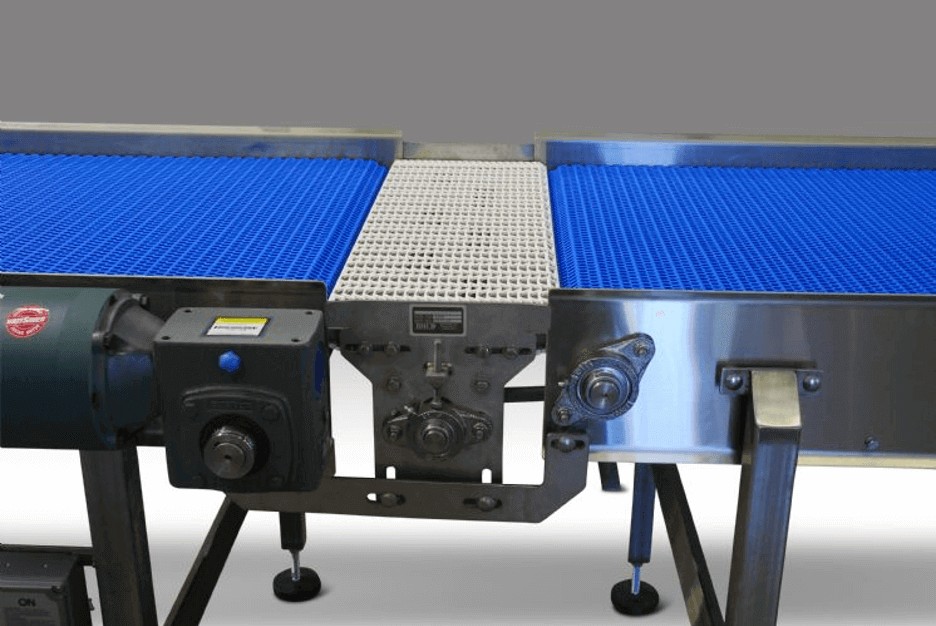
Custom Modular Conveyor Engineering for Modern Production Lines
Need a flexible conveyor system for packaged products, food, containers, components, or automated production processes? GMD Services provides custom Modular Belt Conveyor Design Services for straight, curved, inclined, declined, washdown, accumulation, cooling, inspection, and assembly applications. We develop the complete mechanical solution from layout and engineering calculations to detailed 3D CAD models, fabrication drawings, and bills of materials.
A reliable modular belt conveyor must coordinate the belt series, module style, width, sprockets, shafts, bearings, wear strips, return path, transfers, product guides, frame, drive, guarding, and cleaning strategy. Our designs are built around the actual product dimensions, weight, orientation, throughput, incline, temperature, contamination, hygiene requirements, process interfaces, and available space—creating a system that runs smoothly and can be manufactured, installed, cleaned, and maintained efficiently.
A modular conveyor belt is assembled from interlocking plastic modules connected by hinge rods. The belt is positively driven by sprockets, which reduces the dependence on friction and conventional belt tension. Modules, sprockets, cleats, sidewalls, friction inserts, rollers, and other accessories can be combined to suit specific products and process functions.
GMD Services designs modular belt conveyor systems for OEMs, machine builders, automation integrators, and industrial end users. The engineering scope can include concept development, belt and sprocket selection, pull and power calculations, shaft and bearing design, support and return geometry, curves, inclines, transfers, guides, frames, washdown details, sensors, guarding, 3D CAD, manufacturing drawings, BOMs, and design-review support.
What Is a Modular Belt Conveyor?
A modular belt conveyor uses a continuous surface made from molded plastic modules rather than a fabric or rubber belt. The modules form an endless belt through connecting rods and engage with toothed sprockets on the drive shaft. Damaged sections can often be repaired by replacing individual modules or rods instead of replacing the complete belt.
Modular belt conveyors can transport boxes, trays, packages, bottles, food products, machined parts, components, and other unit loads. Their configurable surfaces, positive drive, drainage options, curve capability, and availability in cleanable materials make them useful across packaging, food processing, assembly, logistics, cooling, washing, and general manufacturing.
Modular Belt Conveyor Systems We Design
Straight Modular Belt Conveyors
Straight conveyors provide reliable point-to-point transport and can be configured for general transfer, assembly, inspection, cooling, drying, or accumulation. The design coordinates belt width, speed, carryway support, sprocket spacing, shaft deflection, return support, transfers, and product guides.
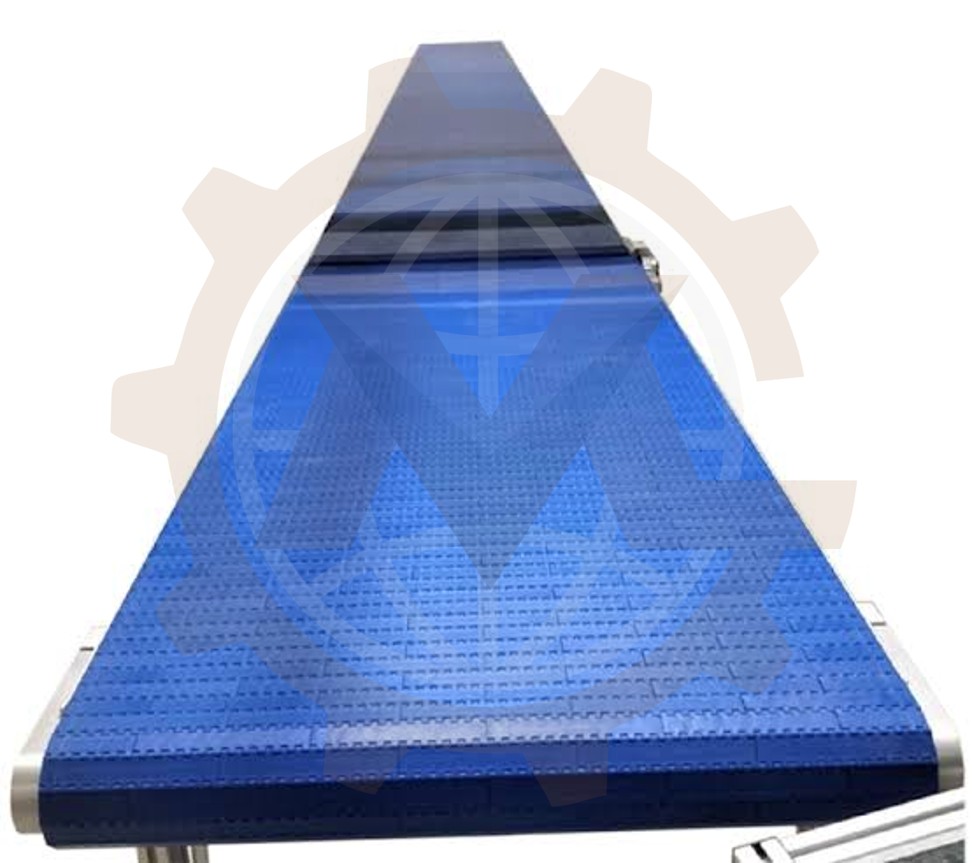
Straight Modular Belt Conveyors
Curved and Side-Flexing Conveyors
Side-flexing modular belts allow straight and curved sections to be combined in one conveyor, reducing the number of transfers and drives. Curve radius, inner-edge loading, outer-edge tension, wear-strip geometry, belt pull, product stability, and return routing must be checked using the selected belt manufacturer’s limits.

Curved and Side-Flexing Conveyors
Inclined and Declined Modular Belt Conveyors
Inclined modular belt conveyors can use high-friction surfaces, rubber inserts, cleats, flights, sidewalls, or product pockets to prevent sliding. The design evaluates incline force, product center of gravity, allowable angle, cleat spacing, nose-over transitions, drive position, rollback, and behavior after power loss.
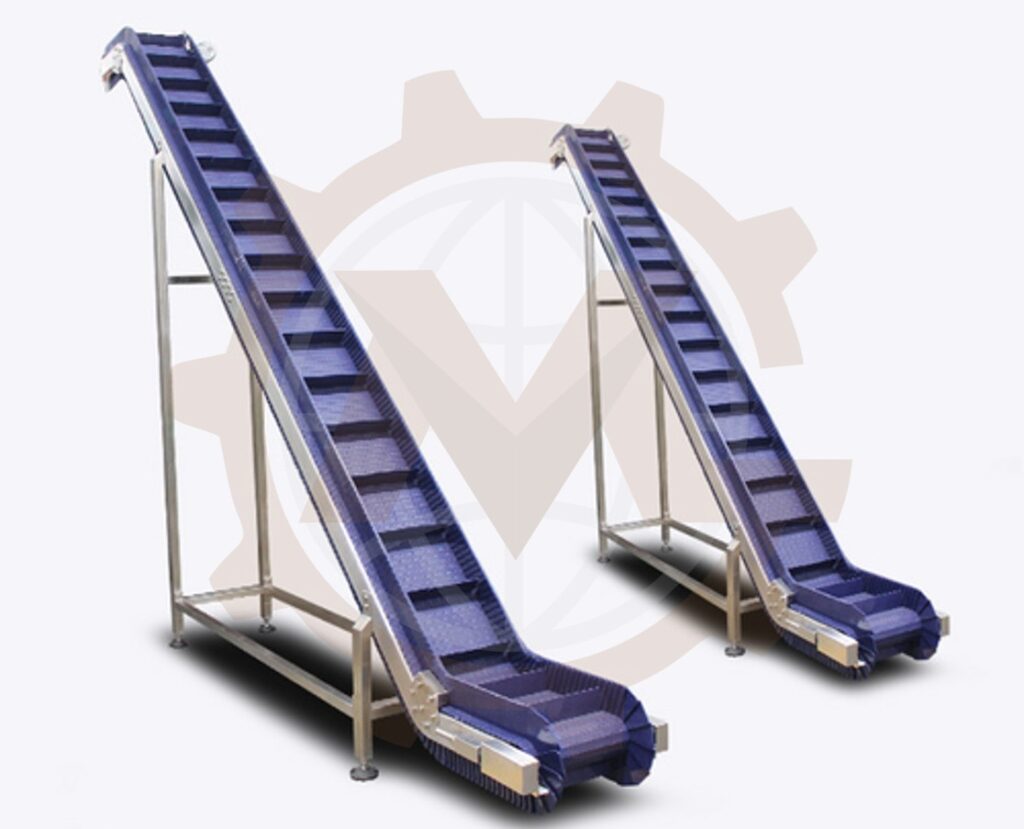
Inclined and Declined Modular Belt Conveyors
Washdown and Hygienic Conveyors
Open-area plastic modular belts, stainless steel frames, hygienic supports, accessible wear strips, drainage, and tool-free components can support washdown and food-processing applications. Hygienic design requirements, material approvals, cleaning chemistry, surface finish, weld treatment, ingress protection, and cleaning validation must be defined for the actual industry and site.
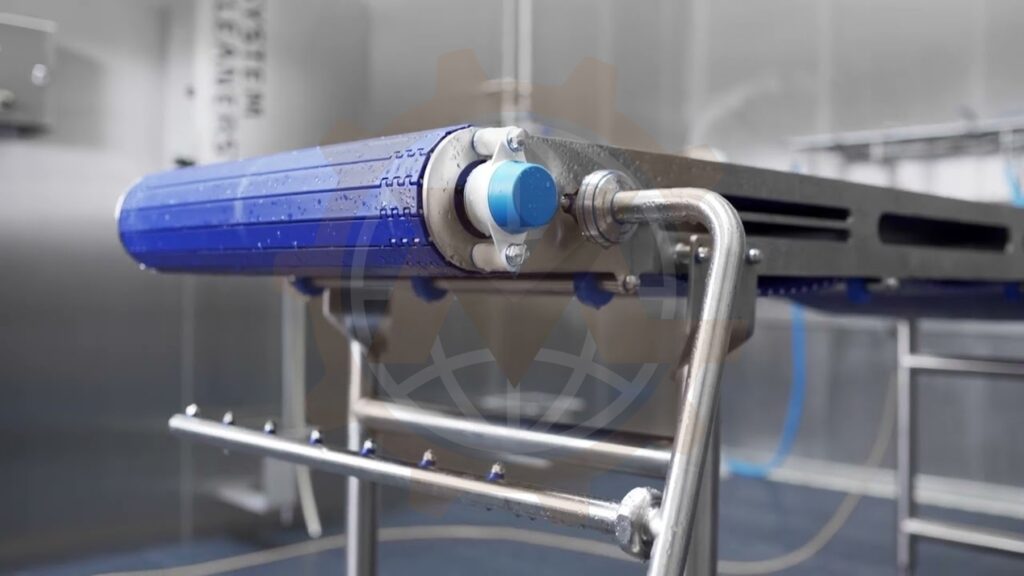
Washdown and Hygienic Conveyors
Accumulation and Low-Back-Pressure Conveyors
Modular belt systems can provide product accumulation using low-friction surfaces, roller-top modules, zoned control, stops, or dedicated accumulation tables. Product contact pressure, stability, heat generation, belt pull, motor torque, scuffing, and release logic must be evaluated before allowing the belt to slide continuously under stationary products.
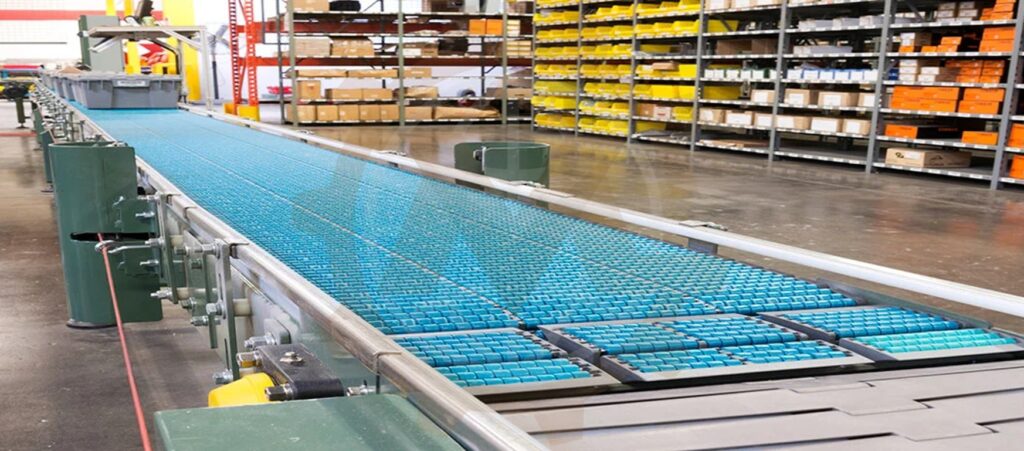
Accumulation and Low-Back-Pressure Conveyors
Cooling, Drying, and Drainage Conveyors
Flush-grid, perforated, or open-area belts allow air, water, oil, or process debris to pass through the conveying surface. The conveyor structure must manage drainage, collection, airflow, spray systems, access, and contamination without creating inaccessible cleaning zones.
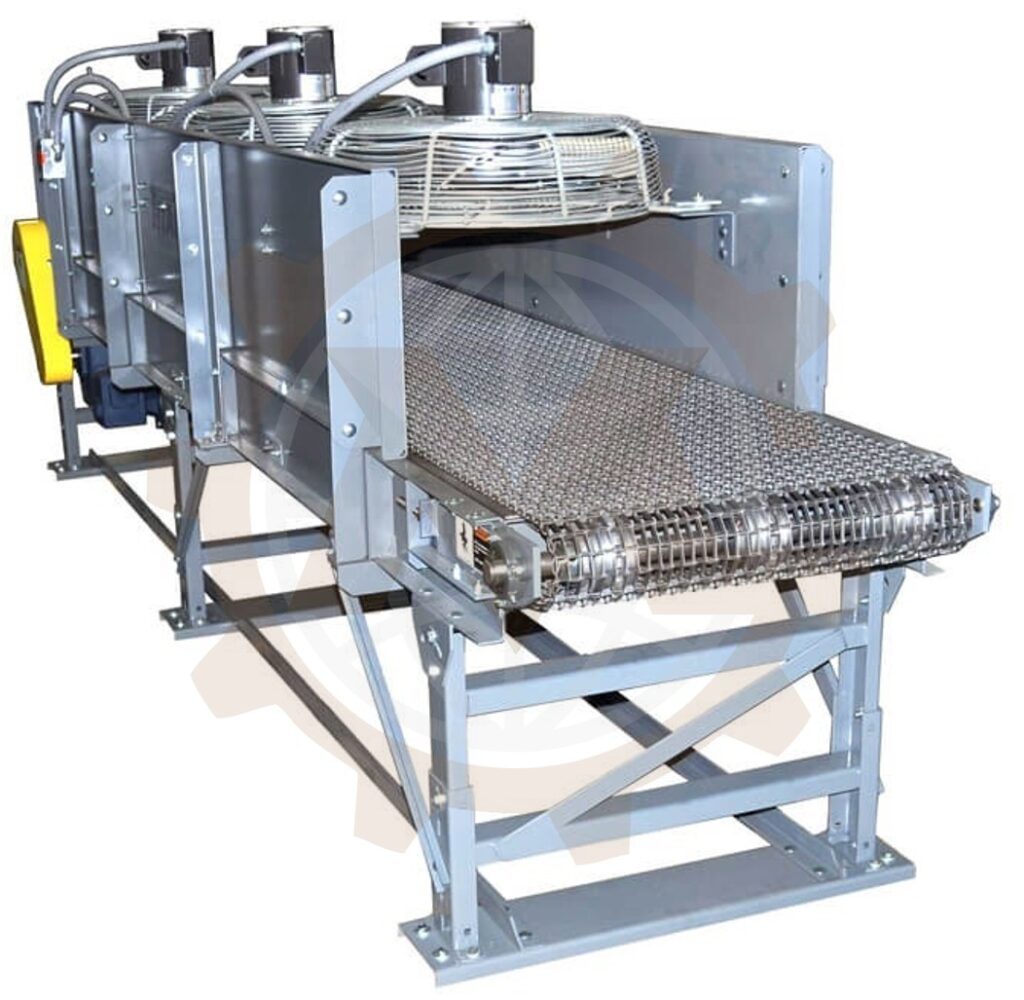
Cooling, Drying, and Drainage Conveyors
Roller-Top and Low-Friction Modular Belts
Roller-top modules reduce back pressure or allow products to move transversely relative to the belt. They may be used for accumulation, merging, sorting, positioning, or transfers. Roller orientation, loading, product footprint, speed difference, debris sensitivity, and control sequence are application-specific.
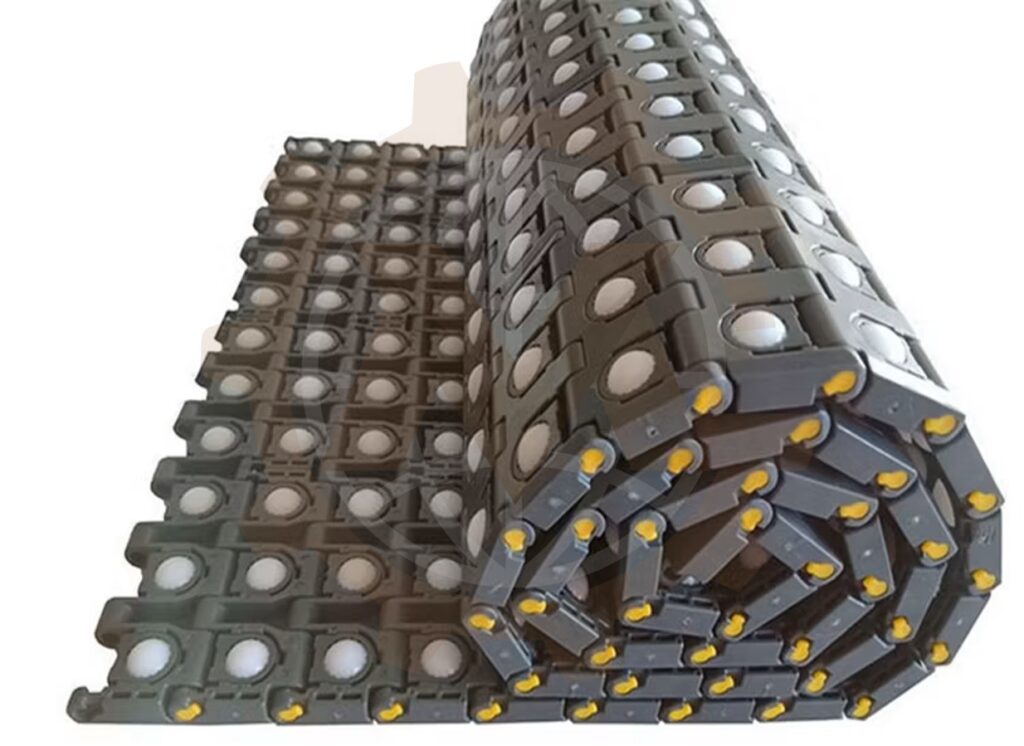
Roller-Top and Low-Friction Modular Belts
Cleated and Sidewall Modular Conveyors
Integral or attached cleats and sidewalls help contain products during incline, decline, spacing, or metering. Cleat height, pitch, pocket volume, side clearance, transition geometry, return path, cleaning, and the product release point must be coordinated.
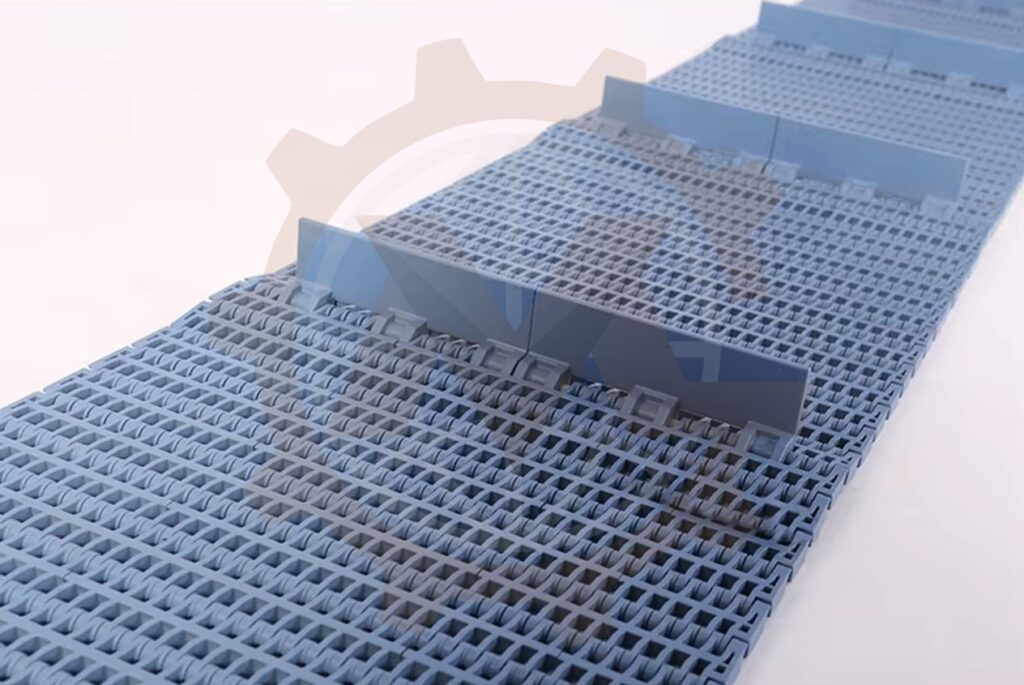
Cleated and Sidewall Modular Conveyors
|
Configuration
|
Typical application
|
Primary design focus
|
|
Straight modular conveyor
|
Packaging, assembly and general transfer
|
Belt width, pull, shaft, carryway, guides and transfers
|
|
Side-flexing conveyor
|
Curved routing and reduced transfers
|
Curve radius, wear strips, inner-edge load and product stability
|
|
Incline / decline conveyor
|
Elevation changes
|
Cleats, friction, center of gravity, nose-over and rollback
|
|
Washdown conveyor
|
Food and contamination-sensitive processing
|
Cleanability, drainage, materials, access and hygienic details
|
|
Accumulation conveyor
|
Buffers and process decoupling
|
Back pressure, heat, scuffing, torque, zones and release control
|
|
Open-grid conveyor
|
Cooling, drying, washing and drainage
|
Open area, airflow, spray, liquid collection and debris management
|
|
Roller-top conveyor
|
Accumulation, sorting and transverse movement
|
Roller orientation, product footprint, loading and controls
|
Our Modular Belt Conveyor Design Process
1. Product and Process Definition
We collect product dimensions, mass, footprint, center of gravity, surface sensitivity, orientation, temperature, throughput, speed, accumulation, operating hours, environment, cleaning, and connected-equipment data. Minimum and maximum products are defined so the conveyor supports the full operating range.
2. Conveyor Architecture and Layout
We determine the conveyor route, working height, straight and curved sections, incline or decline, transfers, process stations, drive location, return path, supports, maintenance access, and safety boundaries. Layout decisions are reviewed before detailed component selection.
3. Belt Series and Module Selection
Belt pitch, module type, material, surface style, open area, friction, side-flex capability, cleats, sidewalls, sprockets, and accessories are selected against the product and process. Manufacturer limits for pull, curve, temperature, chemical resistance, and sprocket spacing are incorporated into the design.
4. Engineering Calculations
We calculate moving load, belt pull, curve effects, incline resistance, acceleration, accumulation friction, motor power, gearbox torque, shaft loads, bearing reactions, carryway pressure, frame deflection, support reactions, and cycle time. Starting and credible upset conditions are included where relevant.
5. Detailed 3D Mechanical Design
We model the belt path, modules, sprockets, shafts, bearings, wear strips, carryway, return supports, frame, legs, guides, transfers, drive, take-up or catenary, guards, sensors, drains, drip trays, and connected interfaces. Assembly, cleaning, adjustment, and replacement access are reviewed in the 3D model.
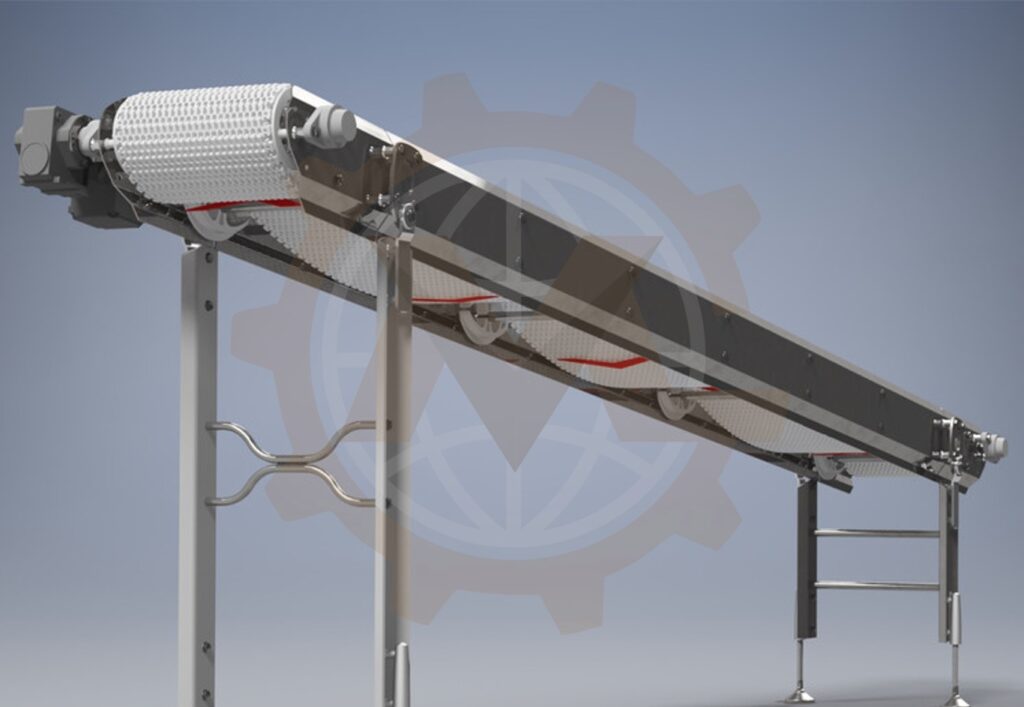
Detailed 3D Mechanical Design for Modular Belt Conveyor
6. Manufacturing Documentation
The deliverable package can include general arrangements, frame fabrication drawings, machining drawings, shaft and sprocket layouts, guide and transfer details, assembly drawings, purchased-component specifications, BOMs, and agreed neutral CAD exports.
7. Design Review and Integration Support
We review the design with the client, belt supplier, manufacturer, or system integrator, resolve agreed comments, and support interface clarification before release. Optional services can include supplier-data updates, manufacturing support, and as-built revisions.
Key Engineering Calculations
- Product and conveyed-load distribution across the belt width, including concentrated, impact, and offset loads.
- Belt pull from product mass, belt mass, wear-strip friction, curve resistance, incline, acceleration, and accumulation.
- Allowable belt pull and safety margin at the selected temperature, speed, width, curve, and operating environment.
- Motor power and gearbox torque for normal operation, starting, stop-start duty, and credible blocked conditions.
- Drive shaft strength under combined torsion and bending, including keys or locking devices and fatigue effects.
- Sprocket spacing, engagement, shaft deflection, tooth alignment, thermal expansion, and belt tracking behavior.
- Bearing reactions, bearing life, sealing, lubrication, alignment, mounting, temperature, and maintenance access.
- Carryway pressure, wear-strip spacing, PV limits where applicable, thermal movement, and replaceable support geometry.
- Frame and support strength, deflection, floor reactions, anchors, vibration, and process-equipment loads.
- Throughput, accumulation capacity, cycle time, sensor response, transfer timing, and product spacing.
Slat Conveyor Design Services: https://gmd.engineering/slat-conveyor-design-services/
Selecting the Modular Conveyor Belt
The belt is not selected by width alone. Module geometry, pitch, material, surface, hinge design, rod material, open area, sprocket system, and accessories determine how the conveyor supports, drives, cleans, and transfers the product.
Flat-Top Modules
Flat-top belts provide a continuous carrying surface for packages, containers, components, and products that require stable support. Transfer gaps, drainage, friction, and cleaning must still be reviewed for the actual product.
Flush-Grid and Perforated Modules
Open-area designs improve drainage, airflow, cooling, washing, and debris removal. Product feet or small parts must be checked against opening size, and the supporting wear strips must not block the required process flow.
Raised-Rib and Finger-Plate Systems
Raised-rib modules and matched finger plates can reduce transfer gaps at selected conveyor interfaces. Product dimensions, orientation, finger alignment, contamination, impact, and access determine whether this approach is appropriate.
High-Friction and Cleated Belts
Rubber-top modules, friction inserts, cleats, and sidewalls support inclined transport or controlled product spacing. The chosen arrangement must release the product cleanly and avoid difficult return-path interference or cleaning traps.
Roller-Top and Specialty Modules
Roller-top, ball-top, low-friction, conductive, detectable, heat-resistant, or application-specific modules can add process capability. Their mechanical and environmental limits must be verified with the selected belt supplier.
Sprockets, Shafts, and Positive Drive
Modular belts engage directly with sprockets, so sprocket quantity, spacing, orientation, bore, retention, and tooth alignment affect belt engagement and tracking. The center sprocket may be fixed to establish belt position while adjacent sprockets are allowed to accommodate thermal expansion, depending on the selected belt system.
Drive and idler shafts are checked for combined torsion and bending, deflection between bearings, sprocket loads, connections, keys or locking assemblies, fatigue, and acceptable alignment. Excessive deflection can produce uneven engagement and shorten belt life even when shaft stress remains below its allowable value.
Read more: Custom Machine Design Services: https://gmd.engineering/custom-machine-design-services/
Wear Strips, Carryway, and Return Path
Wear strips support the belt and control its path. Their material and layout depend on belt material, pressure, sliding speed, temperature, cleaning chemicals, contamination, and lubrication conditions. Continuous straight support, herringbone patterns, parallel strips, full beds, or roller support may be selected according to the application.
The return path may use wear strips, rollers, shoes, or a controlled catenary. It must accommodate belt engagement and thermal growth without allowing excessive sag, interference, product contamination, or unsafe access. Return support also affects cleaning and the replacement path for belts and hinge rods.
Curves, Thermal Expansion, and Belt Tracking
Side-flexing belts generate additional forces in curves. The inner edge, outer edge, guide profile, radius, carryway, and return path must follow the selected belt system’s rules. Combining excessive pull with a tight radius can cause accelerated wear or unstable tracking.
Plastic belts change length and width with temperature and moisture. Conveyor frames, sprocket positions, wear-strip joints, guide clearances, and transitions must allow expansion and contraction across start-up, washdown, heating, cooling, and seasonal conditions.
Industrial Automation Services: https://gmd.engineering/industrial-automation-services/
Product Transfers and Conveyor Interfaces
Transfer performance depends on product base geometry, orientation, stability, speed, and the gap between supporting surfaces. Dead plates, finger plates, small-diameter nose bars, powered rollers, side transfers, parallel belts, or synchronized adjacent conveyors may be used to reduce unsupported distance.
Interfaces with packaging machines, fillers, labelers, robots, inspection systems, palletizers, cooling tunnels, washers, and other conveyors are defined by elevation, speed, product datum, sensor location, access, and fault-recovery responsibility.
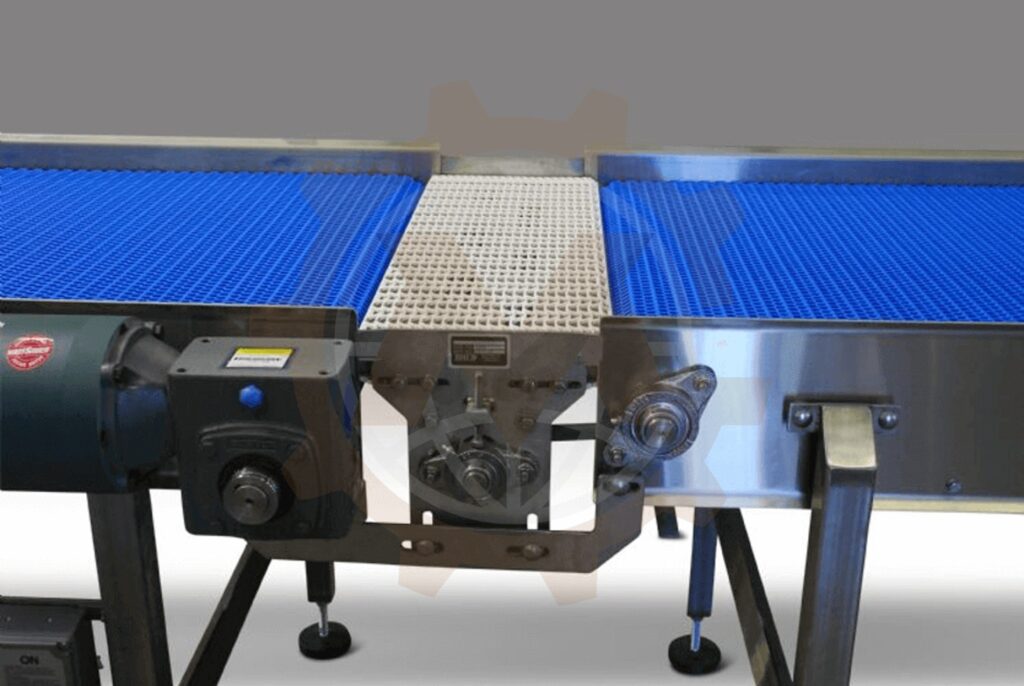
Product Transfers and Conveyor Interfaces
Inclines, Cleats, and Product Stability
The maximum practical incline depends on product friction, center of gravity, surface condition, acceleration, cleat spacing, side restraint, and belt transition geometry. A nominal friction coefficient should not be used without considering oil, water, dust, vibration, packaging variation, and product orientation.
Cleats can create product pockets for controlled spacing, but they also affect capacity, discharge, nose-over design, return support, cleaning, and belt replacement. Product rollback or falling after a power loss must be addressed where the consequence is significant.
Hygienic and Washdown Design
A food-grade belt does not automatically make the complete conveyor hygienic. The frame, supports, guards, fasteners, welds, bearings, drives, cable routes, drip trays, and cleaning access must support the required hygiene program. Requirements vary by product, cleaning method, customer standard, and regulatory jurisdiction.
- Open and accessible frame geometry with minimized horizontal ledges and trapped volumes.
- Drainable surfaces and properly oriented members that do not retain wash water.
- Accessible or removable wear strips, guides, catch pans, and return supports.
- Materials compatible with product contact, temperature, detergents, sanitizers, and corrosion exposure.
- Suitable weld finish, sealed joints, fasteners, bearing arrangements, and cable-management details.
- Tool-free release or belt-lift provisions where the cleaning strategy and risk assessment support them.
- Clear separation between product zones, drive components, lubrication, floor splash, and contamination sources.
Pallet Conveyor Design Services: https://gmd.engineering/pallet-conveyor-design-services/
Accumulation, Product Control, and Automation
Accumulation may use low-back-pressure belt surfaces, roller-top modules, zones, stops, gates, or dedicated tables. The conveyor must control product contact force, motor torque, belt pull, heat, scuffing, and restart behavior. Sensitive products may require true zero-pressure zones rather than continuous belt slip.
Automation provisions can include photoelectric sensors, inductive sensors, encoders, RFID readers, motor-current monitoring, jam detection, stops, pneumatic or electric actuators, variable-speed drives, servo axes, and safety devices. The control sequence should define normal flow, blocked and starved states, accumulation limits, manual mode, restart logic, and fault recovery.
Safety and Maintainability
Modular belt conveyors contain sprocket nip points, moving belt edges, rotating shafts, transfer gaps, pinch zones, and stored product. Safety requirements depend on the complete machine risk assessment, installation country, application, and customer standards.
- Guard drive and idler shafts, sprockets, couplings, return paths, transfers, and accessible pinch points.
- Coordinate emergency stops, safety gates, light curtains, scanners, and restart behavior with the complete line.
- Provide lockout and isolation for electrical, pneumatic, hydraulic, thermal, and stored mechanical energy.
- Prevent product rollback, falling, or uncontrolled movement on inclined, declined, or elevated conveyors.
- Provide safe access to bearings, sensors, wear strips, drains, drives, belt rods, sprockets, and cleaning zones.
- Plan practical removal routes for gearmotors, shafts, belts, guards, drip trays, and replaceable components.
- Avoid sharp edges, inaccessible contamination traps, exposed hot surfaces, and uncontrolled liquid discharge.
Where Modular Belt Conveyor Systems Deliver the Most Value
- Food, beverage, bakery, meat, seafood, dairy, fruit, and vegetable processing
- Packaging, filling, labeling, inspection, sorting, and end-of-line automation
- Pharmaceutical, medical, personal-care, and contamination-sensitive manufacturing
- Automotive, battery, electronics, appliance, and industrial assembly lines
- Bottles, cans, cartons, trays, totes, containers, and packaged product handling
- Cooling, drying, washing, draining, dewatering, and environmental-control processes
- Accumulation, merging, diverting, spacing, indexing, and robotic handling interfaces
- Cleanroom, washdown, corrosive, oily, wet, and general manufacturing environments
Modular Belt Conveyor Design Deliverables
|
Deliverable
|
Typical content
|
|
Design basis
|
Product data, throughput, environment, hygiene, assumptions and equipment interfaces
|
|
Concept and layout
|
Conveyor route, belt type, curves, inclines, transfers, drive and maintenance zones
|
|
Engineering calculations
|
Belt pull, sprockets, shafts, bearings, drive power, frame and cycle-time checks
|
|
3D CAD assembly
|
Complete conveyor, belt path, frame, drive, guides, guards, sensors and interfaces
|
|
2D drawings
|
General arrangement, fabrication, machining, shaft, guide and assembly drawings
|
|
Bill of materials
|
Manufactured parts, belt, sprockets, motors, gearboxes, bearings, sensors and actuators
|
|
Exchange formats
|
Inventor files, STEP, SAT, DXF, PDF, Excel or other agreed formats
|
|
Review support
|
Design review, supplier coordination, manufacturing clarification and controlled revisions
|
Why GMD for Modular Belt Conveyor Engineering?
- More than 10 years of mechanical machine-design experience for conveyors, automation, and production equipment.
- Design decisions based on actual products, throughput, process conditions, hygiene, interfaces, and fabrication capability.
- Practical attention to manufacturing, tolerances, assembly, belt installation, cleaning, access, wear, and component replacement.
- Autodesk Inventor as the primary design platform, with common neutral CAD and documentation formats available.
- Flexible support for a complete modular belt conveyor or as an extension of an OEM or integrator engineering team.
- Clear definition of assumptions, exclusions, responsibility boundaries, deliverables, and review stages.
- Remote collaboration for manufacturers and system integrators serving international markets.
Modular Belt Conveyor Project Data and Design Inputs
- Product drawings, dimensions, mass, center of gravity, footprint, surface sensitivity, and orientation.
- Required throughput, conveyor speed, accumulation, cycle time, product spacing, and operating hours.
- Route, width, length, elevation, curve radius, incline or decline, transfers, and available layout.
- Temperature, moisture, oil, dust, washdown, cleaning chemicals, corrosion, and hygiene requirements.
- Upstream and downstream machines, robots, inspection systems, operators, and conveyor interfaces.
- Preferred belt manufacturer or components, utilities, controls philosophy, standards, CAD format, and schedule.
Chain Conveyor Design Services: https://gmd.engineering/chain-conveyor-design-services/
Modular Belt Conveyor Design FAQs
What is a modular belt conveyor?
A modular belt conveyor uses interlocking plastic modules connected by hinge rods to form a continuous belt. The belt is positively driven by sprockets and can be configured with different surfaces, openings, cleats, sidewalls, friction inserts, and specialty modules.
What is the difference between a modular belt and a conventional belt?
A conventional belt is a continuous flexible material driven mainly by friction around pulleys. A modular belt uses linked plastic modules and sprocket engagement. Modular belts can offer easier section repair, configurable surfaces, curves, drainage, and washdown options, while conventional belts may provide a smoother uninterrupted surface for other applications.
How do you select a modular plastic conveyor belt?
Selection considers the product, load, belt width, speed, curve, incline, temperature, chemicals, hygiene, open area, friction, transfer requirements, belt pull, and available accessories. Final selection should be verified with the chosen belt supplier’s engineering limits.
Can a modular belt conveyor include curves and inclines?
Yes. Side-flexing belts can handle curves, while friction-top modules, cleats, or sidewalls can support inclines. Curve radius, belt pull, product stability, transition geometry, and manufacturer limits must be checked for the complete route.
Are modular belt conveyors suitable for food processing?
They can be suitable when the selected belt materials and complete conveyor design meet the application’s hygiene, cleanability, drainage, temperature, chemical, and product-contact requirements. Belt designation alone is not sufficient to establish compliance of the complete machine.
Can products accumulate on a modular belt?
Yes, using an appropriate low-friction surface, roller-top modules, controlled zones, stops, or accumulation tables. Product pressure, scuffing, heat, motor torque, belt pull, and restart logic must be evaluated.
Do you provide calculations, CAD models, drawings, and BOMs?
Yes. Depending on the agreed scope, we can deliver belt and drive calculations, 3D CAD, general arrangements, fabrication and machining drawings, shaft and transfer details, assembly drawings, BOMs, PDFs, and neutral CAD exports.
Can you redesign an existing modular belt conveyor?
Yes. Typical objectives include new products, increased throughput, improved transfers, fewer jams, reduced belt wear, better washdown, safer guarding, improved maintenance access, or replacement of obsolete components.
How long does a modular belt conveyor design project take?
Schedule depends on conveyor length, curves, inclines, special modules, hygiene requirements, transfer complexity, documentation depth, input quality, and review cycles. Complete product and interface data significantly reduce engineering lead time.
Develop a Modular Belt Conveyor Around Your Product and Process
A dependable modular belt conveyor is created by coordinating belt selection with pull, sprockets, shafts, carryway support, curves, transfers, product control, hygiene, automation, guarding, and maintenance. GMD Services can provide the engineering capacity and documentation required to move from concept to fabrication.
Send us your product data, layout, throughput, environment, cleaning requirements, equipment interfaces, and required deliverables. We will review the application and propose a practical scope for your Modular Belt Conveyor Design Services project.