
Automated Pallet Sorting, Stacking and Packaging Line
GMD designed an integrated line that collects molded plastic pallets from four machines, routes them through manual trimming and automated size and color checks, then stacks, straps and stretch wraps the finished pallets for warehouse collection.


Handling plastic pallets from four molding machines requires more than connecting their outputs to a conveyor. The line must combine four product streams, provide a safe point for manual trimming, identify each pallet type and direct it to the correct stacking process. Completed stacks then need to reach the packaging equipment and a collection point for warehouse transport.
GMD developed a coordinated layout using roller conveyors, inspection and sorting stations, pallet stackers, a rail guided vehicle (RGV), a strapping machine and a stretch wrapping machine.
1. Four Molding Machines Feeding One Pallet Handling Line
The project serves a plastic pallet manufacturing operation with four molding machines. After molding, a robot removes each pallet from its machine and places it onto a roller conveyor.
The four conveyor branches bring the pallets toward a shared transport line. From there, each pallet passes through trimming and identification before being sent to the appropriate stacker. Finished stacks are packaged and presented for forklift collection.
2. Coordinating Four Product Streams Without Losing Pallet Identity
The main engineering challenge was to bring pallets from four separate sources into one downstream process while maintaining an orderly flow.
Pallets could differ in size and color, so the line needed to identify the product before choosing its stacking route. It also needed to accommodate a manual burr trimming operation between automated handling stages. Once stacked, the product had to transfer to an RGV and then through strapping and wrapping without interrupting the upstream flow.
3. Inputs Required to Define the Sorting and Stacking Process
The line design was based on the following operating requirements:
- Receive pallets removed by robots from four molding machines.
- Merge four roller conveyor branches into a main transport route.
- Provide an operator position for removing molding burrs.
- Check pallet dimensions and color to identify the product type.
- Route each identified pallet to its assigned stacking machine.
- Count pallets until the required quantity per stack is reached.
- Transfer completed stacks to an RGV.
- Move stacks through strapping and stretch wrapping.
- Present packaged stacks at a forklift pickup position.
The required stack quantity, accepted pallet types and routing rules are configuration inputs for the operating system.
4. Layout Constraints Across Inspection, Stacking and Packaging
The conveyor layout had to fit around the four molding machines and their robotic unloading areas. Each branch needed a path into the shared line while preserving space for operators and equipment access.
The trimming station required suitable working space for manual handling. Downstream, the inspection position needed consistent pallet presentation so the dimensional and color checks could be used for sorting.
Completed stacks introduce a different handling requirement from individual pallets. The stacker discharge, RGV transfer, end of line conveyors, strapping machine and wrapping machine therefore had to be arranged around the dimensions and stability of a full stack.
5. Evaluating How to Combine and Route the Pallets
The system design considered the practical roles of several handling approaches:
| Process requirement | Selected handling approach |
|---|---|
| Collect pallets from four molding machines | Individual roller conveyor branches |
| Combine the product streams | Shared straight conveyor route |
| Identify pallet type | Dimension and color inspection station |
| Direct pallets to stacking | Controlled conveyor routing |
| Move completed stacks between areas | RGV transfer |
| Prepare stacks for storage | Strapping followed by stretch wrapping |
This arrangement keeps individual pallet handling separate from completed stack transport while connecting both within one production flow.
6. How the Selected Line Operates
The operating sequence is:
- Robots remove molded pallets from the four machines and place them on their respective roller conveyors.
- The four conveyor branches bring the pallets onto the shared straight conveyor.
- Pallets stop at the operator station for burr trimming.
- The inspection station checks pallet dimensions and color to determine the product type.
- The conveyor system routes each identified pallet to its assigned stacking machine.
- The stacker counts the pallets. When the specified quantity is reached, it discharges the completed stack toward the RGV transfer position.
- The RGV receives the stack and carries it to the end of line conveyor.
- The stack moves into the strapping machine.
- After strapping, conveyors transfer it to the stretch wrapping machine.
- The packaged stack moves to a pickup position, where a forklift takes it to storage.
7. Engineering Checks for Flow and Stack Transfer
The design requires the output from four molding machines to be compared with the available capacity of the shared conveyor, trimming station, inspection station and stackers. These checks help identify where pallets may accumulate when several machines discharge close together.
Stack handling also depends on the selected pallet size and the quantity per stack. The resulting stack dimensions and mass inform the stacker discharge arrangement, RGV capacity, conveyor selection and packaging equipment interfaces.
The available project information does not include numerical cycle times, pallet weights or stack quantities. Those figures should be added here only after they are confirmed from the project calculations or acceptance records.
8. CAD Model and System Layout
GMD developed the equipment arrangement as a 3D production line model. The model brings together the molding machines, robotic unloading points, four conveyor branches, operator station, inspection and sorting area, stacking machines, RGV route, strapping machine, wrapping machine and forklift pickup position.
The CAD layout provides a common reference for checking equipment interfaces, material flow and access around the line. The specific CAD software version and controls platform can be listed here if they are part of the approved public project information.
9. Project Deliverables
The engineering output includes the integrated production line layout and 3D equipment arrangement, covering:
- Conveyor branches from the four molding machines.
- Main conveyor and operator trimming station.
- Dimension and color inspection position.
- Sorting routes and pallet stacking stations.
- RGV transfer and end of line conveyors.
- Strapping, stretch wrapping and forklift pickup interfaces.
Detailed manufacturing drawings, BOMs, controls documentation or simulation files should be listed as deliverables only if they were included in the actual project scope.
10. From Four Molding Outputs to Packaged Pallet Stacks
The designed line establishes one connected route from four molding machine outputs to packaged stacks ready for forklift pickup. It incorporates two automatic classification criteria: pallet size and color, followed by counted stacking, RGV transfer, strapping and stretch wrapping.
These are measurable features of the designed process. Throughput, labor savings and sorting accuracy can be reported once verified operating data is available.
11. Related Engineering Services
This project combines several areas of GMD’s engineering work: conveyor and material handling design, production line layout and custom machinery integration.
The same approach can be applied where multiple machines feed a shared inspection, sorting, stacking or packaging process.
12. Planning a Similar Pallet Handling Line?
If your production area needs to combine machine outputs, classify products and prepare finished stacks for storage, GMD can help develop the handling concept and coordinated equipment layout.
Discuss your project with GMD and share your product sizes, machine cycle times, required stack quantities and available floor space.
Related Portfolios
Explore similar engineering portfolios and industrial solutions.
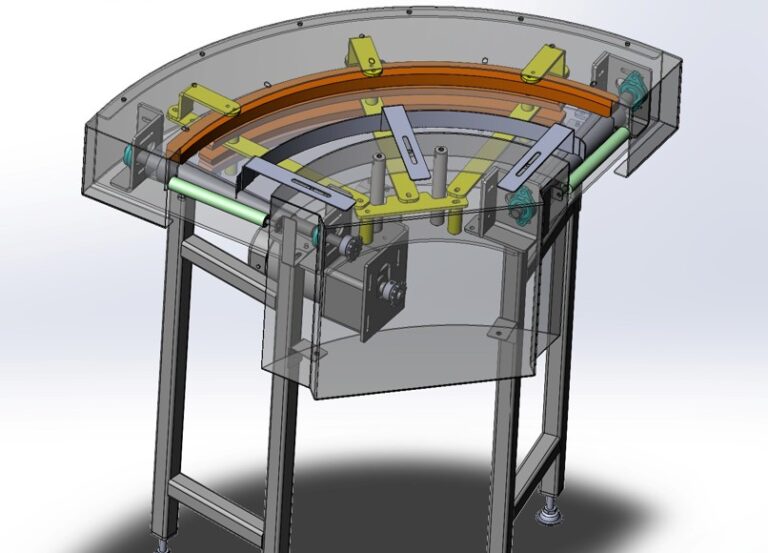
Curved Belt Conveyor Design and Fabrication
GMD designed and fabricated a curved belt conveyor...
View Portfolio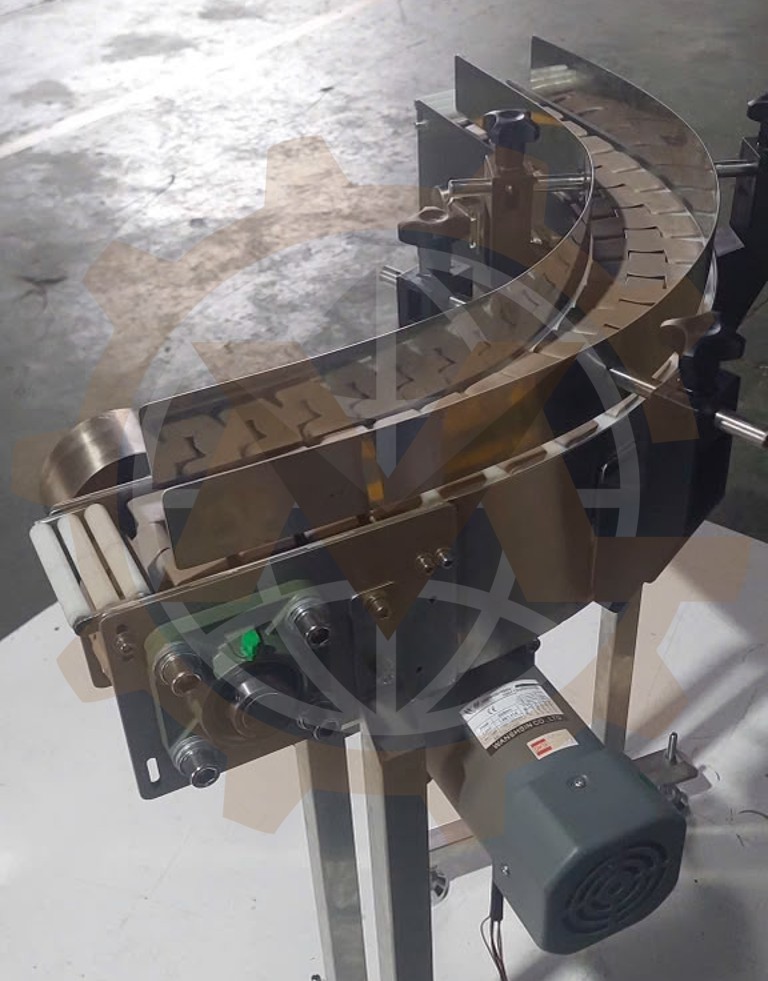
Custom Curved Tabletop Chain Conveyor Design
GMD Engineering designed a compact curved tabletop chain...
View Portfolio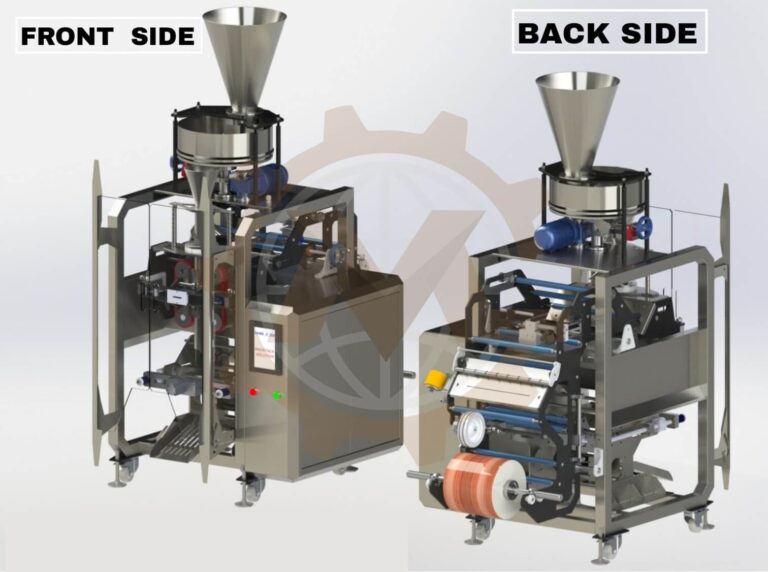
Automatic VFFS Packaging Machine for Granular Products
This automatic vertical form-fill-seal packaging machine integrates rotary...
View Portfolio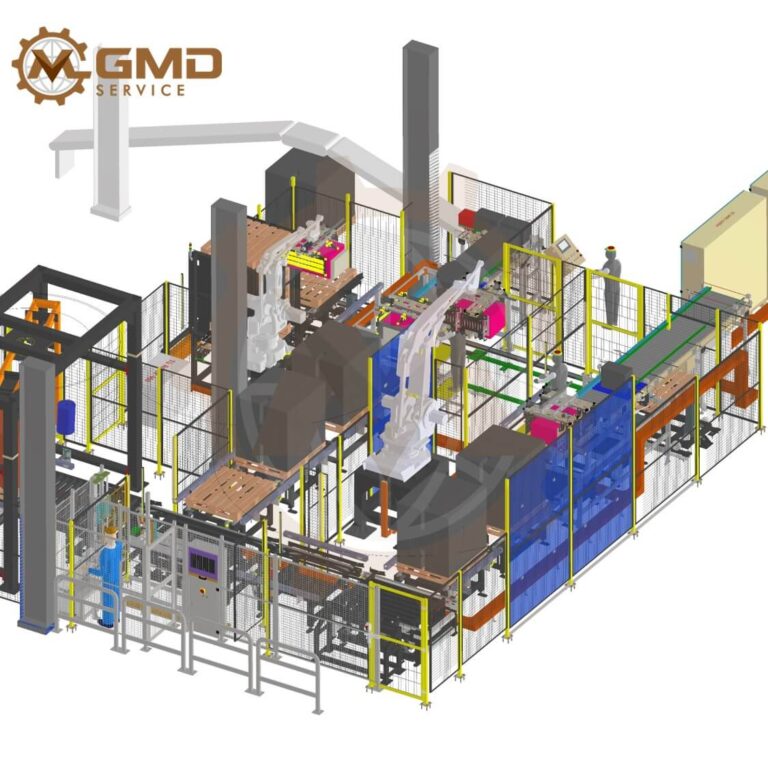
Automated Box Palletizing and Pallet Stretch Wrapping System
An integrated automation system for arranging, packing, and...
View Portfolio
Vision-Guided Robotic Palletizing System
A flexible robotic handling system designed for automated...
View Portfolio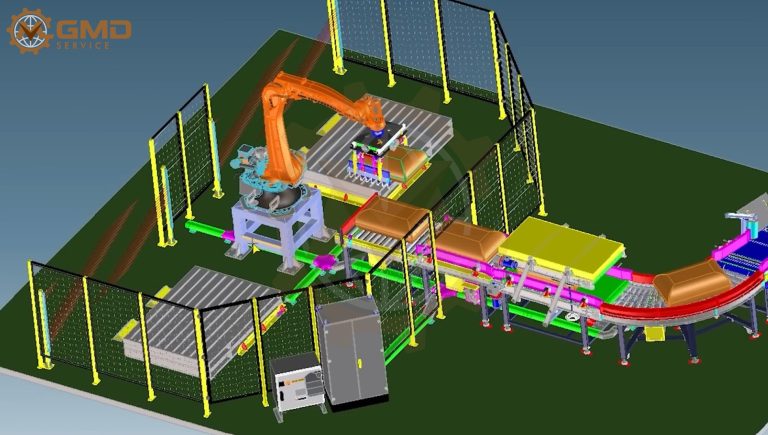
Automatic Bag Handling Robot System | Case Study | Inventor 2024
A robotic bag handling solution developed to automate...
View Portfolio
Automated Robotic Bag Palletizing System – GMD Engineering
An automated robotic palletizing system engineered to pick,...
View Portfolio