
Steel Slat Chain Conveyor Design and Fabrication
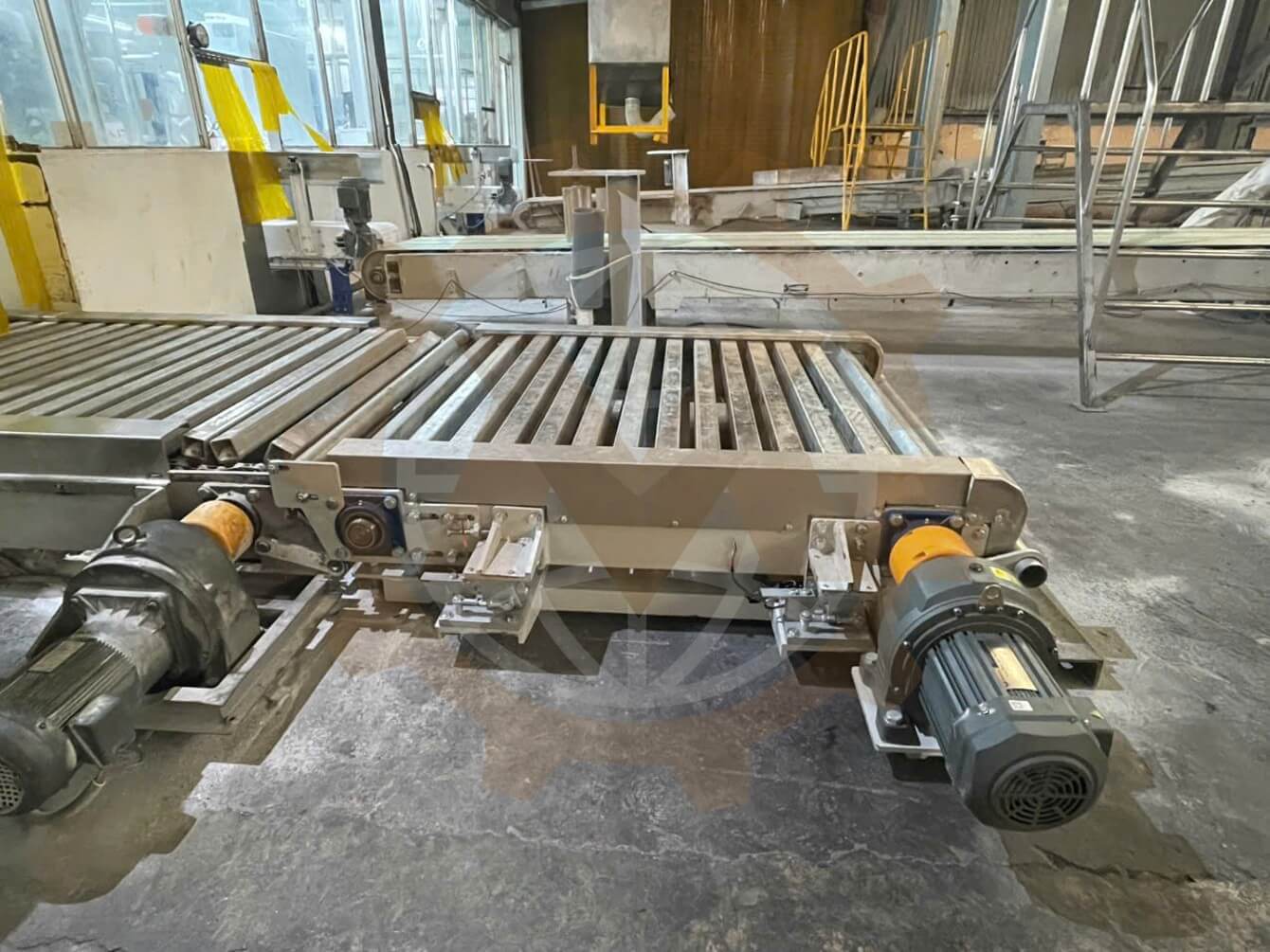
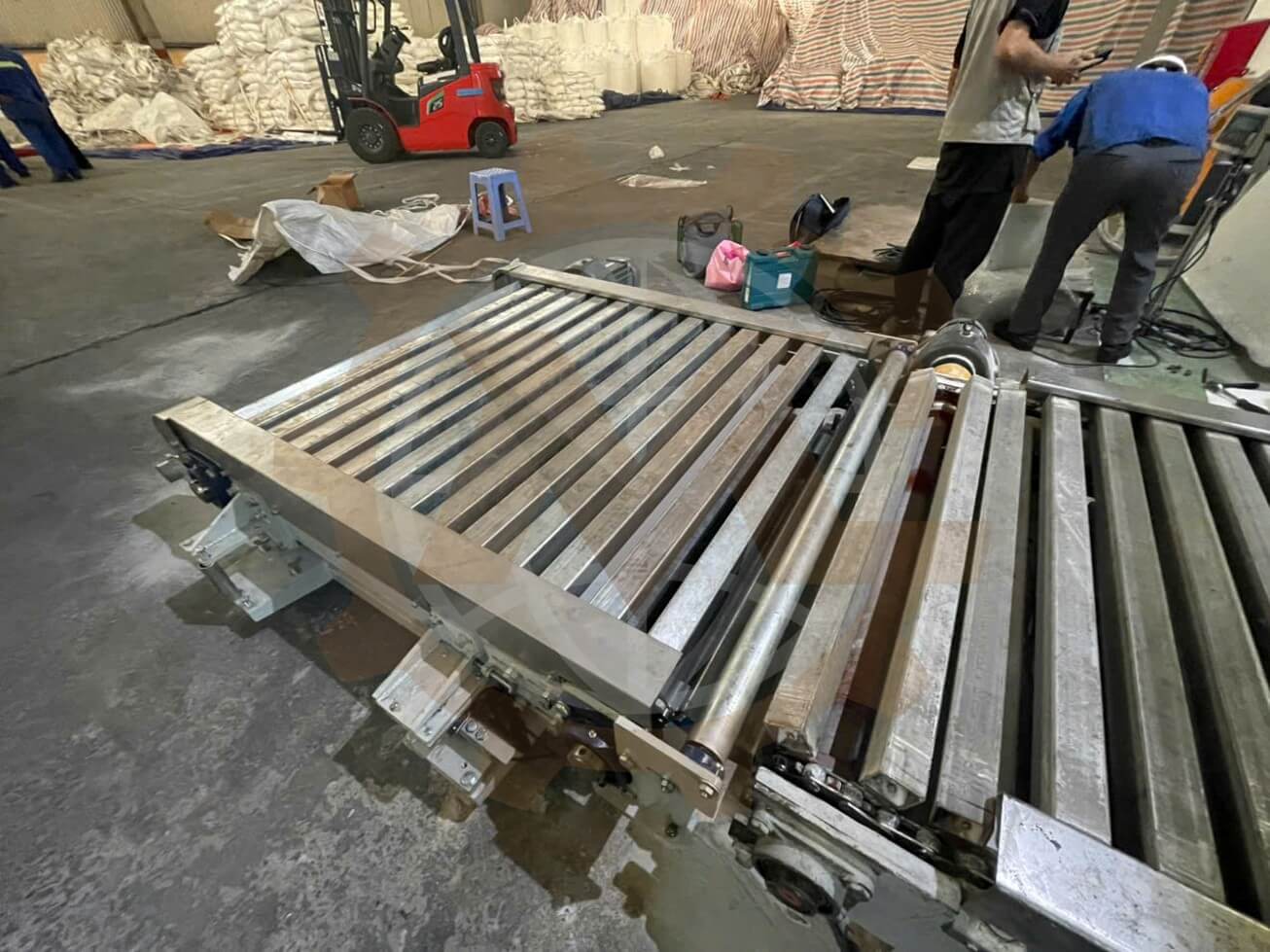
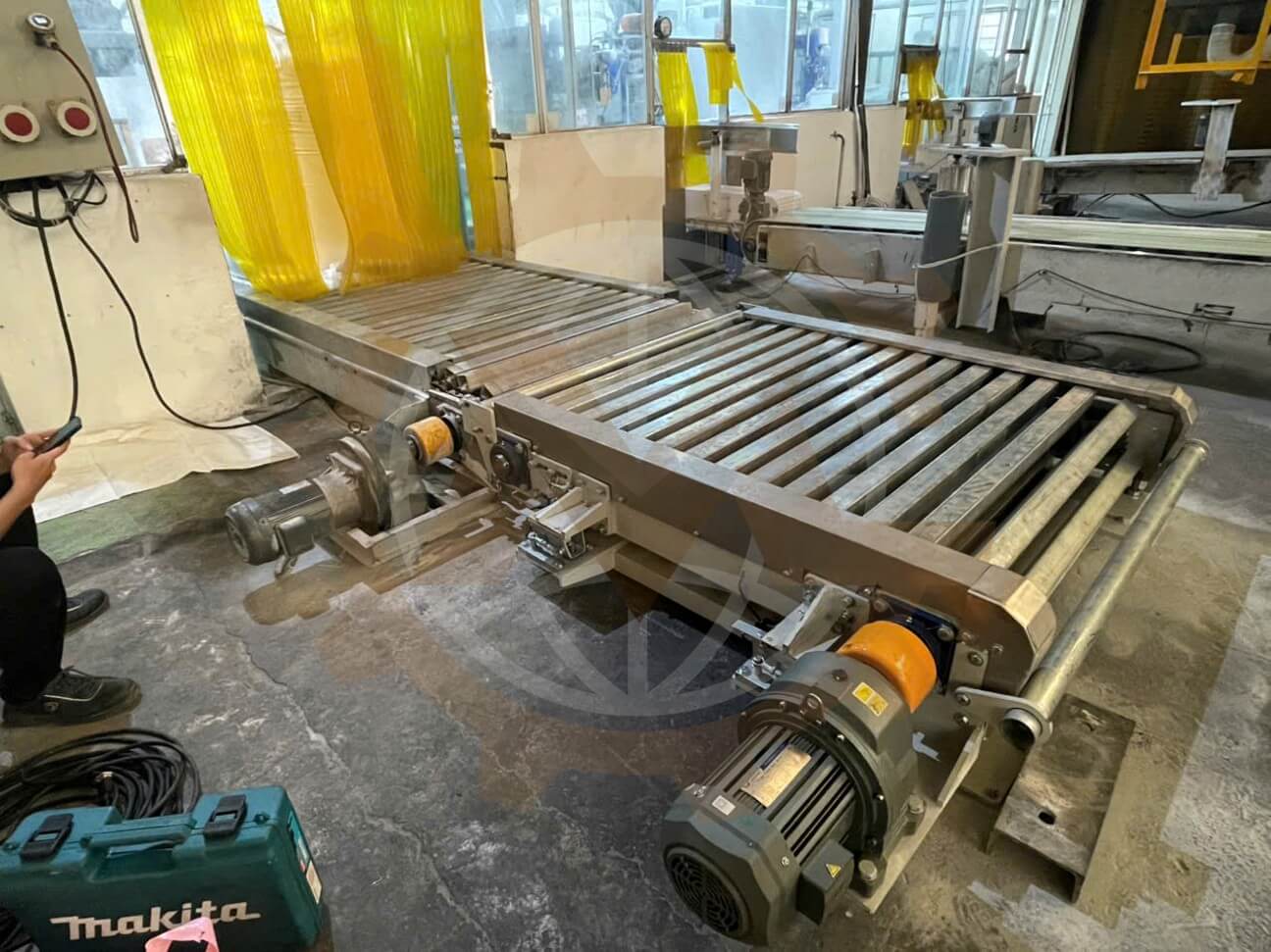
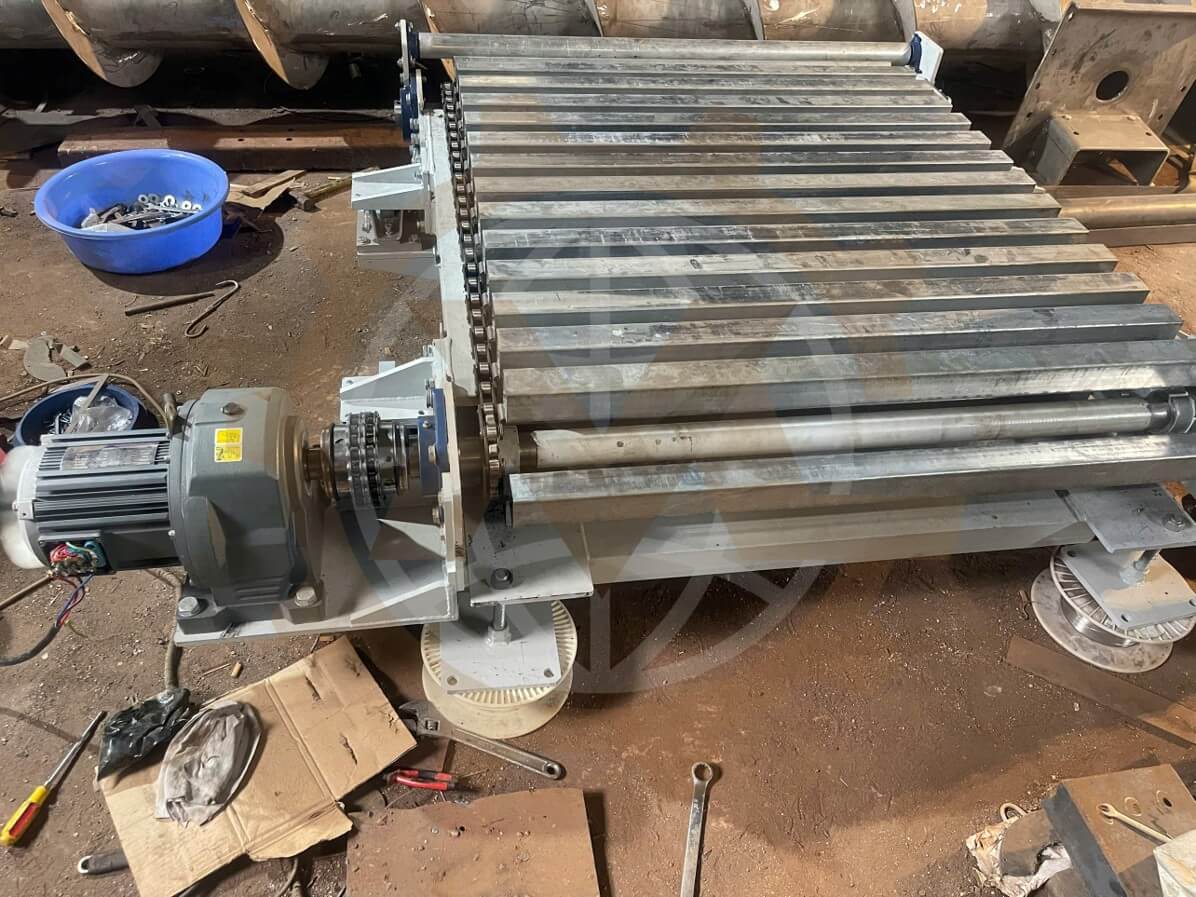
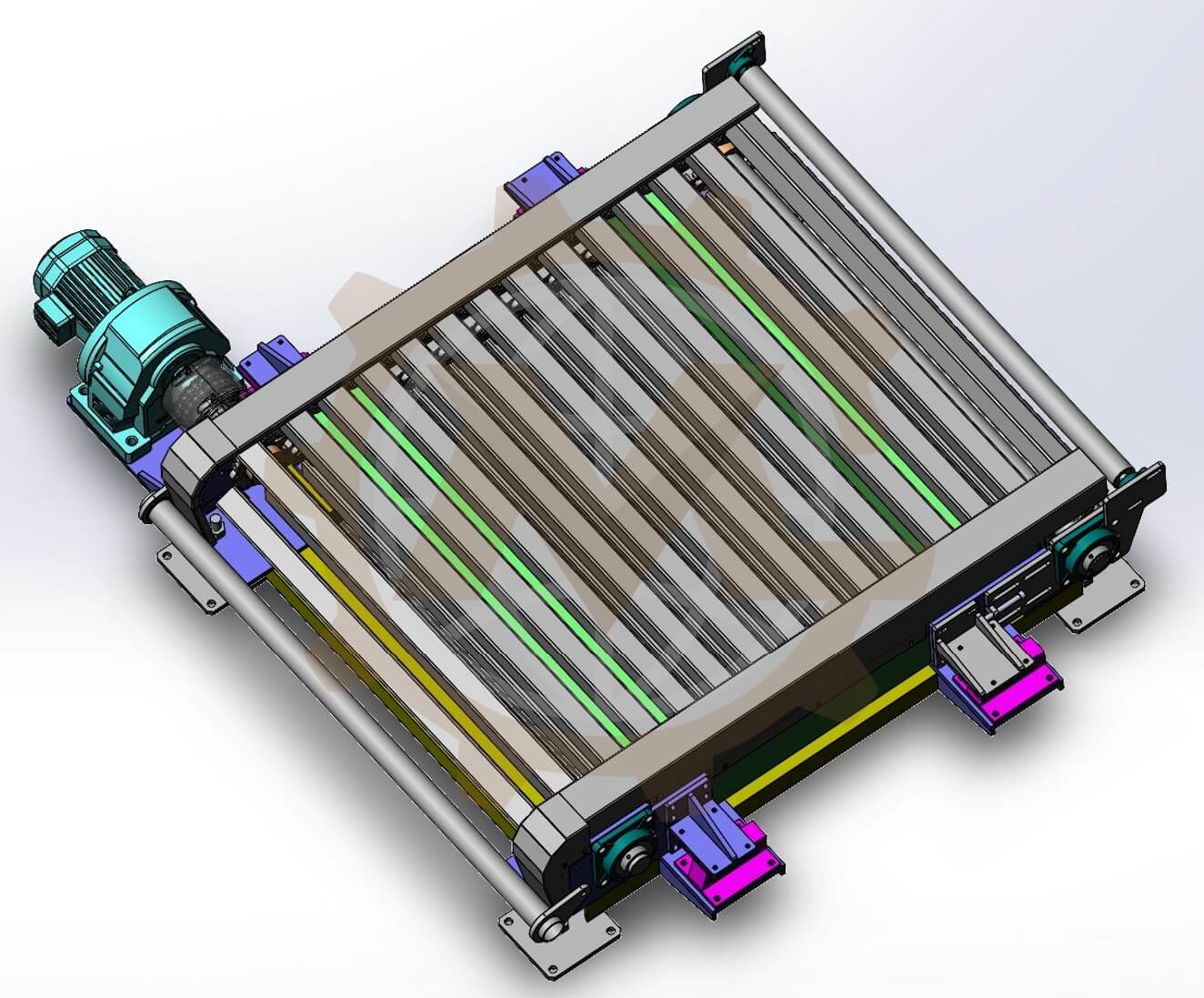
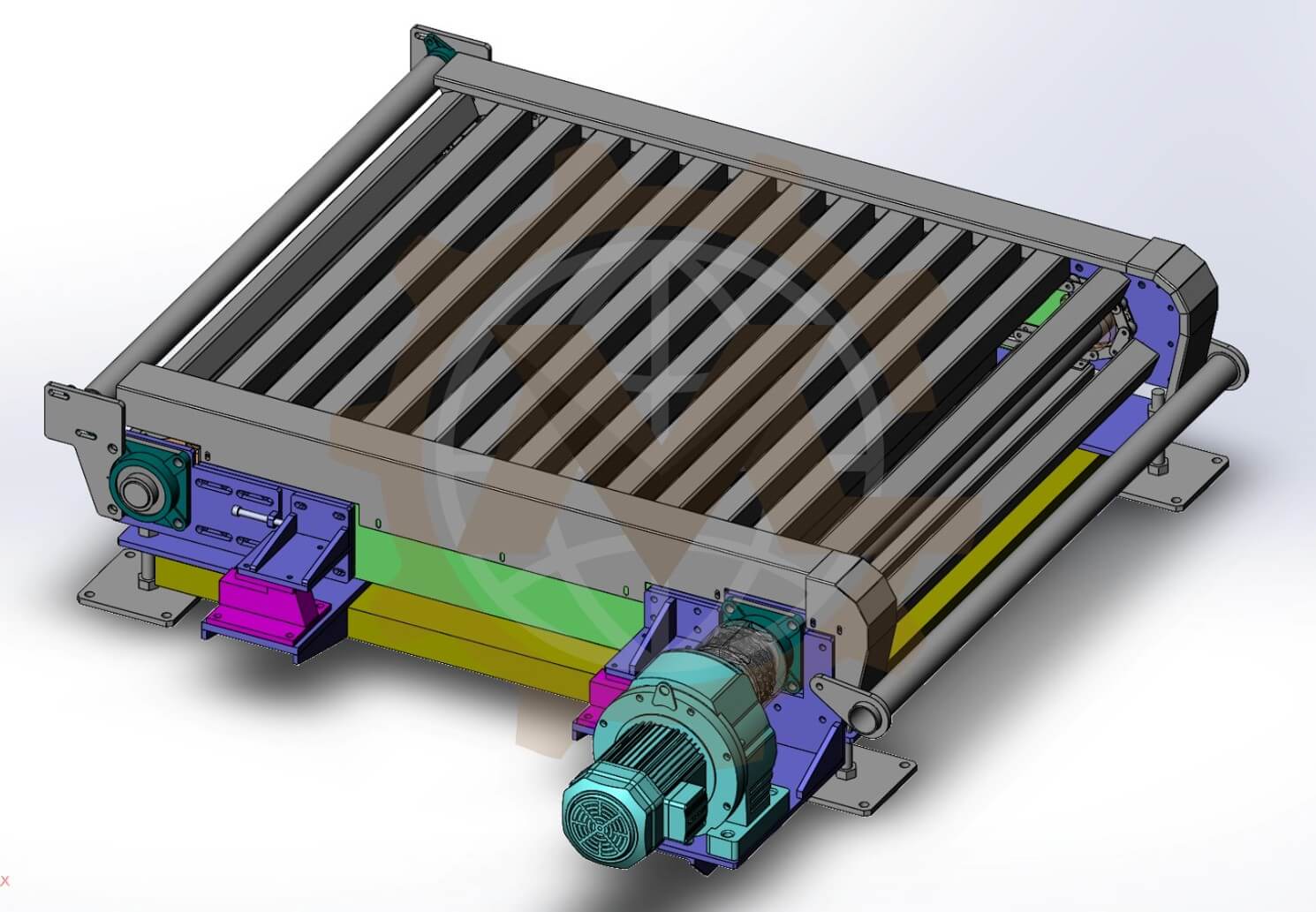
GMD developed a steel slat chain conveyor with a rigid conveying surface formed by parallel metal slats. The design integrates the slats, chain drive, supported shafts, geared motor and compact frame into one industrial conveyor assembly.
A conveyor carrying products through an industrial process must provide a suitable support surface and a drive arrangement matched to the load. Where a flexible belt is unsuitable for the required handling conditions, a series of metal slats can form the moving conveying surface.
GMD developed a steel slat chain conveyor with parallel steel slats, a compact structural frame, supported end shafts and a geared motor. The 3D design brings the conveying and drive components together in an assembly intended for integration into a production line.
1. An Industrial Conveyor With a Rigid Slat Surface
This project concerns the design and fabrication of a steel slat conveyor for industrial material handling. The moving surface consists of individual metal slats arranged across the conveyor width.
The slats provide a defined support area for products traveling through the unit. The client, product type and production process are not identified in the available project material, so the application is described without attributing it to a specific industry.
2. Moving the Slats as One Controlled Assembly
The main engineering challenge was to move multiple steel slats around the conveyor path while maintaining their spacing and supporting the intended product load.
The drive, chains, shafts, bearings and frame must operate as a coordinated system. The conveyor also needs enough clearance for the slats to travel around both ends and along the return path without contacting fixed structure.
3. Inputs That Define the Slat Conveyor
The design of a slat chain conveyor depends on the actual product and production requirements. Key inputs include:
- Product dimensions, mass and contact area.
- Maximum number of products carried at one time.
- Required conveying speed and cycle pattern.
- Conveyor width, length and installation height.
- Slat width, pitch and permitted gaps.
- Infeed and discharge requirements.
- Operating environment and potential impact loading.
- Available space for the motor, gearbox and maintenance access.
These inputs guide the slat design, chain selection, shaft sizing, drive torque and frame arrangement.
4. Slat Spacing, Chain Guidance and Frame Clearances
The slats must provide sufficient support for the conveyed product. Their pitch and the gaps between adjacent slats have to suit the product’s base geometry, especially as the surface passes around the conveyor ends.
The chains need a controlled travel path and suitable support under load. The shafts and bearings must remain aligned within the frame. The design must also provide clearance for the return run, the drive assembly and access to components that require adjustment or maintenance.
5. Choosing a Steel Slat Conveying Surface
Different conveyor types provide different forms of product support:
| Conveyor concept | Design consideration |
| Roller conveyor | Depends on the product’s ability to span the gaps between rollers |
| Belt conveyor | Provides a continuous flexible surface |
| Steel slat chain conveyor | Uses linked rigid slats to form the moving support surface |
The selected slat conveyor system uses steel slats driven around the conveyor by its chain and shaft arrangement.
6. The Selected Chain Driven Mechanism
The 3D model shows parallel slats spanning the conveying width. At one end, a motor and gearbox provide the drive input. Supported shafts at the conveyor ends guide the moving assembly through its carrying and return paths.
The frame houses and supports these components. Mounting feet provide connection points for installation alongside other production equipment.
As the drive turns, the chains advance the slats along the upper conveying path. The slats carry the product toward the discharge end, then circulate around the end of the conveyor and return underneath.
7. Engineering Checks for Slats, Chains and Drive Torque
The mechanical design requires checks based on the specified duty:
- Slat strength and deflection: response to the product load across the span between supports.
- Chain pull: force required to move the loaded slat assembly and overcome running resistance.
- Drive torque and power: demand at the selected speed, including startup conditions.
- Shaft strength: combined torsion and bending at the drive and return ends.
- Bearing loads: reactions from the slat assembly, product and drive.
- Frame stiffness: support of the shafts and loaded conveying path.
- Slat pitch and end clearance: movement around the conveyor ends without interference.
- Transfer geometry: product stability at the inlet and outlet.
The image does not provide the rated load, speed, chain specification or calculation results, so numerical performance values are not stated.
8. CAD Assembly for Fabrication and Integration
The 3D CAD assembly coordinates the slats, chain path, shafts, bearings, geared motor, frame and installation mounts. It provides a basis for checking fit, component alignment, movement clearance and the position of the drive relative to neighboring equipment.
The specific CAD software version and any simulation work can be added if confirmed in the project records.
9. Project Design and Fabrication Outputs
The project covers the steel slat conveyor assembly, including:
- Steel slat conveying surface.
- Slat and chain connection arrangement.
- Drive and return shaft assemblies.
- Bearing supports.
- Motor and gearbox mounting.
- Structural frame and installation points.
Manufacturing drawings, BOMs, fabrication records and test documentation should be listed as delivered files where they are included in the actual project handover.
10. A Complete Steel Slat Conveyor Assembly
The project resulted in a coordinated steel slat chain conveyor design that brings the conveying surface, chain drive and structural supports into one compact machine assembly.
The 3D model establishes the component arrangement for fabrication and line integration. A rated load, production speed or verified throughput can be added to this case study when supported by the final specifications and test records.
11. Related Conveyor Engineering Services
This project is part of GMD’s Mechanical Design Services for conveyors and material handling equipment. GMD can develop a slat conveyor design around product load, transfer requirements, installation space and the interfaces of a larger production line.
12. Need a Steel Slat Conveyor for Your Process?
GMD can help define the conveying surface, chain drive and frame around your product and operating conditions. Share the product dimensions and weight, required speed, conveyor layout and installation constraints to begin the design review.
Related Portfolios
Explore similar engineering portfolios and industrial solutions.
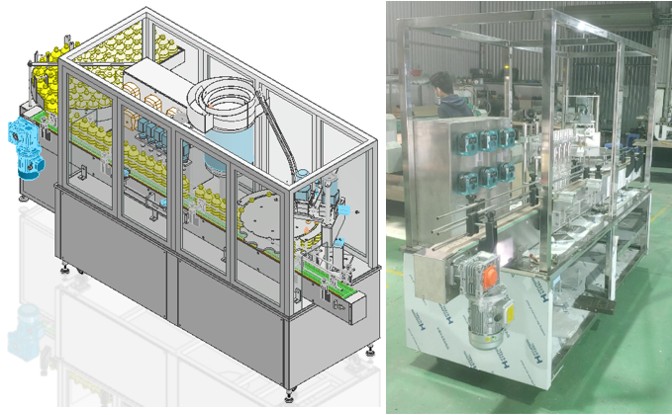
Automatic Filling and Capping Machine
GMD Engineering developed a 3D design for an...
View Portfolio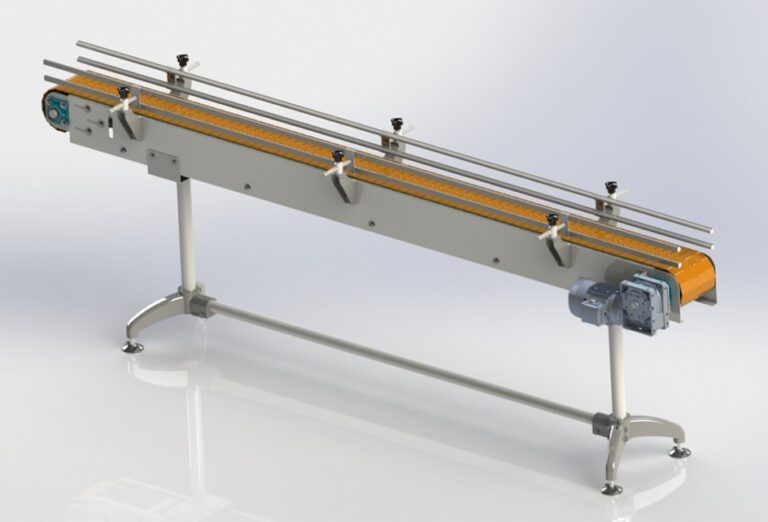
Plastic Chain Conveyor Design for a Production Line
GMD designed a straight plastic chain conveyor for...
View Portfolio
Curved Belt Conveyor Design and Fabrication
GMD designed and fabricated a curved belt conveyor...
View Portfolio
Automated Pallet Sorting, Stacking and Packaging Line
GMD designed an integrated line that collects molded...
View Portfolio
Custom Curved Tabletop Chain Conveyor Design
GMD Engineering designed a compact curved tabletop chain...
View Portfolio